Endangered
Cophyla berara
Cophyla berara
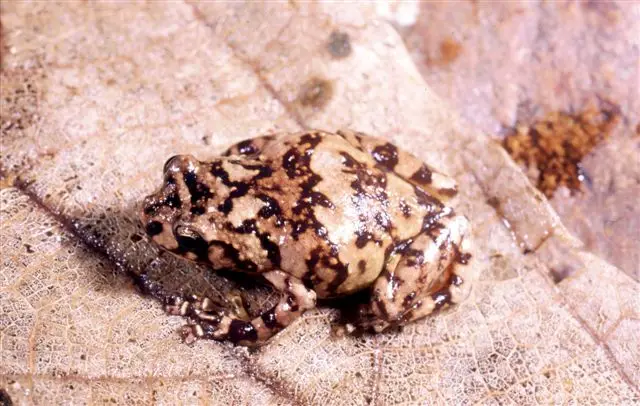
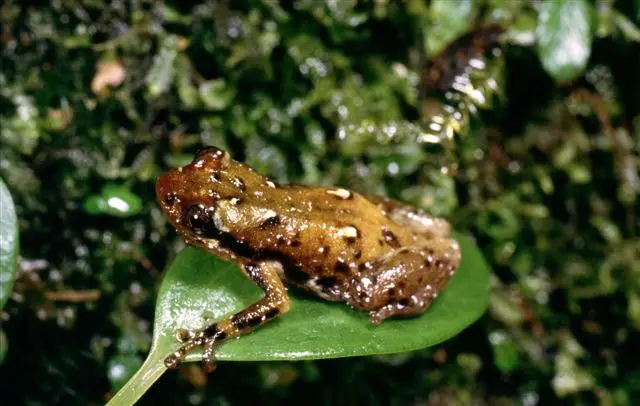
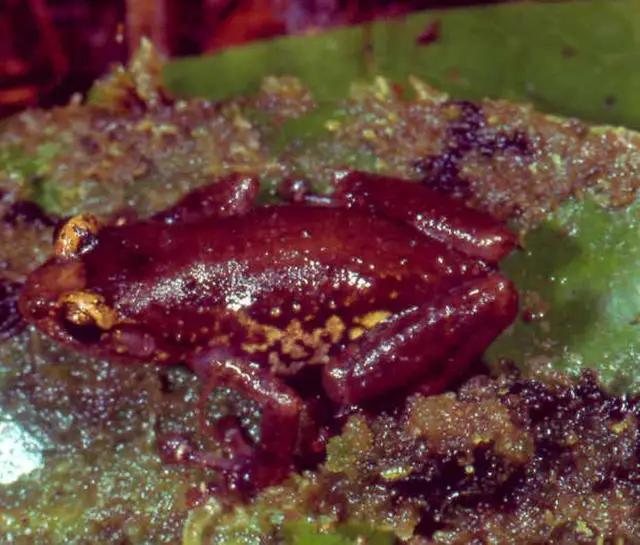
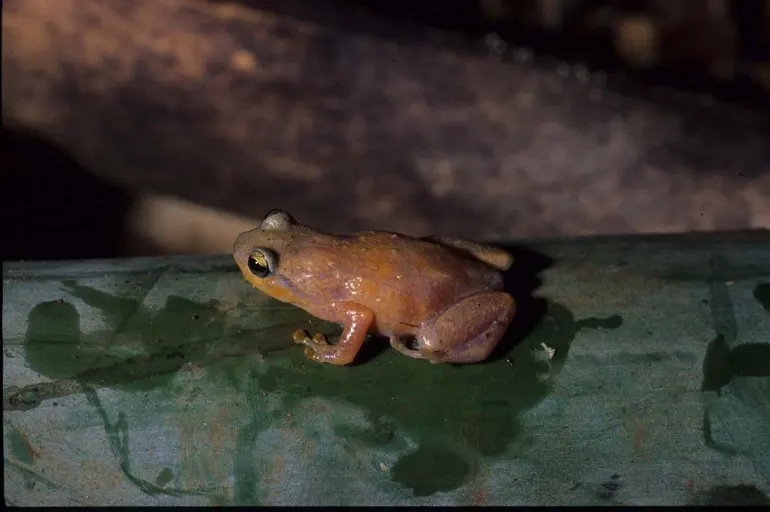
Cophyla berara is a small treefrog found only on the Sahamalaza Peninsula in northwestern Madagascar. It was described in 2005, and the IUCN Red List assessed it as Endangered in 2016. Its populations are separated from one another, and the forest around them is still being cleared.
What it is
This is a microhylid frog, in the family Microhylidae and the subfamily Cophylinae, a group found in Madagascar. Miguel Vences, Franco Andreone and Frank Glaw described it as new to science in 2005. A 2016 conservation action plan for the peninsula's amphibians calls it a relatively small treefrog and gives it the common name Berara whistling treefrog.
Where it lives
The species is endemic to Madagascar. All records come from the Sahamalaza Peninsula, about 26,000 hectares in the northwest, and the frog appears to be a local endemic. It was first found at Berara, a forest fragment within the larger Anabohazo forest, and takes its name from that place.
The IUCN counts three locations and gives a single elevation, 170 m. It lists only dry forest as habitat, though the peninsula's climate sits between the wetter Sambirano region and the drier west. Surveys in 2011 to 2013 added populations in Ankarafa forest, near Antafiabe village and in the Ankatsakely fragment of Anabohazo. The IUCN notes that at least part of its range lies inside a protected area.
Pins are Wikidata “endemic to” fields. Orange dots, when present, are GBIF occurrence tiles — survey bias included.
How it lives
Little has been recorded about its breeding. Surveyors found it in primary forest at Berara, and also in immature secondary forest dominated by bamboo. In Ankarafa it was extremely abundant along forest edges and in interior patches with bamboo, even in fragments that had recently burned.
That tolerance has limits. It still depends on forest, and DNA from the Ankarafa and Anabohazo populations has already begun to diverge slightly, which suggests little exchange between them. The two forests are about 20 km apart, with savannah and scrub in between.
Why it is in trouble
The 2016 assessment, under criterion B1ab(iii), describes a population that is severely fragmented and a range that is still shrinking. Shifting agriculture and small-holder farming are the named threats, converting dry forest to cropland and degrading what remains.
On the peninsula, slash-and-burn clearing, selective logging, free-ranging cattle and dry-season grass fires all pressure the forest. Berara holds the largest area of primary forest left there, but clearing is creeping up its lower slopes. Ankarafa had only about 185 hectares of forest left in 2011 to 2012.
Its status has moved over time. It was Data Deficient in 2006, Critically Endangered in 2008 and Endangered in 2016. That reflects more survey knowledge, including the newer populations, not a proven recovery.
What is being done
The peninsula's forests lie in a national park created in 2007, though the 2016 action plan says rules are rarely enforced and clearing has increased. The IUCN lists site and area management, resource and habitat protection, training, awareness work, livelihood alternatives for local people and habitat restoration as actions needed. The action plan calls for reforestation to link fragments and for a study of whether captive breeding is feasible. No population estimate has been published.
Sources
Written for this catalog in our own words from the sources below, checked against them on 12 November 2026. Population figures are estimates and carry the year they were made. Status and assessment year: IUCN. 2026. The IUCN Red List of Threatened Species. Version 2026-1. iucnredlist.org.