Critically Endangered
Golden coquí
Eleutherodactylus jasperi
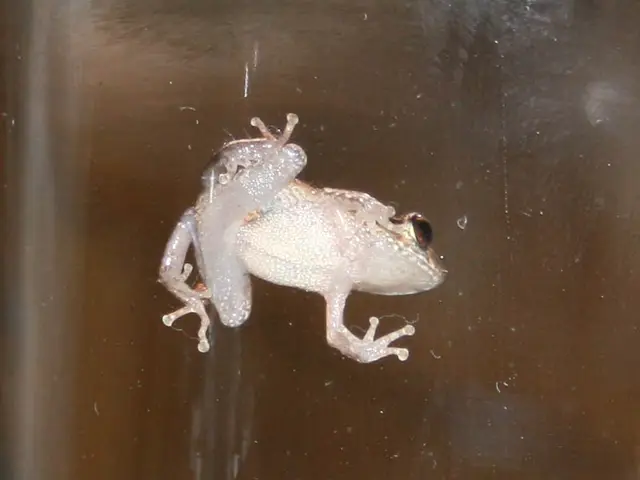
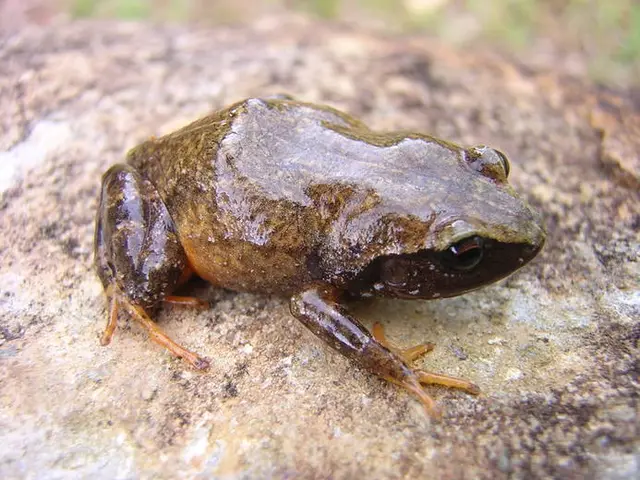
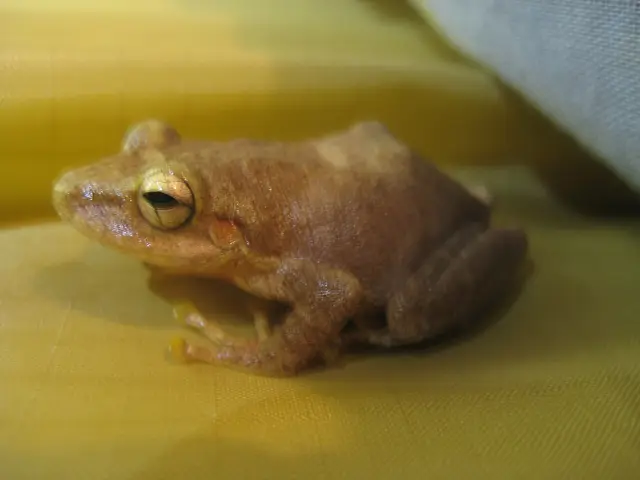
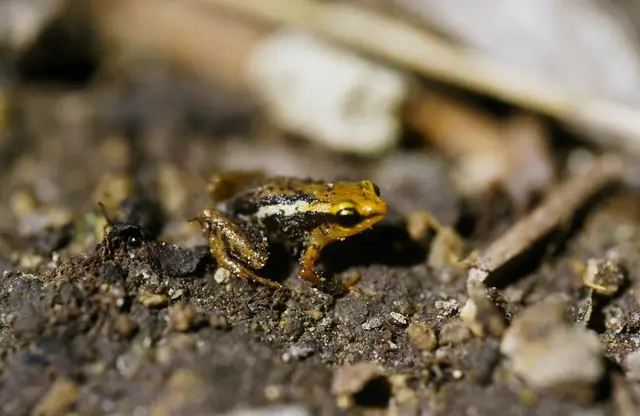
The golden coquí is a tiny olive-gold frog from the Sierra de Cayey in Puerto Rico, unusual because mothers give birth to live young. The IUCN Red List (2021) lists it as Critically Endangered, with no confirmed sighting since 1981 and a possibly extinct tag.
How to recognise it
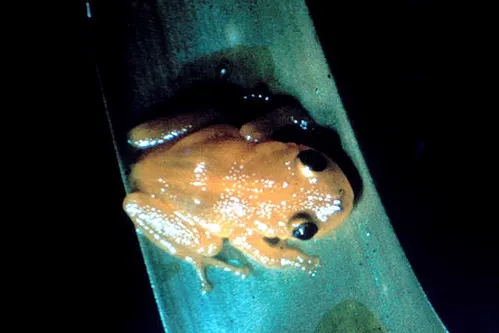
This is a very small frog, about 17 to 22 millimetres from snout to rump. Its skin is plain olive-gold to yellow-gold with no markings, and young frogs look like small adults.
It was active at night and territorial, and individuals rarely strayed more than about 5 metres from their retreat.
Where it lived
The species is endemic to Puerto Rico and was only ever found in the Sierra de Cayey. All records came from between roughly 647 and 785 metres above sea level, in moist lowland forest and rocky areas.
Within that small range it depended on dense growth of water-holding bromeliads, the leafy plants that collect rainwater in their centres. The range includes the Carite Forest Reserve as well as private land.
Pins are Wikidata “endemic to” fields. Orange dots, when present, are GBIF occurrence tiles — survey bias included.
A frog that gives birth
Most frogs in its genus lay eggs on land. The golden coquí does not. Females are ovoviviparous, and a mother gives birth to three to six fully formed froglets after a pregnancy of under a month. It is the only live-bearing species known in its family, the Eleutherodactylidae.
It was described to science in 1976, and the species name honours Jasper Loftus-Hills, who died in a car accident in 1974, before it was named.
Why it is in trouble
The last confirmed observation was in 1981. Searches since then have found nothing, though many surveys covered only known sites and roadsides. A 2004 paper on amphibian declines in Puerto Rico presumed the species extinct, and the IUCN keeps it as Critically Endangered, possibly extinct. Its 2021 assessment gives a population estimate of 0 to 49 individuals, and the trend as unknown.
The cause of the disappearance is not settled. The IUCN lists small-scale farming and mining as past pressures, and drought as an ongoing one. The fungal disease chytridiomycosis, together with a warming climate, has been suggested as a factor, but no direct link has been shown. A narrow range and reliance on one kind of plant would leave any frog vulnerable to such changes.
What is being done
The species occurs in at least one protected area, the Carite Forest Reserve. A 2011 Amphibian Ark conservation needs assessment recorded that golden coquís had been kept in captivity but never successfully bred, and the IUCN lists captive breeding as a conservation action. If a living population were found, keeping some animals safe would be a priority.
Sources
Written for this catalog in our own words from the sources below, checked against them on 12 November 2026. Population figures are estimates and carry the year they were made. Status and assessment year: IUCN. 2026. The IUCN Red List of Threatened Species. Version 2026-1. iucnredlist.org.