Endangered
Jamaican masked frog
Jamaican masked frog
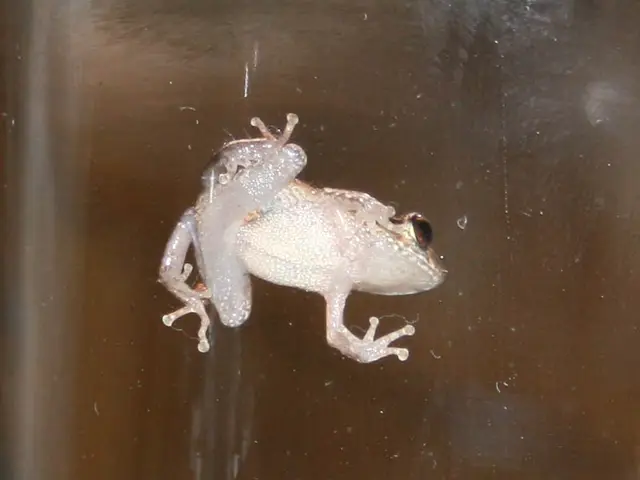
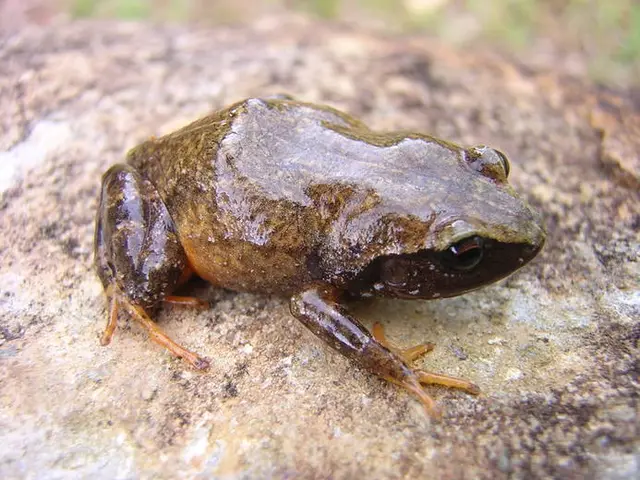
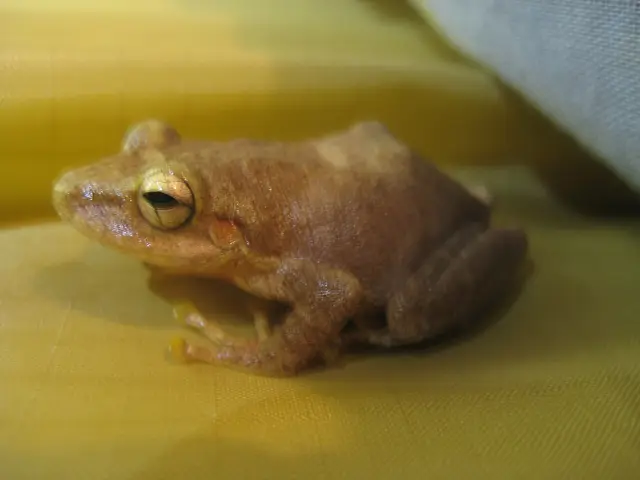
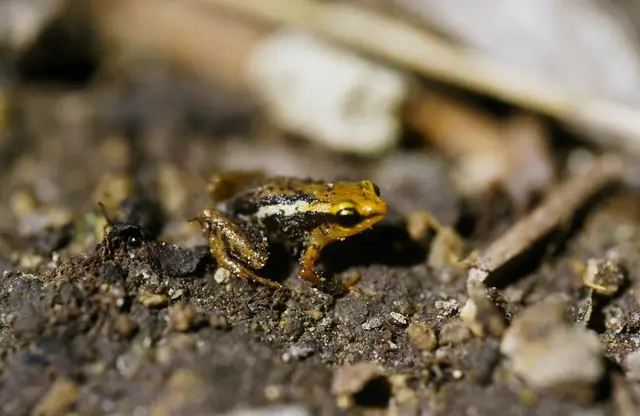
The Jamaican masked frog is a tiny, ground-dwelling frog found only in western Jamaica, mostly in moist forest below 680 m. Assessed as Endangered in 2021, it has a small, broken-up range, and its numbers are falling as forest is cleared and degraded.
How to recognise it
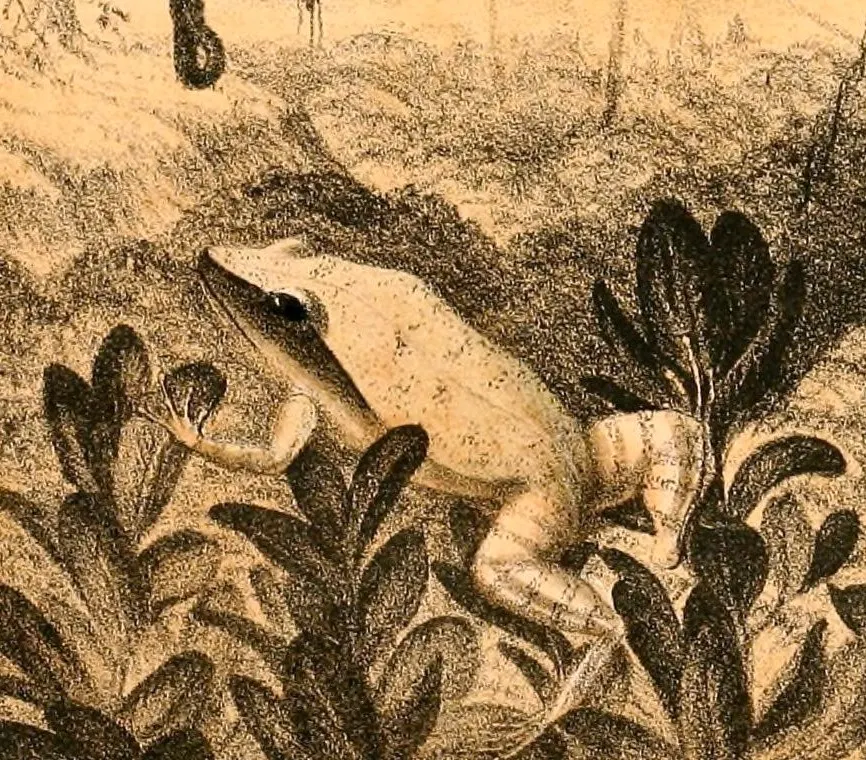
It is a tiny frog that lives on the ground rather than climbing. It belongs to Eleutherodactylus, a very large genus whose frogs lay their eggs on land and skip the tadpole stage entirely. Published accounts give no size measurements or colour description, and the English names on record are Jamaican masked frog and little yellow tree-frog.
Its call is easy to miss. A herpetologist who recorded it at Barbecue Bottom, in north-central Jamaica, describes a weak, low chirp lost among the louder calls of crickets. Males reportedly call from the ground or from low vegetation. Gosse described the species in 1851 under the name Litoria luteola.
Where it lives
This frog is endemic to Jamaica, which means it occurs nowhere else. Its range sits in the west of the island, from sea level up to 680 m, in an area of roughly 2,100 square kilometres. The Red List counts one to five locations and describes the population as severely fragmented.
Its habitat is moist forest, reportedly both near the coast and in the uplands. It has been recorded across the Catadupa area, in the Cockpit Country region, though sound surveys there rarely pick it up because its call carries only a few metres. It is reportedly common at Dolphin Head, in the far west.
Pins are Wikidata “endemic to” fields. Orange dots, when present, are GBIF occurrence tiles — survey bias included.
How it lives
A 1989 allozyme study of Jamaica's 17 native Eleutherodactylus frogs by Blair Hedges placed this species with two close relatives, Eleutherodactylus grabhami and Eleutherodactylus sisyphodemus. All three live mainly in the limestone country of west-central Jamaica. This frog is one of ten ground-dwelling species on the island, and up to eight species of the genus can occur together in the west-central karst.
Beyond that, its private life is poorly documented. The Red List lists life history and ecology among the research still needed.
Why it is in trouble
The Red List records a decreasing population and a continuing decline in the area of habitat. Shifting agriculture is the threat it scores as causing slow, significant declines. Small-holder farming, tourism and recreation areas and the unintended effects of small-scale harvesting are also listed, along with drought, storms and flooding, and temperature extremes.
Forest clearing for farming and settlement, and logging, are the threats generally cited for the species.
What is being done
The frog occurs in at least one protected area, and several forest reserves hold it, although these do not guarantee its long-term protection. The Red List records site management and awareness work as conservation actions, and calls for research on population size, distribution and trends, life history and ecology, and threats.
Sources
Written for this catalog in our own words from the sources below, checked against them on 12 November 2026. Population figures are estimates and carry the year they were made. Status and assessment year: IUCN. 2026. The IUCN Red List of Threatened Species. Version 2026-1. iucnredlist.org.