Endangered
Pseudophilautus cuspis
Pseudophilautus cuspis
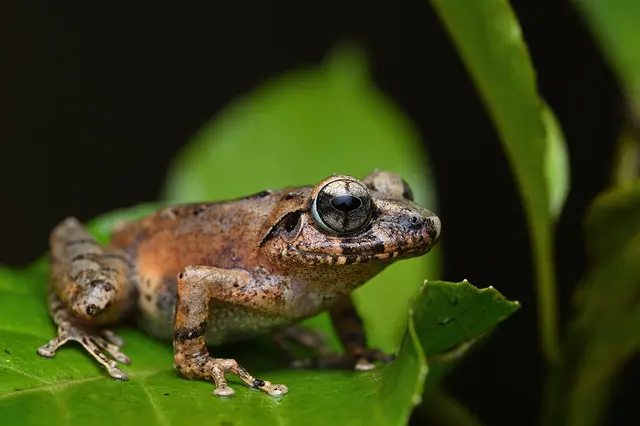
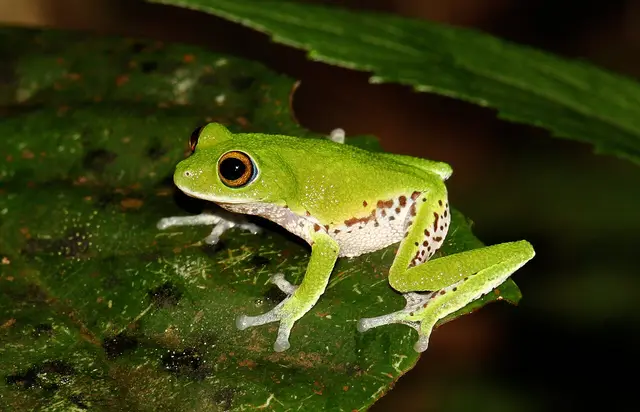
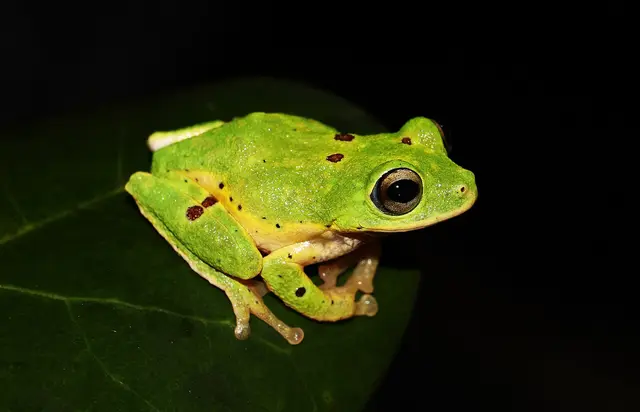
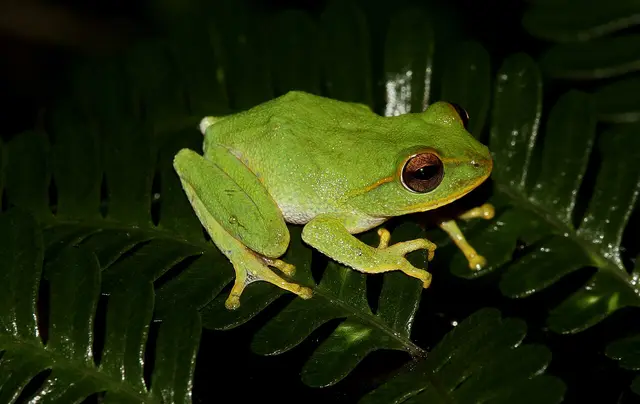
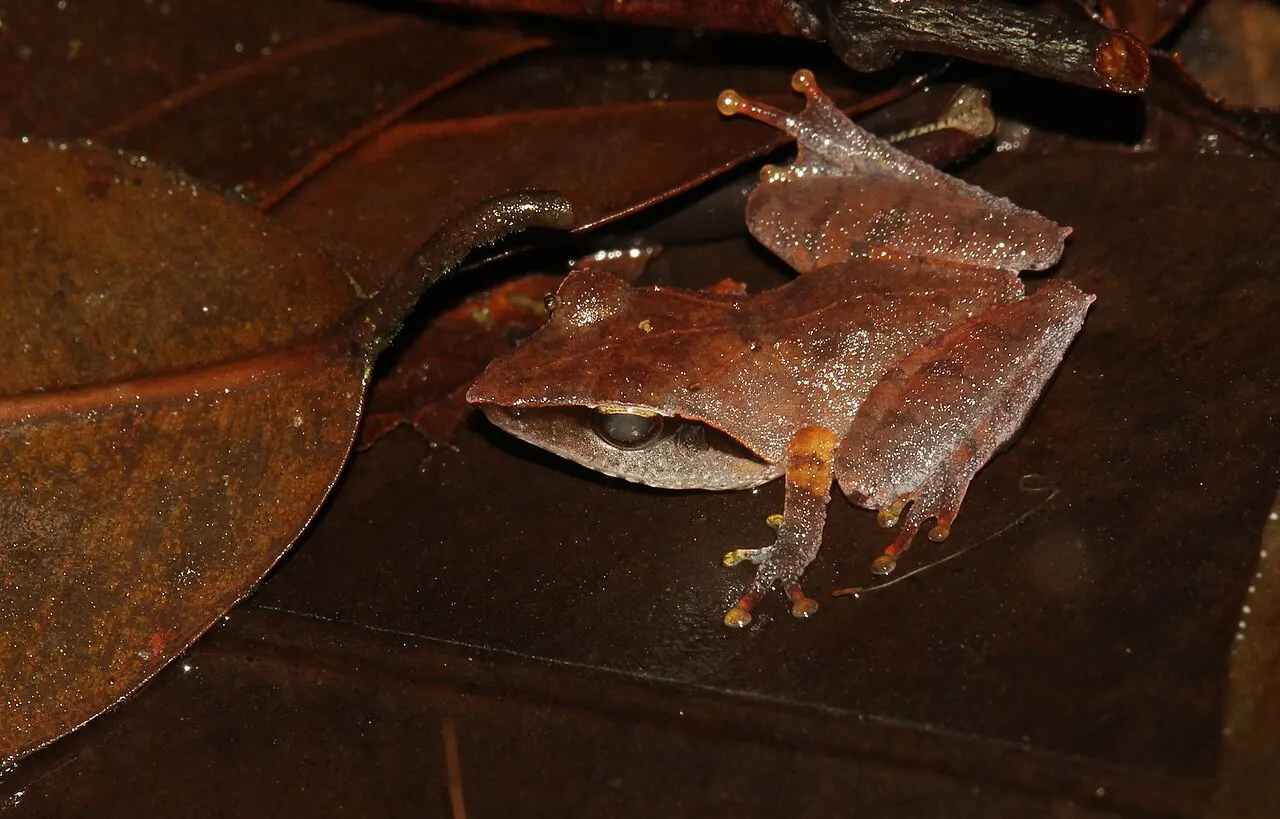
The sharp-snouted shrub frog (Pseudophilautus cuspis) is a small frog of the wet lowland rainforests of south-western Sri Lanka, named for its pointed snout. The IUCN Red List rated it Endangered in 2020, with a declining population in a handful of forest sites.
How to recognise it
It's a small frog. A 2015 comparison table of Sri Lankan shrub frogs lists adults of this species at about 17.6 to 28.9 mm from snout to vent. Its common name refers to the pointed snout.
It was formally described in 2005 by Manamendra-Arachchi and Pethiyagoda, though some databases give the year as 2004. The type specimens came from Koskulana, near Panapola, at about 460 m.
Where it lives
It is found nowhere outside Sri Lanka. Recorded sites cluster in the wet south-west around the Sinharaja rainforest and nearby towns, including Millawa near Morawaka, Mederipitiya and Wathugala near Deniyaya, and the Kudawa entrance of the Sinharaja World Heritage Site. The IUCN counts 2 to 5 locations across an extent of occurrence of about 4,670 square kilometres.
Most accounts put it at about 150 to 660 m above sea level, though the IUCN's elevation limits are wider, at 150 to 1,060 m. It prefers closed-canopy lowland rainforest with a sparse understorey.
Pins are Wikidata “endemic to” fields. Orange dots, when present, are GBIF occurrence tiles — survey bias included.
How it lives
It's active both day and night. By day it sits among leaf litter on the forest floor. After dark the calling males climb onto branches and leaves above the ground. Little else about its diet, breeding or lifespan appears in the published sources. The IUCN lists research on its life history, population trends and threats as a need.
Why it is in trouble
The population is shrinking along with the forest it depends on. The IUCN notes a continuing decline in its area of occupancy and lists a range of ongoing pressures: shifting and altered habitat, more frequent fires, small-holder and large-scale agriculture, housing, renewable energy projects, drought, herbicides and pesticides, and small-scale unintentional harvest. The assessment rates each of these as low impact individually, and the population is not considered severely fragmented, but together they add up to a continuing decline.
What is being done
At least part of its range lies inside protected forest, and the IUCN records that the species occurs in a protected area. The conservation actions listed are site management, site protection and resource and habitat protection. No species-specific recovery plan is recorded.
Sources
Written for this catalog in our own words from the sources below, checked against them on 12 November 2026. Population figures are estimates and carry the year they were made. Status and assessment year: IUCN. 2026. The IUCN Red List of Threatened Species. Version 2026-1. iucnredlist.org.