Endangered
Pseudophilautus tanu
Pseudophilautus tanu
The Sri Lanka petite shrub frog (Pseudophilautus tanu) is a tiny, slender frog from the lowland wet zone of south-western Sri Lanka, known from only a few forest-edge sites in Galle District. The IUCN Red List classed it as Endangered in 2020, and its population is recorded as decreasing as forest margins are built over or farmed.
How to recognise it
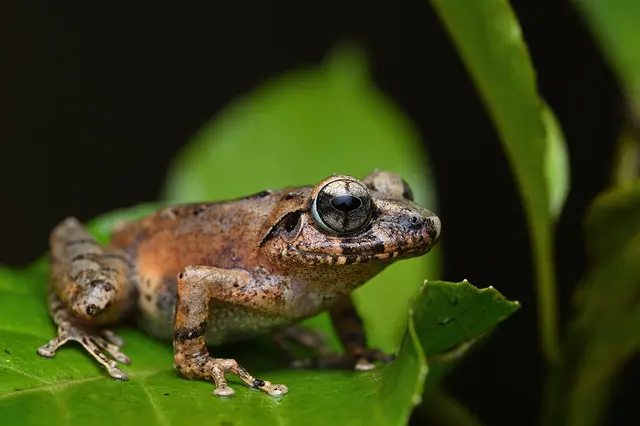
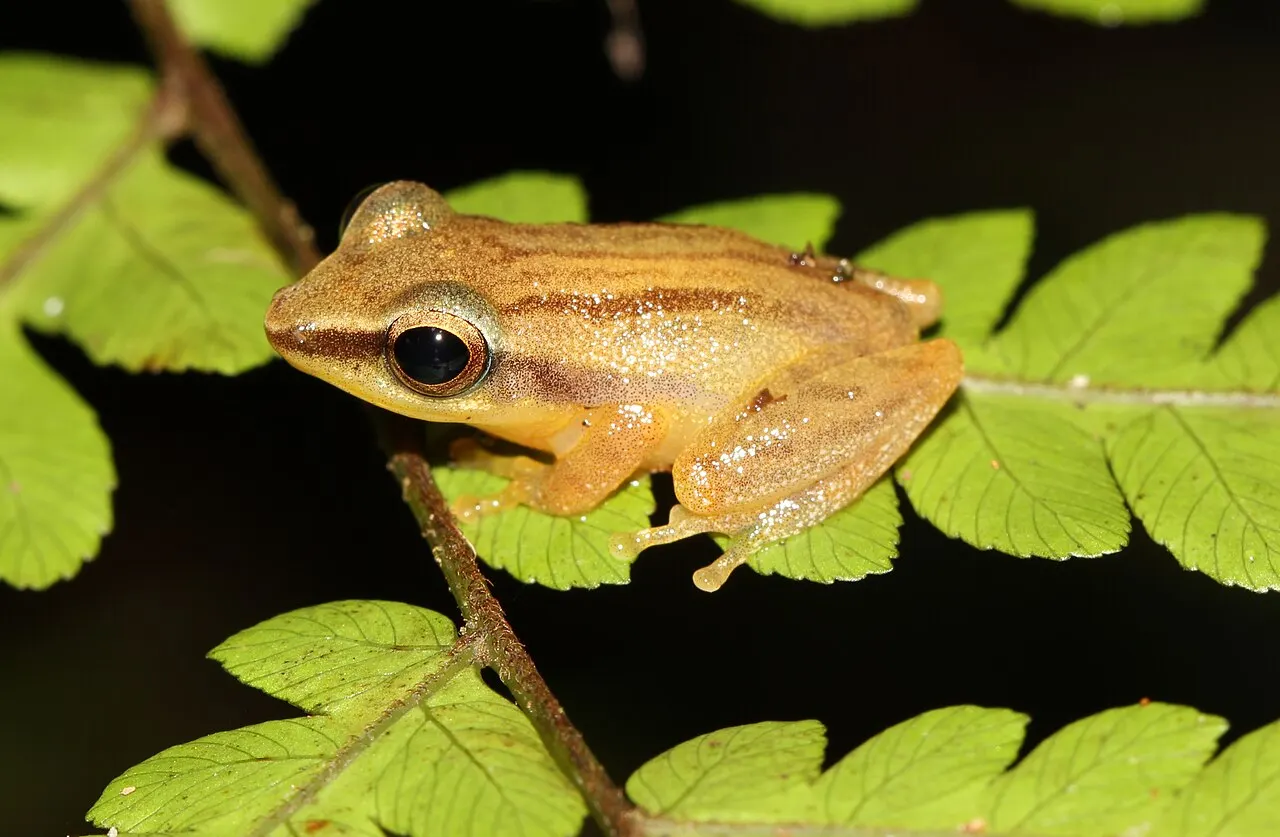
This is a very small frog. The three adult males in the original 2009 description measured only 13.5 to 13.9 mm from snout to vent, less than the width of a thumbnail. No female has been reported. Its snout is bluntly pointed, and it has a distinct, vertically oval eardrum.
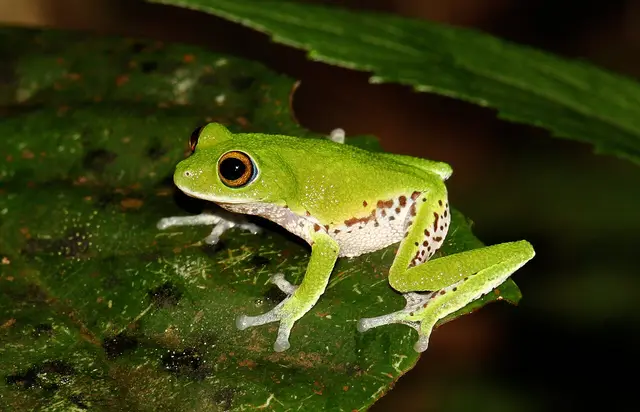
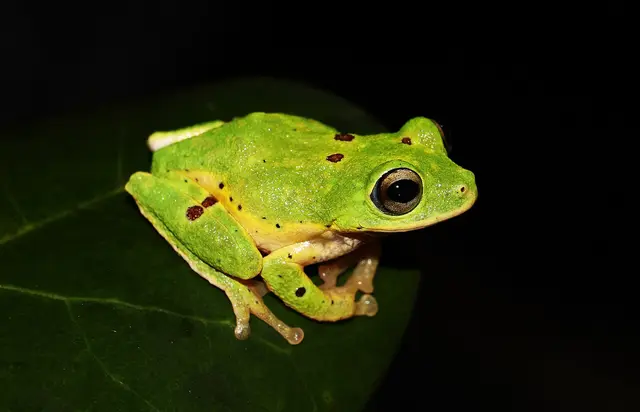
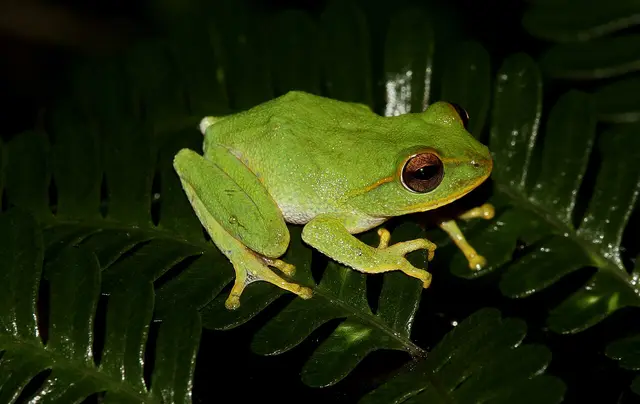
The back is pale brown with about eight darker stripes, and a dark band runs from the snout through the eye and fades along the flank. The belly is white, sometimes with brown specks. In life the rear edge of the eye is light blue. The name tanu is Sinhala for slender, a reference to its build.
Where it lives
It is endemic to Sri Lanka and is known from the Galle District in the south-west. The type specimen came from Kanneliya Forest Reserve, and the original paper also reported it from Pituwala. Later accounts name Beraliya and Kanneliya forest reserves. The Red List treats it as present at between 2 and 5 locations, with an estimated range of about 3,900 square kilometres, though the frog itself occupies only scattered patches inside that.
Records span elevations from 24 m up to 600 m on the Red List, although the frog was first collected at 45 m and published descriptions give lowland sites of 24 to 45 m.
Pins are Wikidata “endemic to” fields. Orange dots, when present, are GBIF occurrence tiles — survey bias included.
How it lives
It lives at forest edges and in open shrub, in Sri Lanka's lowland wet zone. In the original study, males were found sitting on shrub leaves 0.5 to 1 m above the ground, in shrubs 10 to 25 m from canopy forest. The describers thought it probably also uses other open habitat close to patches of rainforest. At Kanneliya it has been reported as the most common frog in fern-dominated habitat.
Its call, breeding behaviour, diet and lifespan have not been described.
Why it is in trouble
The IUCN lists housing and urban development and agro-industry farming as the main pressures, each affecting the majority (50 to 90%) of the frog's habitat. Pesticides, nutrient runoff, drought, habitat shifting and more frequent fires are also listed. The population trend is recorded as decreasing.
What is being done
At least part of its range lies inside a protected forest reserve, and the Red List records site protection, habitat protection and site management as conservation actions. Research priorities listed are population size, distribution and trends, threats, and life history and ecology.
Sources
Written for this catalog in our own words from the sources below, checked against them on 12 November 2026. Population figures are estimates and carry the year they were made. Status and assessment year: IUCN. 2026. The IUCN Red List of Threatened Species. Version 2026-1. iucnredlist.org.