Endangered
Brachycephalus alipioi
Brachycephalus alipioi
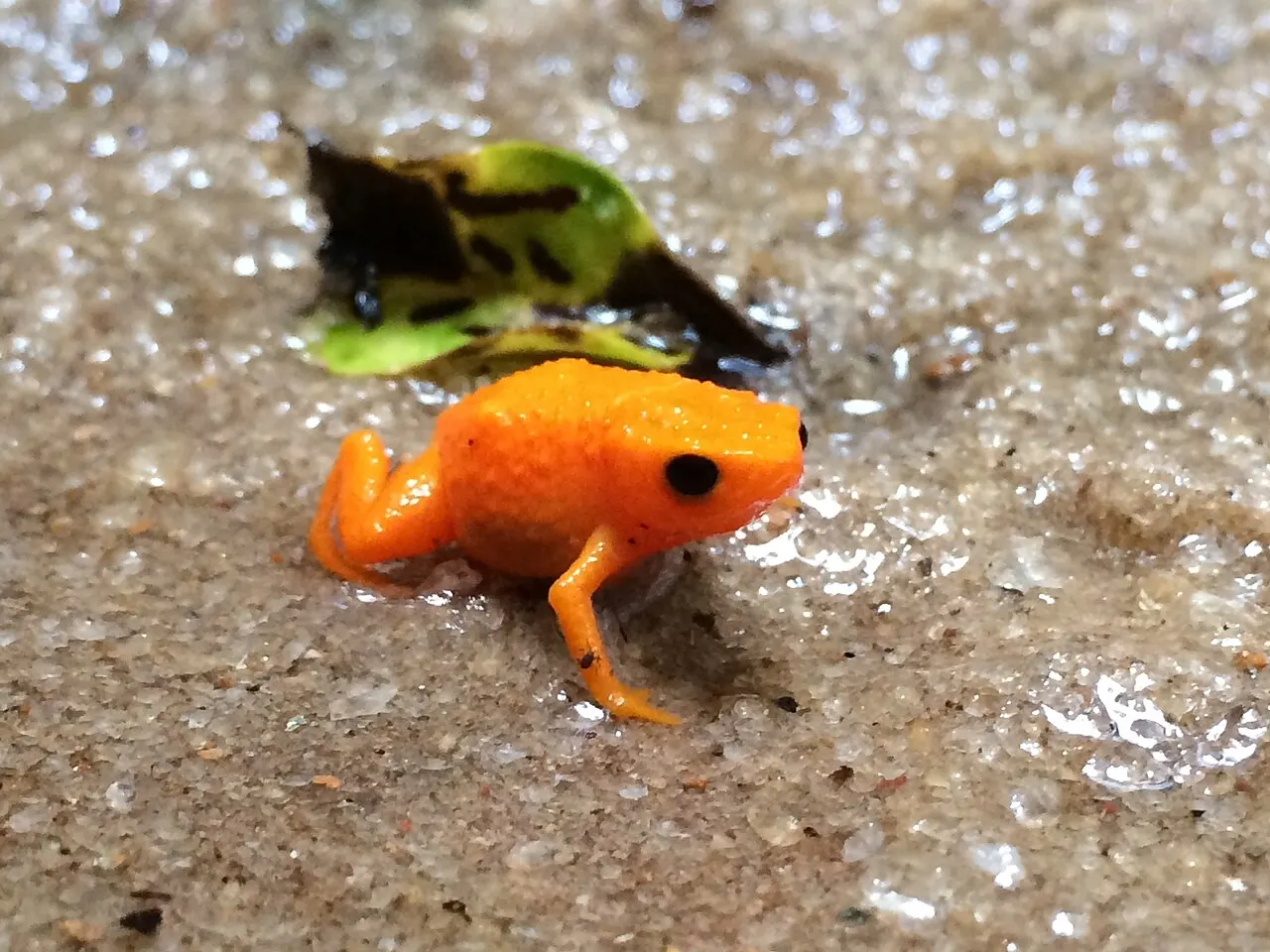
Brachycephalus alipioi is a tiny orange frog, under 2 cm long, from the Atlantic Forest of Espírito Santo in southeastern Brazil. The IUCN Red List lists it as Endangered (2023 assessment), after an earlier Data Deficient rating in 2008. It lives in a few mountain forest pockets, and its habitat is being cleared and broken up.
How to recognise it
This is a very small frog. Adults measure roughly 12.5 to 16.2 mm from snout to rear, and females are bigger and sturdier than males.
In life the whole body is a plain orange, with black eyes ringed by a thin black line. The skin is smooth on the head, throat and chest, slightly wrinkled on the back and legs, and very wrinkled on the flanks and rear thighs. José Perez Pombal Jr. and J. L. Gasparini described the species in 2006 and named it for the Brazilian naturalist Alipio de Miranda-Ribeiro.
Where it lives
It is endemic to Espírito Santo state. The species was described from Vargem Alta, and records also come from Forno Grande, Santa Teresa and Domingos Martins. A 2025 call study in Zootaxa called it the only Brachycephalus species described from that area.
The Red List gives an elevation range of about 800 to 1,500 m and puts the number of separate locations at two to five. It lists the habitat as moist subtropical and tropical forest, and it considers the population severely fragmented.
Pins are Wikidata “endemic to” fields. Orange dots, when present, are GBIF occurrence tiles — survey bias included.
How it lives
Little has been written about its daily life. It walks slowly over leaf litter and the forest floor rather than hopping, and every specimen in the original series was active by day. Two animals examined had mites and spiders in their stomachs, though the real diet is probably wider.
Its call was only described in 2025. Researchers analysed two recordings and found a pulsed note with a dominant pitch near 4 kHz, repeated about 3.6 times per second. About two thirds of notes had eight or nine pulses.
Why it is in trouble
The Red List records continuing decline in the area it occupies and a decreasing population. Listed pressures include small-holder and large-scale plantations and farming, housing and urban growth, and tourism and recreation areas. Droughts and shifting habitat conditions are also named.
With so few locations and forest that is already patchy, a single clearing or fire can matter a great deal.
What is being done
The species is known from at least one protected area, and the Red List estimates that 11 to 20 percent of the population is protected, covering part of its range. The assessment calls for site and habitat protection and awareness work. No population estimate has been made.
Sources
Written for this catalog in our own words from the sources below, checked against them on 12 November 2026. Population figures are estimates and carry the year they were made. Status and assessment year: IUCN. 2026. The IUCN Red List of Threatened Species. Version 2026-1. iucnredlist.org.




