Endangered
Hogsback frog
Anhydrophryne rattrayi
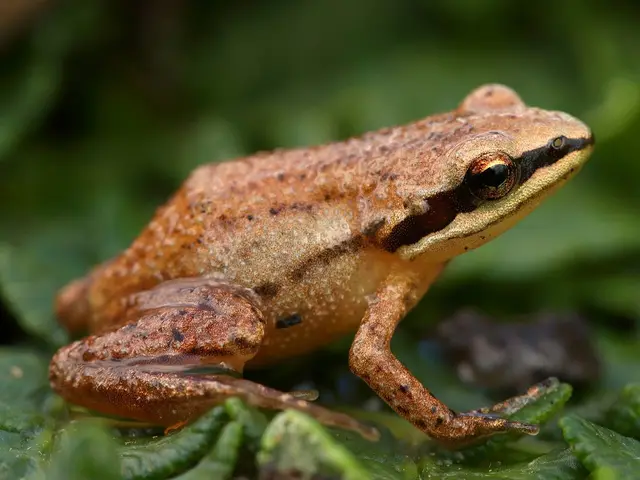
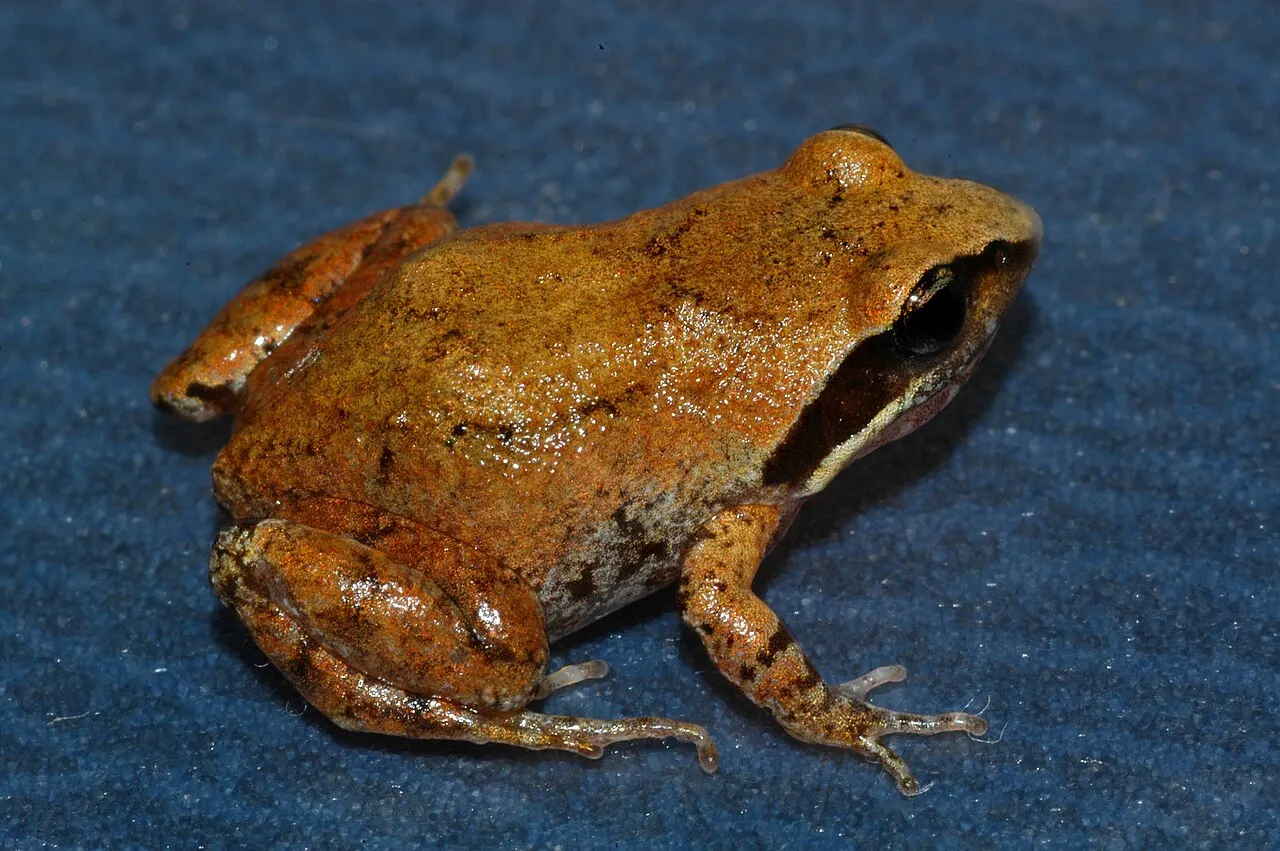
The Hogsback frog (Anhydrophryne rattrayi) is a tiny forest-floor frog found only in the mountains of South Africa's Eastern Cape. The IUCN Red List rated it Endangered in 2025. It has no tadpole stage, and males attract mates with a ping-like call.
How to recognise it
This is one of the smallest frogs in southern Africa. Females reach about 21 to 22 mm in body length, and males are noticeably smaller. The back runs from pale grey to dark brown, sometimes coppery, and many frogs have a thin pale line down the head and back. The belly is white with dark brown or black marbling.
Males carry a hard, horny tip on the snout, which helps separate them from females.
Where it lives
The species is endemic to South Africa's Eastern Cape. John Hewitt described it in 1919 from the Hogsback area, where Dr George Rattray had collected it. It is centred on the Amathole (Amatola) mountains and is also known from Katberg Forest and the Keiskammahoek mountains. Recorded sites include Hogsback Indigenous Forest and Stutterheim Nature Reserve. The IUCN counts three to four locations.
It sits in damp leaf litter on the floor of Afromontane forest, generally above about 1,100 m. It favours moist spots near streams and waterfalls, the edge where forest meets grassland, and small wet openings within forest.
Pins are Wikidata “endemic to” fields. Orange dots, when present, are GBIF occurrence tiles — survey bias included.
How it lives
Males call mostly at night, and also on rainy days, with a short ping given singly or in a series of up to about 15. Calling is recorded from October to February. Food is small leaf-litter animals, mainly amphipods and isopods (woodlice), with springtails apparently making up a large share.
Breeding skips the water. Eggs are laid in a small chamber in damp soil beneath leaf litter, which the male is thought to dig. A clutch holds 11 to 20 large eggs, each about 2.6 mm across. They develop directly into froglets of roughly 4 mm in about four weeks, and the nest has to stay moist.
Why it is in trouble
The frog's forest habitat is patchy, and conservation assessments describe its small subpopulations as isolated and vulnerable. The Red List criteria (B1ab(iii)) rest on a limited range and continuing habitat decline, and the population trend is recorded as decreasing.
The threats listed by the IUCN include plantations of alien trees, more frequent and fiercer fires, roads, and shifts in habitat quality. No population size has been estimated.
What is being done
The IUCN records site protection, and the species occurs in at least one protected area. A regional conservation assessment recommends protecting more localities, surveying further, monitoring known populations and telling forestry companies about its status and how to reduce their impact.
Sources
Written for this catalog in our own words from the sources below, checked against them on 12 November 2026. Population figures are estimates and carry the year they were made. Status and assessment year: IUCN. 2026. The IUCN Red List of Threatened Species. Version 2026-1. iucnredlist.org.