Critically Endangered
Rough Moss Frog
Arthroleptella rugosa
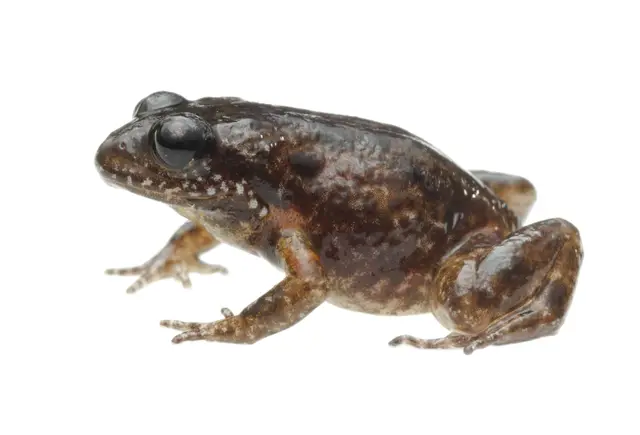
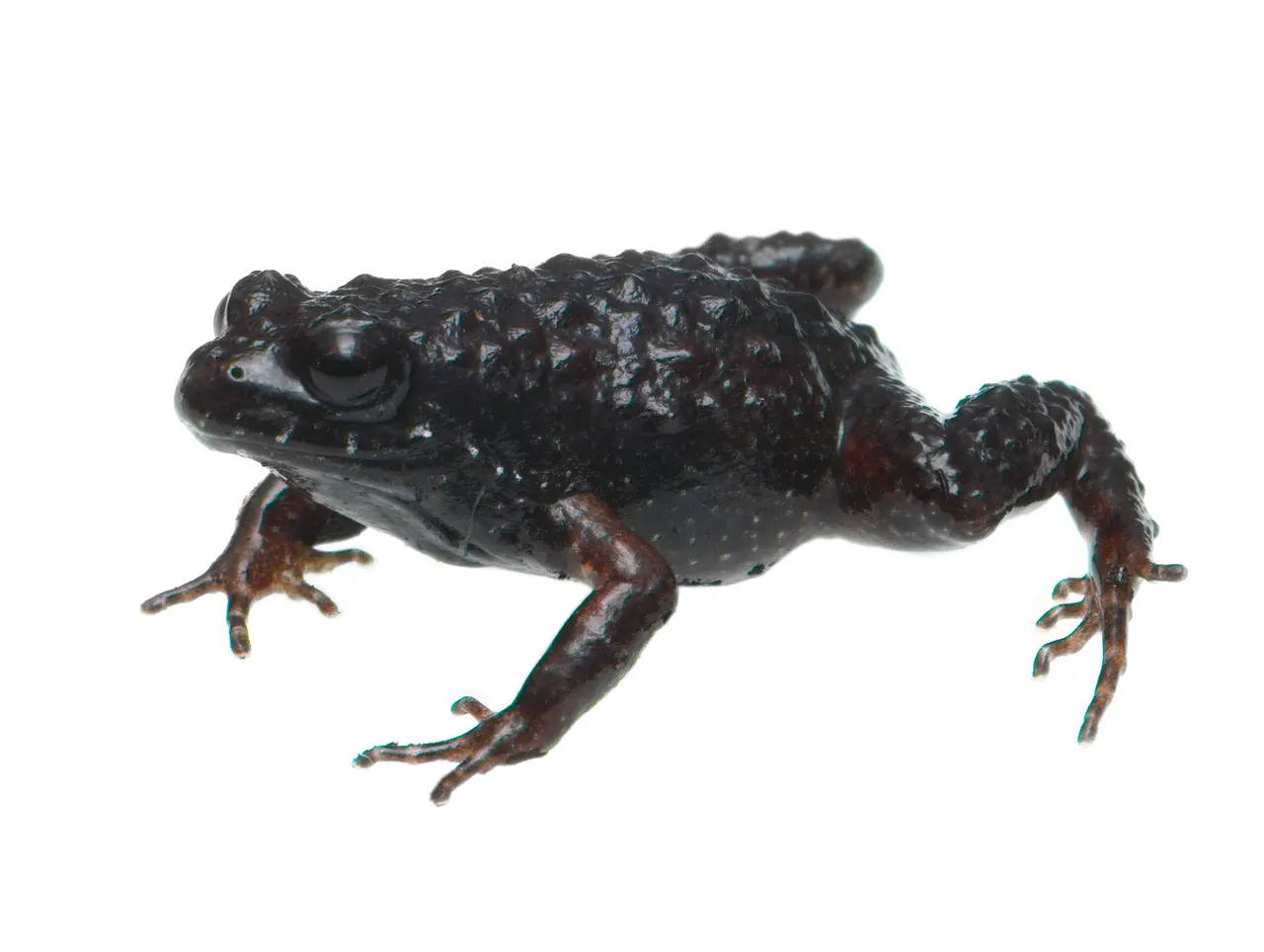
The rough moss frog (Arthroleptella rugosa) is a tiny, dark brown frog known from a single mountain, Klein Swartberg, near Caledon in South Africa's Western Cape. It lives in wet seeps among fynbos. The IUCN assessed it as Critically Endangered in 2026, with a decreasing trend.
How to recognise it
This is a very small frog. Males in the original series measured 11.9 to 14.1 mm from snout to vent, and the one female measured 15.5 mm. The skin is covered in distinct glandular bumps, which sets it apart from other moss frogs. The species name, rugosa, refers to its rough look and rough-sounding call. The limbs are short. Adults are dark chocolate brown, with faint, paler, irregular stripes along the sides that show up in bright light.
Males make two calls. One is a short chirp of two to four pulses. The other is a rougher, squeaky chuckle of six to ten pulsed notes, which may come before a chirp or an aggression call.
Where it lives
The frog is endemic to South Africa and known only from Klein Swartberg, an isolated mountain (an inselberg) near Caledon. It was described in 2008 by Turner and Channing. The IUCN lists one location, at 340 to 800 m elevation, and a population in the range of 1,000 to 10,000. Searches on neighbouring mountains found none, so the range is very small.
It lives in Mediterranean-type shrubland (fynbos) and inland wetland, in dense stands of restios, the wiry reed-like plants of the Cape, right beside permanently moist seeps.
Pins are Wikidata “endemic to” fields. Orange dots, when present, are GBIF occurrence tiles — survey bias included.
How it lives
Little is known of its life history. Males call in the morning after rain from well-hidden spots in the seep vegetation, and breeding is in mid to late winter. There is no swimming tadpole stage. One clutch of seven eggs has been observed, and the tadpoles stay nearly motionless on damp ground, lack a functional mouth, and transform about three weeks after hatching.
Why it is in trouble
Everything depends on one mountain's seeps. The IUCN lists suppressed fire frequency and intensity as a threat, along with a named problem species, and records continuing decline in habitat area. Other accounts also point to invasive plants as a danger to the habitat.
What is being done
The IUCN records a systematic monitoring scheme, invasive species control, conservation sites identified over the whole range and an occurrence in at least one protected area, and lists site management, habitat restoration and site protection among the actions needed. Whether the population itself is still declining is listed as unknown.
Sources
Written for this catalog in our own words from the sources below, checked against them on 12 November 2026. Population figures are estimates and carry the year they were made. Status and assessment year: IUCN. 2026. The IUCN Red List of Threatened Species. Version 2026-1. iucnredlist.org.