Critically Endangered
Arthroleptella subvoce
Arthroleptella subvoce
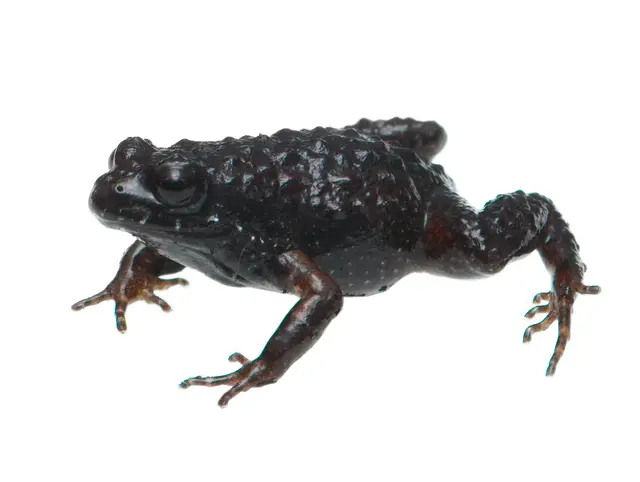
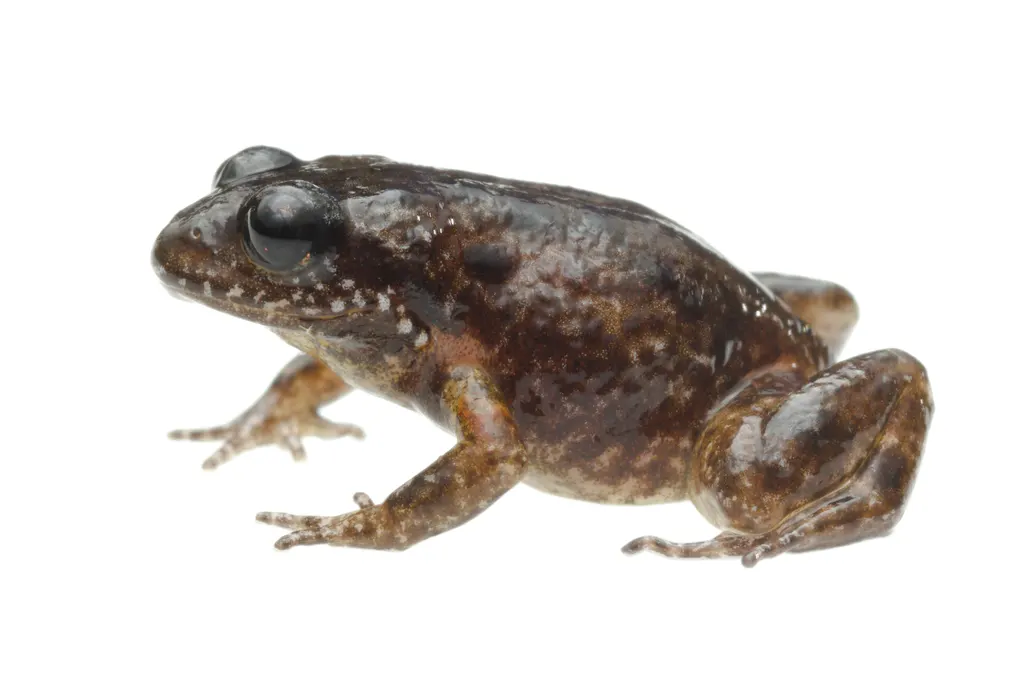
Arthroleptella subvoce, the northern moss frog, is a thumbnail-sized frog restricted to mountain seeps in the Groot Winterhoek mountains of South Africa's Western Cape. It is listed as Critically Endangered on the IUCN Red List (assessed 2026), mainly because fire and invasive plants threaten its tiny range.
How to recognise it
It is tiny. Adult males measure 12 to 13 millimetres, and the only female in the original series was 14 mm. The back is brown with darker blotches or bands, a dark stripe runs from the eye to the front leg, and the upper arm is orange-brown. The belly is pale and slightly speckled. The skin is smooth, the limbs are short and the toes have no webbing.
The scientific name subvoce means 'under voice'. Males call very quietly, with a short pulsed chirp followed by a series of evenly spaced double clicks, from the bases of dense restio clumps.
Where it lives
It is found only in the Groot Winterhoek mountains, at about 900 to 1,100 metres, in thickly vegetated seeps within mountain fynbos. Restios, the reed-like plants of the Cape, dominate these wet patches.
For years it was known from three localities, nearly all inside the Groot Winterhoek Wilderness Area. In October 2024, CapeNature announced a fourth, healthy population in the far south of the wilderness area. The IUCN now counts four locations and an area of occupancy of about 72 square kilometres.
Pins are Wikidata “endemic to” fields. Orange dots, when present, are GBIF occurrence tiles — survey bias included.
How it lives
Much of its life history remains unknown. Eggs and egg-bearing females have been recorded in August and September, with females laying 6 to 12 eggs in a single mass in well-vegetated seeps. Males stay hidden in dense vegetation while calling.
Why it is in trouble
The Red List criteria (B1ac(iv)) reflect a very small range and extreme swings in numbers. The population is listed as decreasing and severely fragmented. The threats named are more frequent and intense fires, changes to habitat, and invasive alien plants. One locality lies near homes, so water pollution is a possible risk.
A fire in April 2024 hit both populations that have been monitored yearly for about 20 years. Both survived, but relative abundance fell roughly fivefold at each site.
What is being done
The IUCN records that all of the population is inside protected areas, that a recovery plan and a regional management plan exist, and that invasive species control is in place. After the 2024 fire, CapeNature called for adaptive management, including firebreak designs meant to protect the frog's habitat, and described the fourth population as a reason for hope that more may exist.
Sources
Written for this catalog in our own words from the sources below, checked against them on 12 November 2026. Population figures are estimates and carry the year they were made. Status and assessment year: IUCN. 2026. The IUCN Red List of Threatened Species. Version 2026-1. iucnredlist.org.