Endangered
Eleutherodactylus intermedius
Eleutherodactylus intermedius
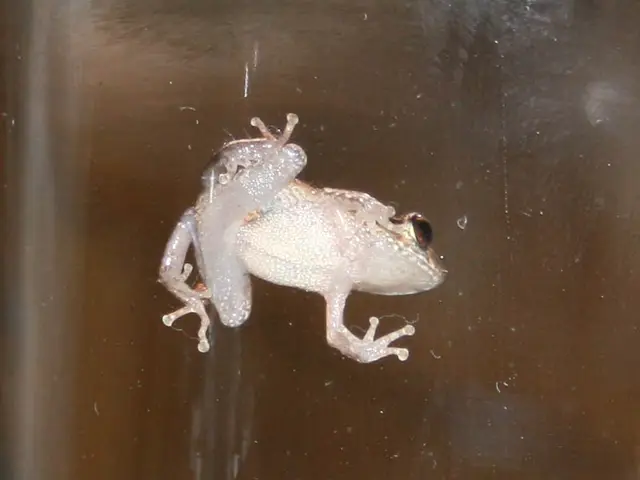
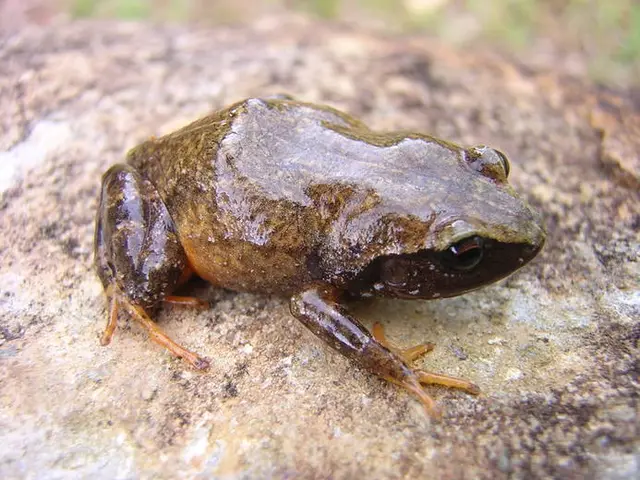
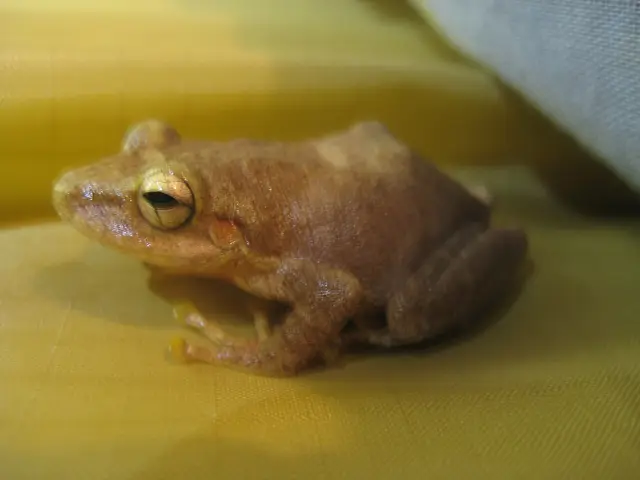
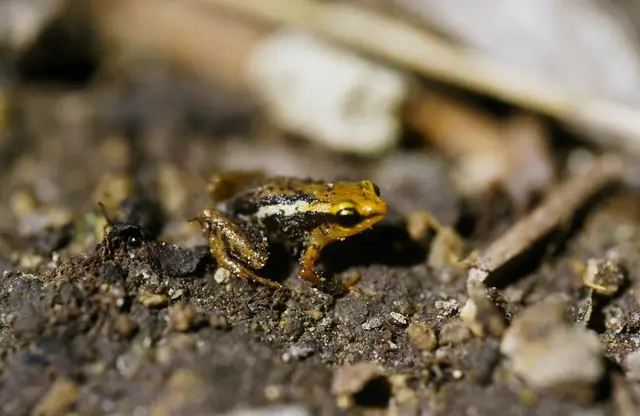
The Pico Turquino robber frog (Eleutherodactylus intermedius), listed by the Red List as the Oriente dark-bellied frog, is a tiny frog found only in the mountains of eastern Cuba. It has been rated Endangered since the 2023 assessment, and its population is shrinking in fragmented forest.
How to recognise it
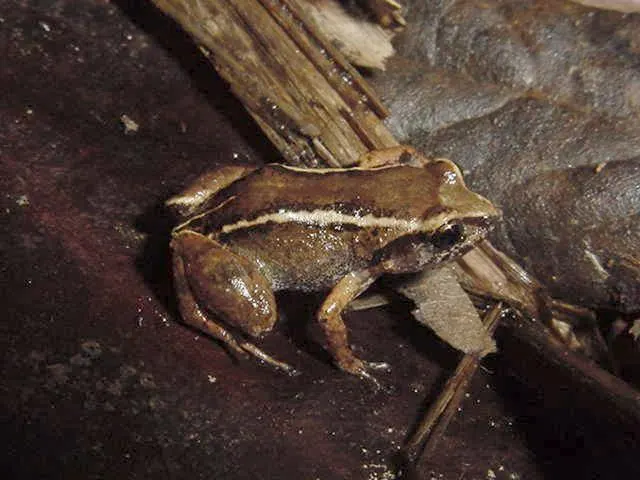
This is a very small frog. Males grow to about 17 mm from snout to vent and females to about 20 mm. Colour varies from light grey to very dark brown, often marbled or mottled. Some individuals carry a narrow whitish line along each side of the back, or a thin pale line down the middle.
The toes have no webbing and the fingertips have no expanded discs.
Where it lives
It is endemic to Cuba, meaning it lives nowhere else. Records come from the Sierra Maestra and the Sierra del Cobre in the east of the island. The Red List gives an elevation range of 800 to 1,970 m and estimates its total range at roughly 4,800 square kilometres.
The name refers to its type locality near Pico Turquino, at 1,975 m the highest peak in Cuba. The frog is known from Turquino National Park and the neighbouring Pico La Bayamesa National Park, both in the Sierra Maestra. Turquino reportedly holds some of the best-preserved cloud forest in the Caribbean.
Pins are Wikidata “endemic to” fields. Orange dots, when present, are GBIF occurrence tiles — survey bias included.
How it lives
The Pico Turquino robber frog is nocturnal. It lives in moist, closed forest and spends the day hidden under rocks, logs and other cover. It is uncommon even where the habitat looks suitable.
Every species in its genus, Eleutherodactylus, develops directly, meaning eggs hatch as miniature frogs with no tadpole stage. Breeding details specific to this frog are scarce.
Why it is in trouble
The 2023 assessment records a decreasing population in severely fragmented forest, with continuing decline in the area it occupies. The threats listed are small-holder farming, housing and urban development, and recreational activities, each rated low impact but ongoing. All of them clear, degrade or disturb the forest the frog needs.
Habitat loss is described as the main threat and is reported to continue even inside the two national parks where the frog occurs. The assessment also lists plantations among the habitats it uses.
What is being done
The frog occurs in at least one protected area, and the assessment lists site protection and site management as conservation actions. Research is recorded on its taxonomy, population size and distribution, life history and population trends, so there is still much to learn about it.
Sources
Written for this catalog in our own words from the sources below, checked against them on 12 November 2026. Population figures are estimates and carry the year they were made. Status and assessment year: IUCN. 2026. The IUCN Red List of Threatened Species. Version 2026-1. iucnredlist.org.