Endangered
Guerreran leopard frog
Lithobates omiltemanus
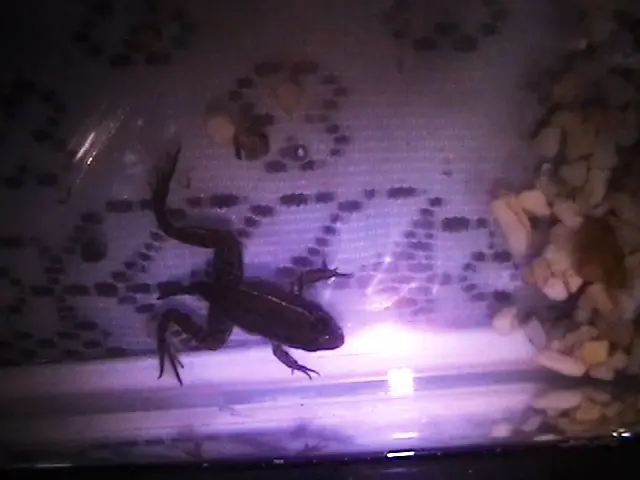
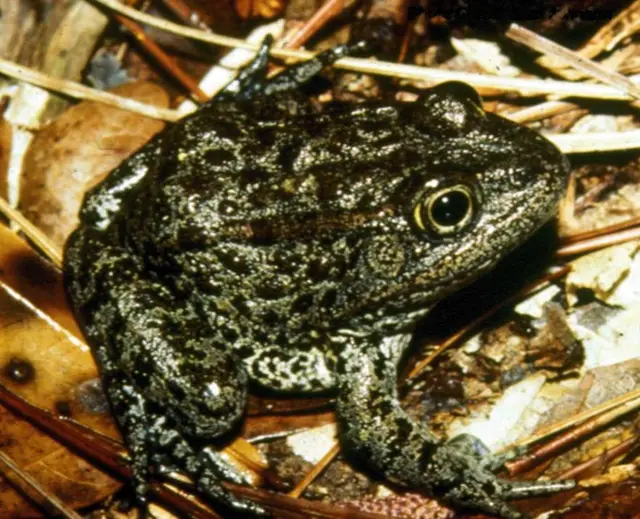
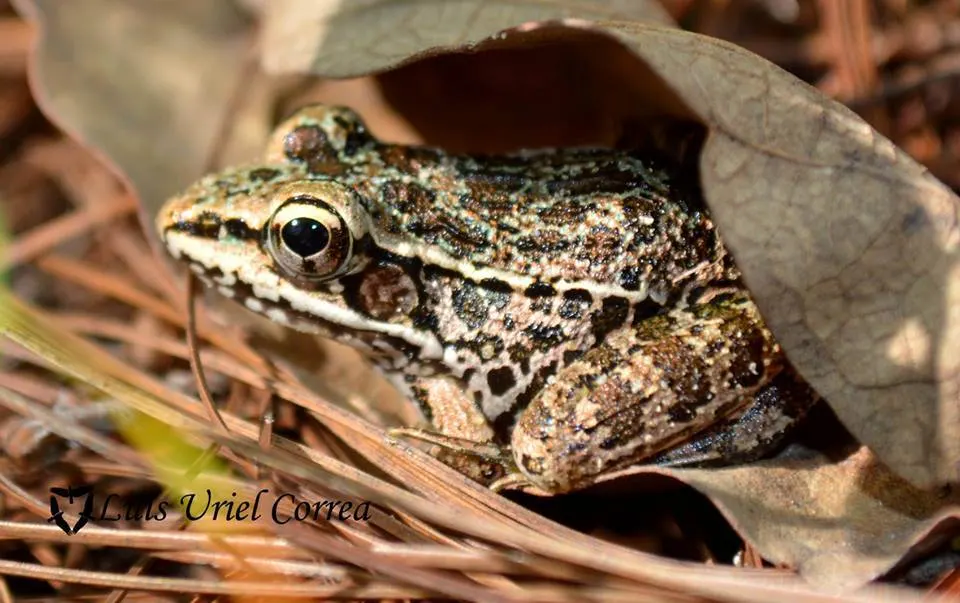
The Guerreran leopard frog (Lithobates omiltemanus) is a stream-breeding frog of the mountains of Guerrero, in the Sierra Madre del Sur of southern Mexico, and is found nowhere else. The IUCN Red List rated it Endangered in 2020. It is known from just two locations, and farming and water use are eating into its forest streams.
How it was named
Albert Günther described the frog in 1900 as Rana omiltemana, from Omilteme in Guerrero. Five type specimens are held in the British Museum. In 1948 two American herpetologists, Smith and Taylor, treated it as a synonym of the northern leopard frog (Rana pipiens). It is treated as a species of its own today, under the name Lithobates omiltemanus, with Rana omiltemana as a synonym.
Where it lives
The species is endemic to Guerrero, a mountain state in the Sierra Madre del Sur. The IUCN gives it two locations and an extent of occurrence of only about 1,361 square km. GBIF holds 121 records, nearly all museum specimens. They cluster around Omiltemi, Agua del Obispo and Tixtla, near Chilpancingo, and most were collected between the 1930s and 1960s.
Elevation figures disagree. It is described as a frog of montane forest around 2,400 m, yet the IUCN assessment gives a range of 300 to 2,000 m. The IUCN lists moist montane forest, moist lowland forest and permanent rivers and streams as its habitats.
Pins are Wikidata “endemic to” fields. Orange dots, when present, are GBIF occurrence tiles — survey bias included.
How it lives
Very little has been written about its life. It breeds in streams, and the IUCN classes it as non-migratory. The sources available give no reliable figures for its size, diet, clutch or lifespan.
Why it is in trouble
The IUCN lists small-holder farming, drawing water from streams for household use and small-scale accidental harvest among the ongoing threats, and records a continuing loss of habitat. The assessment also names a further species as an ongoing threat, without saying which.
How many frogs remain is unknown. GBIF holds specimens from Agua del Obispo as late as 1991 and one research-grade iNaturalist observation from Guerrero in 2025, but few records after the 1960s. An older assessment, from 2004, rated the frog Critically Endangered. The 2020 Red List entry rests on an evaluation dated 2014 and calls the trend stable, with no population estimate.
What is being done
The IUCN records that the frog occurs in at least one protected area. It calls for resource and habitat protection, site protection, livelihood alternatives that ease pressure on the forest, and a species recovery effort. Omiltemi Ecological State Park, about 15 km west of Chilpancingo, protects roughly 36 square km of forest at 1,800 to 2,800 m, and GBIF lists two frog records labelled with the park name.
Sources
Written for this catalog in our own words from the sources below, checked against them on 12 November 2026. Population figures are estimates and carry the year they were made. Status and assessment year: IUCN. 2026. The IUCN Red List of Threatened Species. Version 2026-1. iucnredlist.org.