Critically Endangered
Gastrotheca litonedis
Gastrotheca litonedis
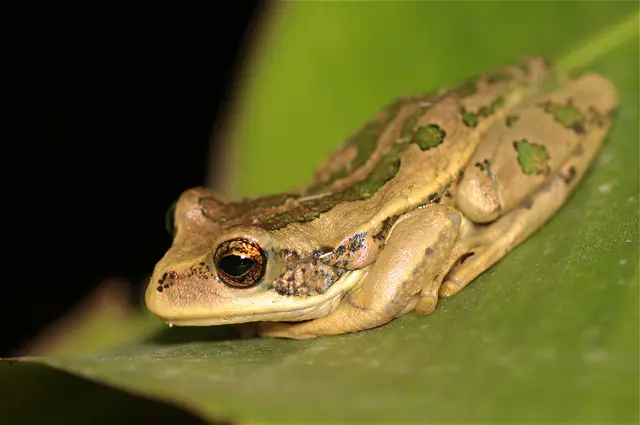
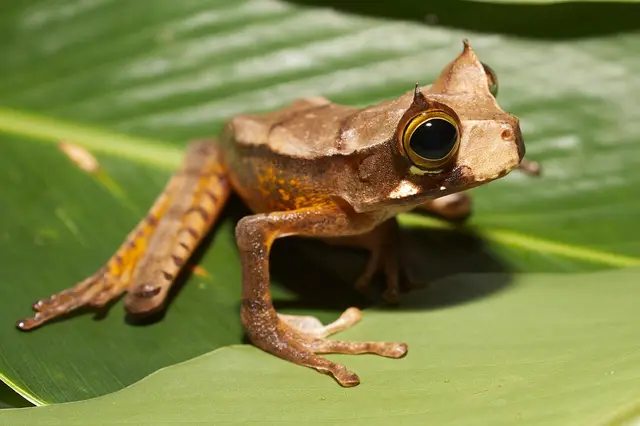
The Busa marsupial frog (Gastrotheca litonedis) is a green or brown, semi-arboreal frog from the high Andes of Ecuador, where the female carries her eggs in a pouch on her back. The IUCN's 2022 assessment rates it Critically Endangered, with a decreasing population in just one or two locations.
How to recognise it
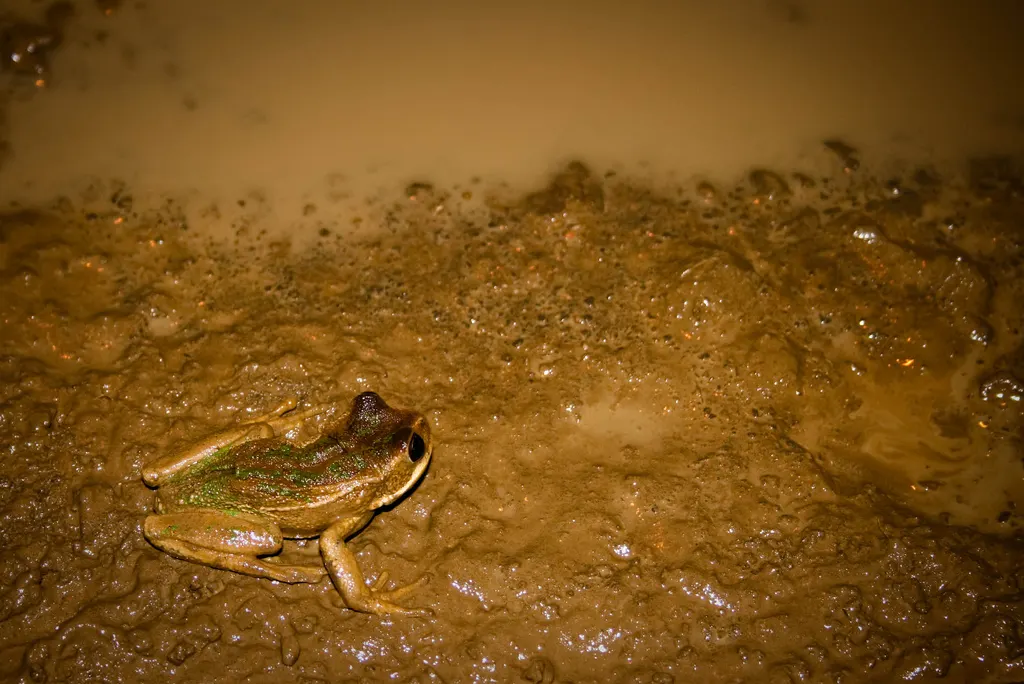
It's a fairly large frog. Adult males measure about 49 to 57 mm from snout to vent, and females are bigger at about 53 to 62 mm. The back is either all green or all brown, sometimes with dark brown marks. The flanks are bronze-brown, the armpits and groin pale blue, and the belly cream-grey, with a deep brown iris. The species name comes from Greek words for flat and belly. It's also called the Azuay marsupial frog, and in Spanish the rana marsupial de Busa.
A 2019 study in Zootaxa on marsupial frogs of the genus redescribed the species, including its calls and its tadpoles, whose colour changes as they grow.
Where it lives
The frog is endemic to Ecuador. The IUCN assessment counts one to two locations, with an estimated extent of occurrence of about 85 square kilometres, and places it between about 2,700 and 2,854 m above sea level. It lists high-altitude shrubland and grassland, permanent streams and seasonal marshes and pools as habitat. The frog is nocturnal and semi-arboreal, and it also reportedly occurs in forests and disturbed areas.
Pins are Wikidata “endemic to” fields. Orange dots, when present, are GBIF occurrence tiles — survey bias included.
How it lives
Like other marsupial frogs, the female carries her eggs in a pouch of skin on her back. She takes the tadpoles to still water, where they finish developing. The species is reported to need clean water to breed.
Why it is in trouble
The Red List records a continuing decline in both the population and the area it occupies. Listed threats include herbicides and pesticides, introduced carp and trout, chytrid fungus (Batrachochytrium dendrobatidis) and recreational activity. Introduced carp and trout reportedly eat the frogs, and plantations of eucalyptus and conifers have reportedly spread near its home. Heavy tourism has also been cited.
Chytrid fungus has been detected on the species, and it is believed to have caused significant losses before 2004. It's not thought to still kill many frogs. The assessment notes that the frog isn't known to occur in any protected area.
What is being done
The assessment lists resource and habitat protection and site protection as the actions needed. A 2019 Zootaxa study of Ecuador's marsupial frogs calls for urgent research and conservation for all surviving species, and notes that highland species with free-living tadpoles have survived events that wiped out many other frogs living alongside them.
Sources
Written for this catalog in our own words from the sources below, checked against them on 12 November 2026. Population figures are estimates and carry the year they were made. Status and assessment year: IUCN. 2026. The IUCN Red List of Threatened Species. Version 2026-1. iucnredlist.org.