Endangered
Small wrinkled frog
Small wrinkled frog
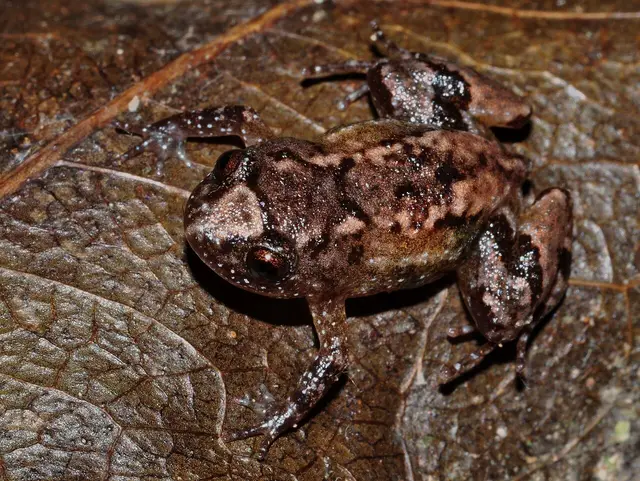
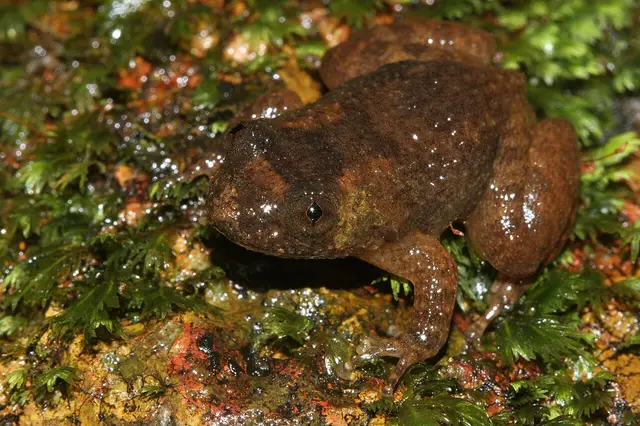
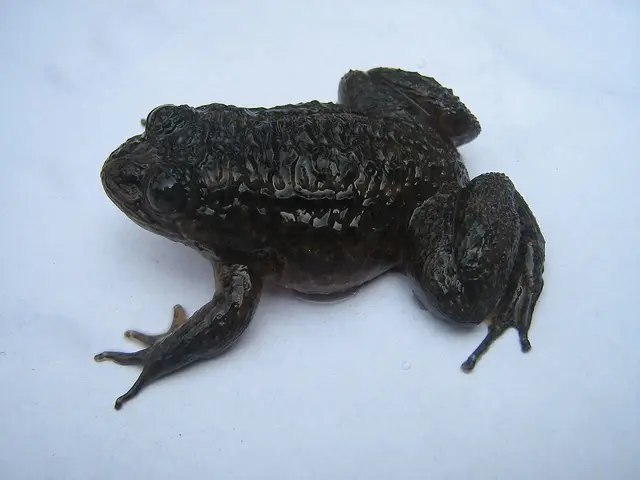
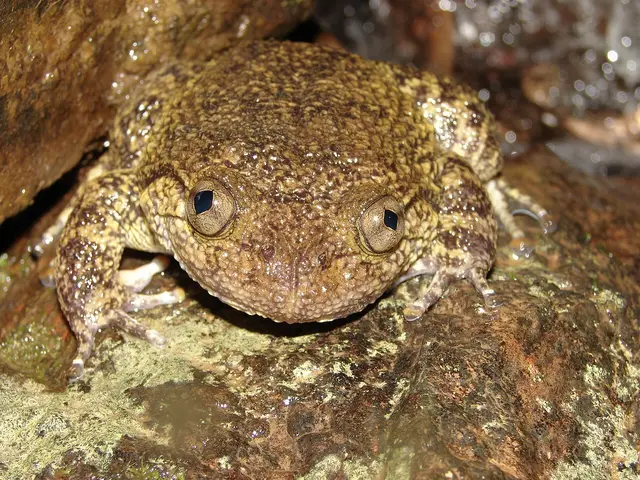
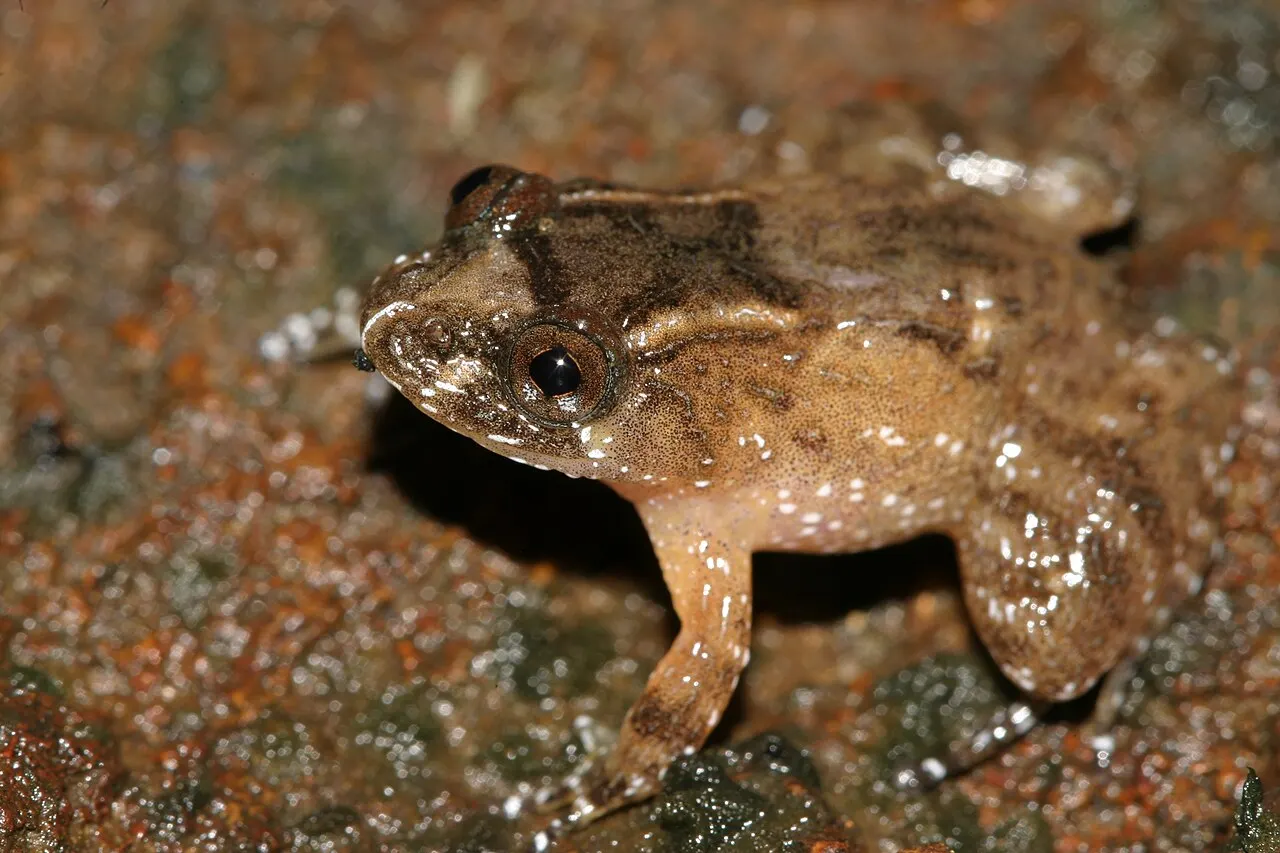
The small wrinkled frog (Small wrinkled frog) is a night frog that lives beside forest streams in the southern Western Ghats of Kerala, India. It was described in 1984. The IUCN Red List assessed it as Endangered in 2023 because its small forest range is shrinking.
How to recognise it
Night frogs (genus Nyctibatrachus) are sturdy-bodied, nocturnal frogs that live near streams in the hilly evergreen forests of the Western Ghats. They have a hidden eardrum and lengthwise skin folds on the back.
This species shows a pair of distinct glandular folds along the back, one on each side, separated on the front half of the back by an X-shaped pattern. That pattern helps tell it from some relatives, such as the tiny N. robinmoorei, whose folds are only weakly developed.
Where it lives
Robert Inger and colleagues described the species in 1984. It is endemic to the southern Western Ghats, with records from the Ponmudi Hills and Wayanad Wildlife Sanctuary, both in Kerala. Reports from outside Kerala still lack confirmation, though the species probably occurs more widely than the records show.
The 2023 Red List assessment gives an extent of occurrence of about 652 square kilometres, split between one and five locations, at 300 to 1,400 metres above sea level. It occurs in at least one protected area.
Pins are Wikidata “endemic to” fields. Orange dots, when present, are GBIF occurrence tiles — survey bias included.
How it lives
It is semi-aquatic, found along hill streams and rivers in tropical moist forest, from lowland to montane. It can turn up at the forest edge but not in heavily cultivated land. An IUCN specialist group profile from around 2004 calls it uncommon. Almost nothing is recorded about its breeding. Related night frogs breed in streams with free-living tadpoles, and the profile presumes the same for this species, but it has not been documented.
Why it is in trouble
Conversion of forest to farmland and to tea and coffee plantations has long been named as the main threat. The 2023 assessment lists a wider set. Soil erosion and sedimentation, rubbish dumping and roads are ongoing and rated low impact. Unintentional small-scale harvest and recreation are ongoing with unknown impact, and habitat alteration is listed as a future, negligible concern.
The chytrid fungus (Batrachochytrium dendrobatidis) is listed as a possible threat of unknown effect. The IUCN records a continuing decline in the area the frog occupies and a decreasing population trend.
What is being done
The frog is covered by Indian national legislation and has been reported from Wayanad Wildlife Sanctuary. The IUCN lists protection of resources and habitat as the action needed, and calls for research on population trends, life history and threats.
Sources
Written for this catalog in our own words from the sources below, checked against them on 12 November 2026. Population figures are estimates and carry the year they were made. Status and assessment year: IUCN. 2026. The IUCN Red List of Threatened Species. Version 2026-1. iucnredlist.org.
- IUCN Red List assessment, Small wrinkled frog (2023)
- Globally Threatened Amphibian Species, IUCN SSC Amphibian Specialist Group profiles (Part 4, p. 489)
- Garg et al. 2017, Nyctibatrachus robinmoorei description (Zenodo record)
- Nyctibatrachus (genus article)
- GBIF, Small wrinkled frog
- Small wrinkled frog (encyclopedia article)