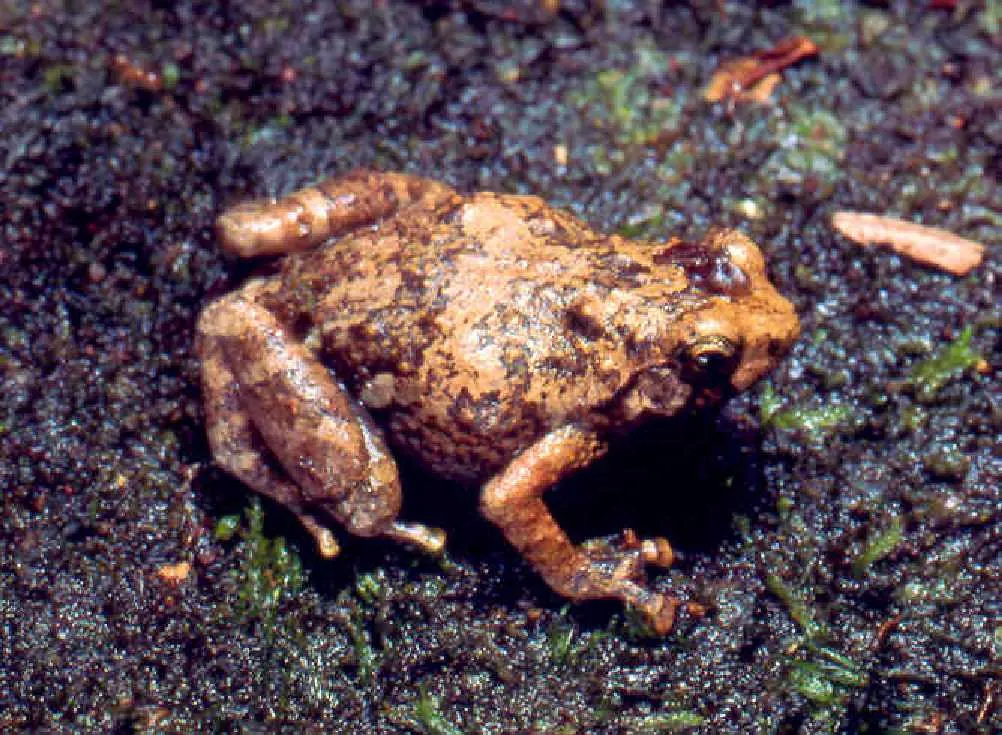
Endangered
Black-throated climbing frog
Black-throated climbing frog
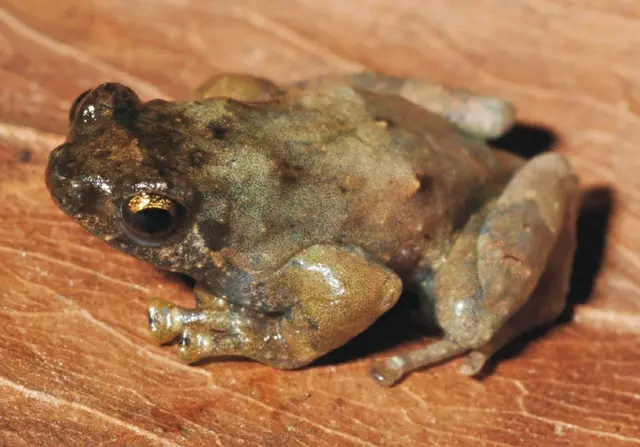
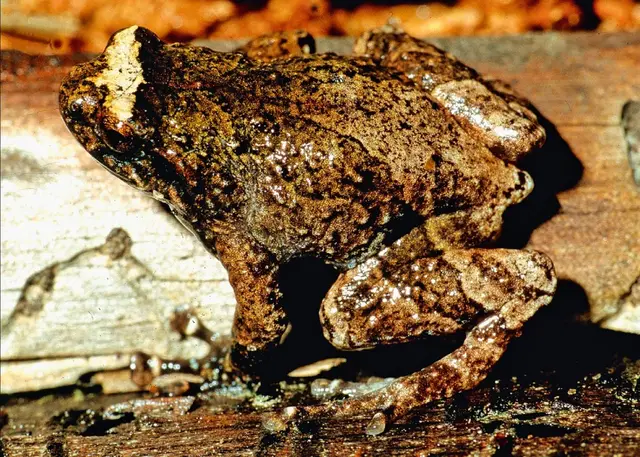
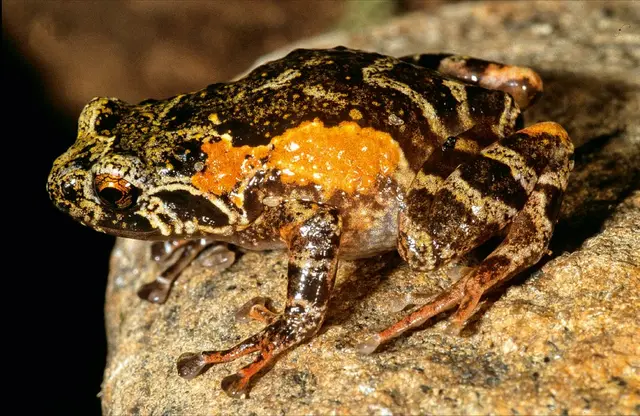
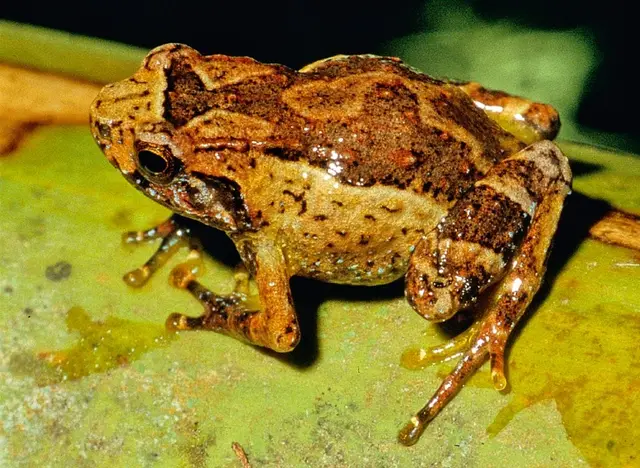
The black-throated climbing frog (Black-throated climbing frog) is a small microhylid frog found only in Madagascar. It lives in lowland rainforest in the south-east and is listed as Endangered on the IUCN Red List (2016 assessment), with a decreasing population, a small range and very little published natural history.
What it is
Frank Glaw and Miguel Vences described the species in 1992. It belongs to Anodonthyla, a Madagascan genus of arboreal frogs in the subfamily Cophylinae, a group of microhylid frogs. The English name is black-throated climbing frog.
Its identity is not fully settled. In 2010 Vences and colleagues used DNA, calls and anatomy to revise the genus in Contributions to Zoology. Their trees showed that several named species, A. nigrigularis and A. boulengeri in particular, were polyphyletic: animals under one name fell into more than one separate lineage. The same study described four new species and restored another from synonymy. Older records under this name may therefore include other frogs.
Where it lives
Madagascar is the only country. The IUCN treats the frog as occurring at between one and four locations, from sea level up to about 500 m, across an estimated extent of occurrence of 2,272 square kilometres. Andohahela National Park, in the far south-east, is a known site, where the frog is reportedly abundant.
Its habitat is lowland moist forest, and it has also been recorded in heavily degraded former forest. The total population hasn't been counted.
Pins are Wikidata “endemic to” fields. Orange dots, when present, are GBIF occurrence tiles — survey bias included.
Why it is in trouble
The 2016 assessment names shifting agriculture, small-scale farming and grazing, housing, and increased fire frequency as ongoing threats, each rated low impact, along with unintended effects of small-scale harvesting. The spread of non-native eucalyptus is also reported as a pressure. These clear or degrade forest, and the IUCN records a continuing decline in the area the frog occupies.
The listing has moved up the scale. It was rated Data Deficient in 2004 and 2008 before the 2016 Endangered assessment, which used criterion B1ab(iii), a small range with continuing habitat decline.
What is being done
The frog is recorded from at least one protected area. The IUCN lists site protection, site management and habitat protection as the conservation actions needed or in place. No species-specific programme or captive population is described.
Sources
Written for this catalog in our own words from the sources below, checked against them on 12 November 2026. Population figures are estimates and carry the year they were made. Status and assessment year: IUCN. 2026. The IUCN Red List of Threatened Species. Version 2026-1. iucnredlist.org.