Endangered
Anodonthyla emilei
Anodonthyla emilei
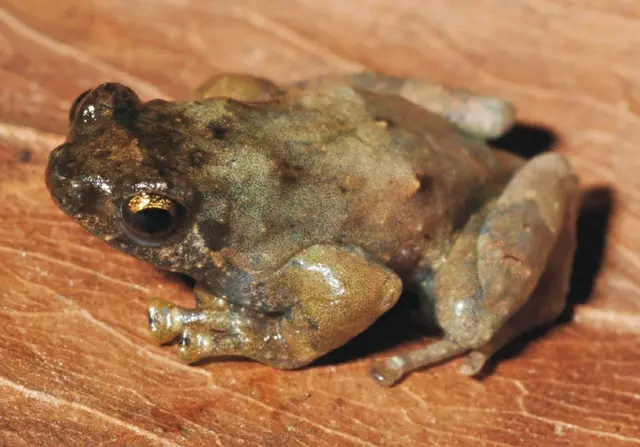
Anodonthyla emilei is a medium-sized tree frog in the narrow-mouthed frog family Microhylidae. It is known only from the rainforest of Ranomafana National Park in southeastern Madagascar. The IUCN Red List assessed it as Endangered in 2015. Its call, a short burst of rapid notes, differs from those of other known Anodonthyla.
How to recognise it
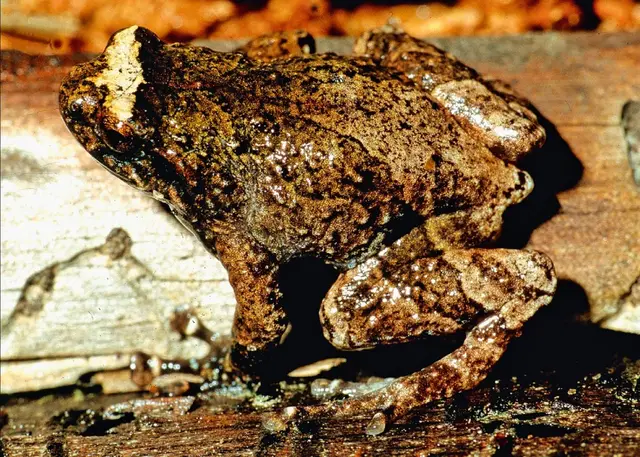
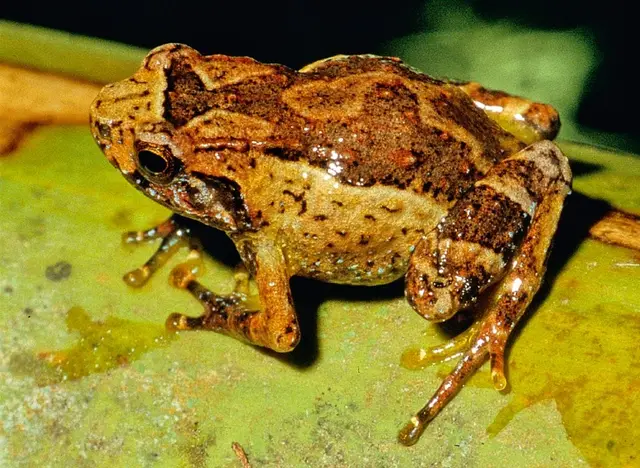
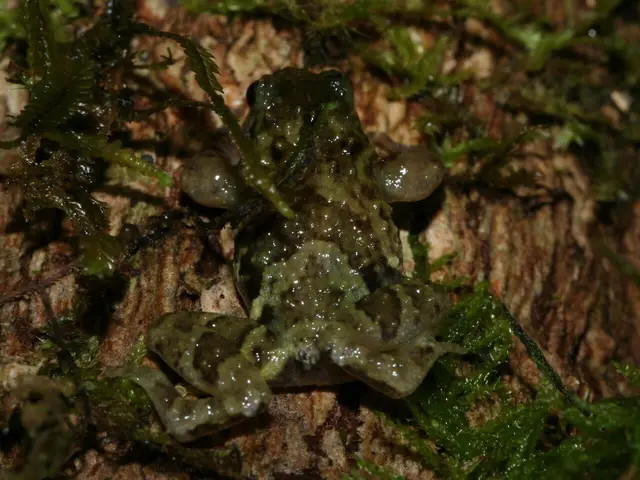
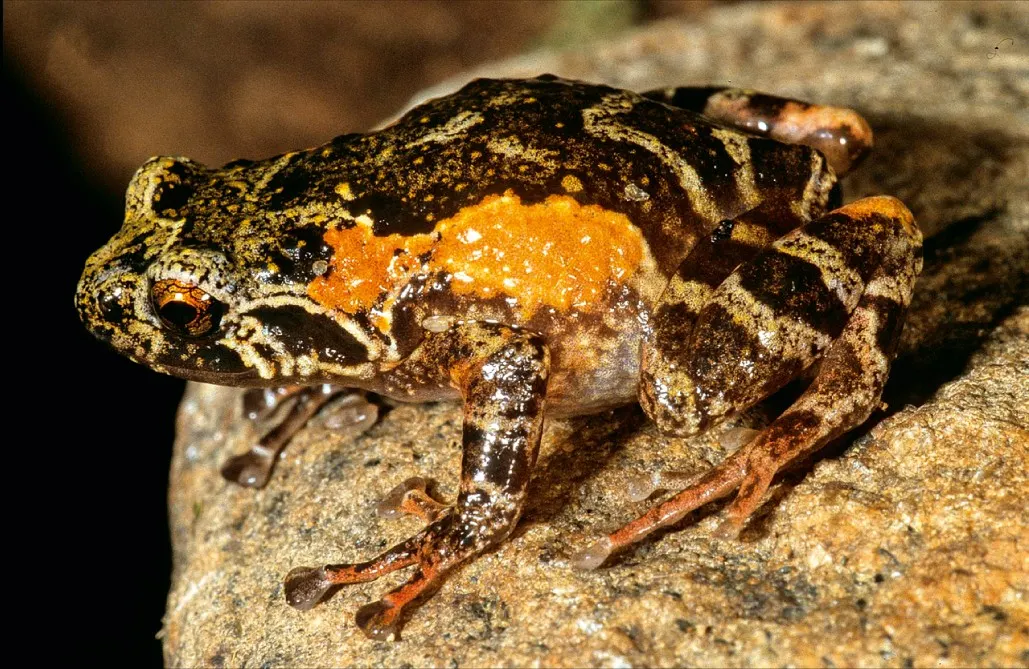
Among its relatives this is a big frog. Adult males measure 24 to 27 mm from snout to vent, larger than most other Anodonthyla species (15 to 23 mm) though smaller than the mountain species A. montana (32 to 34 mm). Colour is variable. The type specimen was brown with cream markings, scattered orange flecks and a bright orange patch on each flank, and the iris had a copper tint.
Orange patches were common in the type series but not universal, since one male had none. Living frogs vary from almost smooth skin to scattered or fine tubercles, and the type specimen had only slightly thickened arms. Together with its DNA and call, these set it apart, and it was described as new in 2010 by Miguel Vences, Frank Glaw, Jörn Köhler and Katharina Wollenberg. It is named for Emile Rajeriarison, a nature guide at Ranomafana who was present when several of the first specimens were found.
What it sounds like
Most Anodonthyla call in long, regular strings of notes that can run for minutes. This one calls in short series of 13 or 14 melodious notes, each lasting 58 to 81 ms, delivered at about five notes per second. A series lasts roughly 2.3 to 2.6 seconds and the gaps between series are irregular. These figures come from only three recorded series. The 2010 paper called it the most divergent call in the genus.
Where it lives
The frog has been recorded only in Ranomafana National Park, at Samalaotra and Maharira, at about 900 to 1,000 m above sea level. At Maharira it was not rare and its calls were heard often, yet it was absent from several other sites in and around the park despite intensive searching. The IUCN estimates its extent of occurrence at 824 square kilometres and counts one to four locations. It uses both lowland and montane moist forest.
Males called at night from tree trunks 2 to 3 m up, and in one case from inside a tree hole with a very small entrance. One frog was found with eggs in a tree hole, which hints that it may breed above ground in the forest rather than in ponds.
Pins are Wikidata “endemic to” fields. Orange dots, when present, are GBIF occurrence tiles — survey bias included.
Why it is in trouble
A small range puts it at risk, and the 2015 assessment, under criterion B1ab(iii), records an ongoing decline in the area of its habitat. The listed threats are small-holder farming, shifting agriculture, grazing, mining and quarrying, housing, and small-scale harvesting that harms it unintentionally. The overall population trend is listed as decreasing. Population size is not known.
The frog's describers had themselves proposed Endangered in 2010, citing an extent of occurrence under 5,000 square kilometres, fewer than five locations and a probable continuing decline in habitat.
What is being done
The IUCN records that all of the known population lies inside a protected area, and lists site and area management as an action needed. No systematic monitoring scheme is in place.
Sources
Written for this catalog in our own words from the sources below, checked against them on 12 November 2026. Population figures are estimates and carry the year they were made. Status and assessment year: IUCN. 2026. The IUCN Red List of Threatened Species. Version 2026-1. iucnredlist.org.