Endangered
Moramora Climbing Frog
Anodonthyla moramora
Anodonthyla moramora is a tiny tree-climbing frog, only about 15 to 16.5 mm long, from the rainforests around Ranomafana in south-eastern Madagascar. Scientists described it only in 2005. The IUCN Red List assessed it as Endangered in 2016 because its range is very small and its forest is shrinking.
How to recognise it
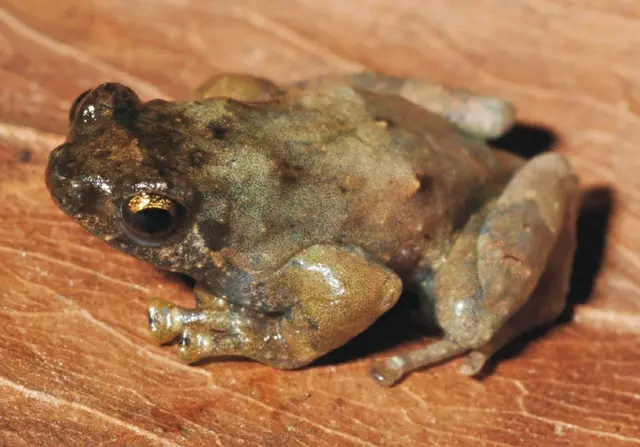
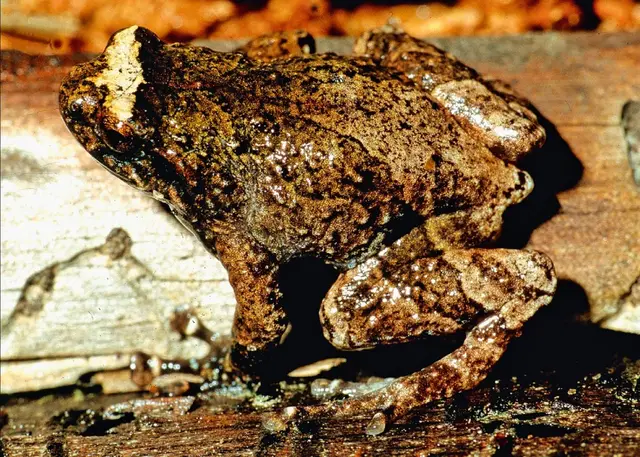
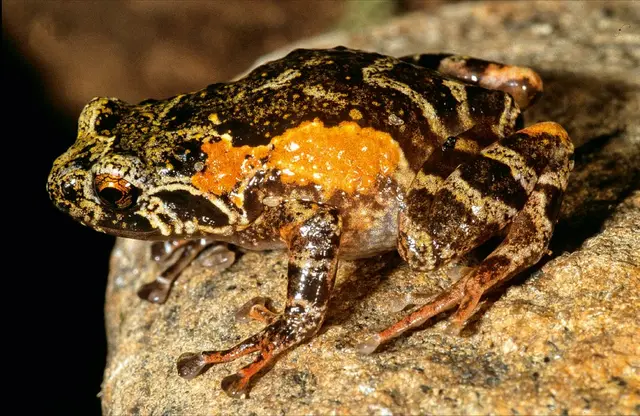
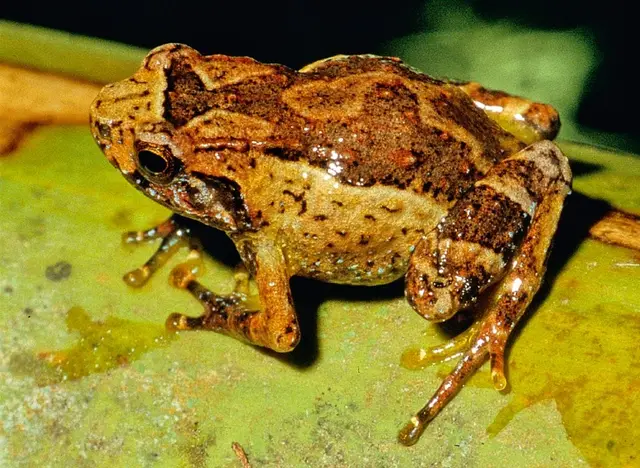
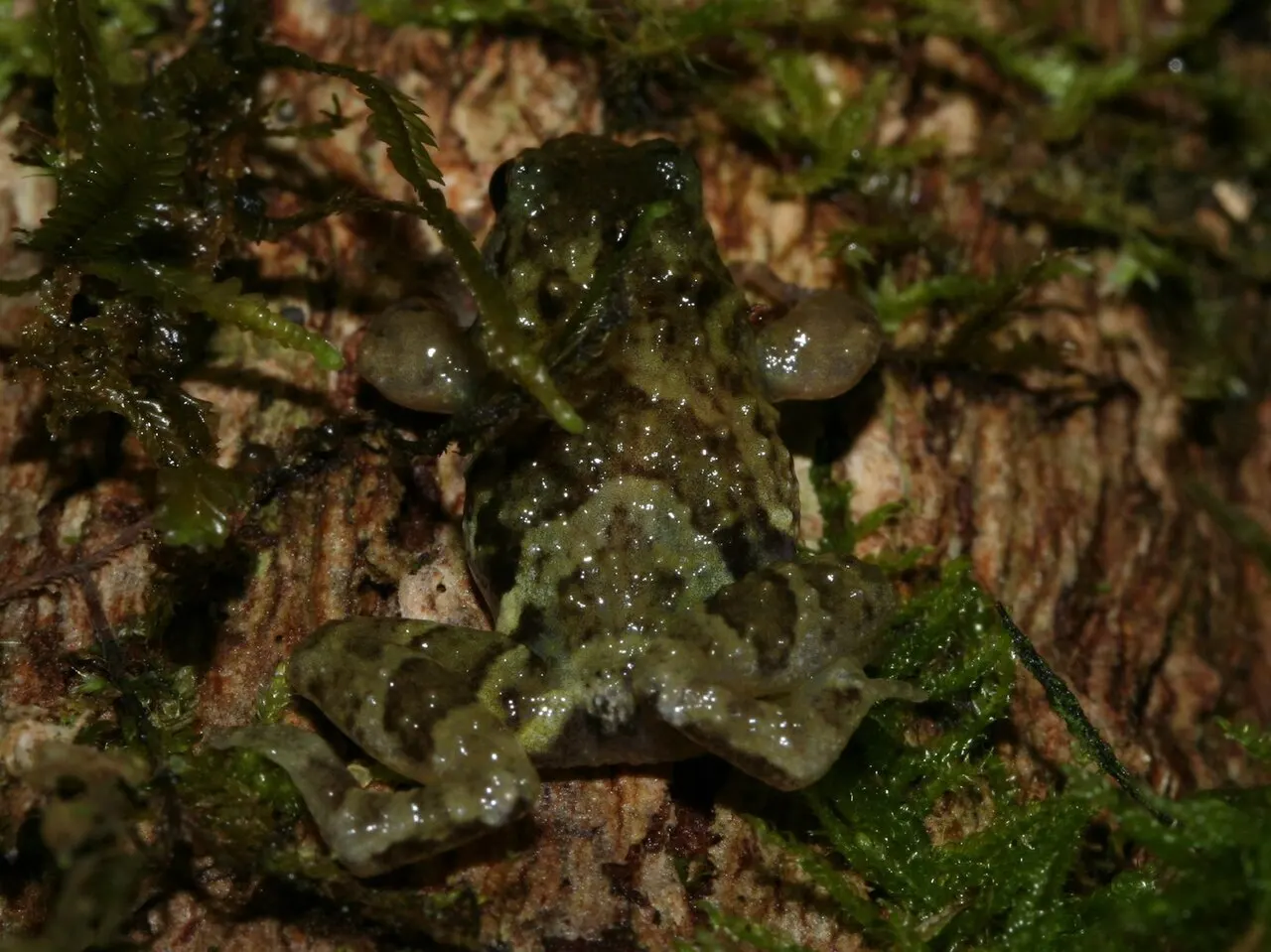
This is the smallest known frog in its genus. Adults measure only 15 to 16.5 mm from snout to vent, in both sexes. The body is slender, the head is as wide as it is long, and the toes have no webbing. The finger tips are enlarged into triangular discs, which suit a frog that climbs. Males have a large, distinct prepollex on the hand, a feature used to place the frog in its genus.
In life the back is light beige to greenish-brown, crossed by three or four dark brown bars or V-shaped markings. The belly is olive green or pale grey with a darker grey chest. The similar Anodonthyla boulengeri is bigger (16 to 22 mm in males) and lacks greenish tones, so the voice is the best field clue. This frog repeats its call far more slowly, at 0.6 to 0.9 notes per second against 1.8 to 3.1 for A. boulengeri.
Where it lives
It is known only from the Ranomafana region of south-eastern Madagascar, from Ranomafana village at roughly 550 m above sea level up to the Kidonafo bridge near Vohiparara at about 1,000 m. Frank Glaw and Miguel Vences, who described it, searched the rainforests around Andasibe and Moramanga further north and never found it, so they treated it as a regional endemic of the south-east. The IUCN counts two locations and estimates the extent of occurrence at about 685 square kilometres, in subtropical or tropical moist lowland forest. At least part of its range lies in a protected area.
Pins are Wikidata “endemic to” fields. Orange dots, when present, are GBIF occurrence tiles — survey bias included.
How it lives
It is arboreal. In the 2005 description, calling males were observed mostly after dusk in primary rainforest and in secondary growth, perched head-up on tree trunks 50 to 150 cm above the ground. Others called from small tree holes or from under thick moss, some before dark. Calling was regularly heard in January, February and March, which suggests a long breeding season in the rainy months. The only female found in the original study was sitting near a calling male. Near Ranomafana village it occurs alongside A. boulengeri.
The name comes from the Malagasy phrase mora mora, meaning slowly or calmly, a reference to the leisurely call.
Why it is in trouble
The Red List assessment, published in 2016 under criterion B1ab(iii), reflects a small range and continuing decline in the area of habitat. It lists small-holder farming and grazing, shifting agriculture, housing, mining and small-scale harvesting as ongoing threats, most of them scored as low impact. The population trend is decreasing, and no population size has been estimated.
The picture has shifted over time. When Glaw and Vences described the species in 2005, they called it relatively common around Vohiparara and, because it occurs inside Ranomafana National Park, not threatened, while stressing that more survey work was needed. An earlier Red List entry (2008) had it as Data Deficient. The 2016 assessment treats the small range and shrinking habitat as the main concern.
What is being done
The main protection is the national park, since the frog occurs in at least one protected area. The IUCN lists site management and habitat protection as the conservation actions needed, and recommends more research on its population size, distribution and trends.
Sources
Written for this catalog in our own words from the sources below, checked against them on 12 November 2026. Population figures are estimates and carry the year they were made. Status and assessment year: IUCN. 2026. The IUCN Red List of Threatened Species. Version 2026-1. iucnredlist.org.