Endangered
Astylosternus laurenti
Astylosternus laurenti
Laurent's night frog (Astylosternus laurenti) is a stream-breeding frog from the lowland forests of south-western Cameroon, found nowhere else. The IUCN Red List rated it Endangered in 2017. Its range is small, its forest is being cleared for farms and housing, and its numbers are falling.
What kind of frog it is
It belongs to Astylosternus, a group of West and Central African frogs in the family Arthroleptidae, and was described by Jean-Louis Amiet in 1978. Its English name is Laurent's night frog. The IUCN lists it as a frog of lowland moist forest and permanent rivers and streams, including waterfalls.
What the tadpole looks like
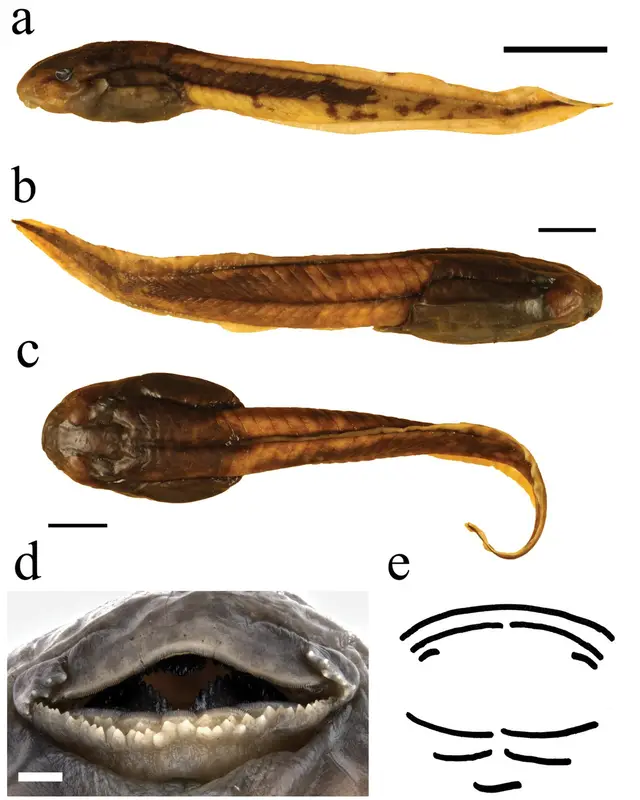
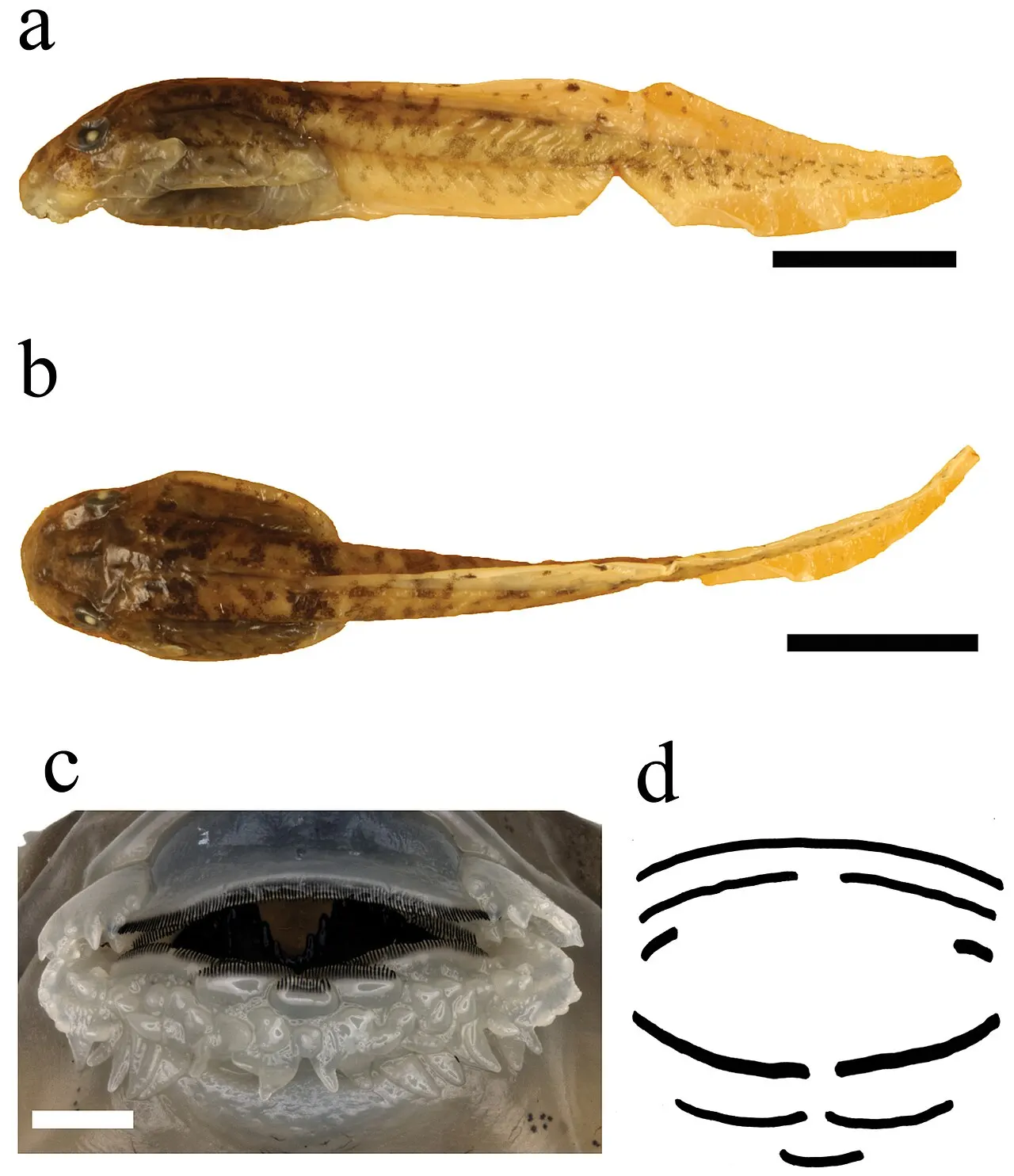
The tadpole is the best-described life stage. A 2019 study in Zoosystematics and Evolution by Griesbaum and colleagues gave the first description, based on a single tadpole caught in a forest stream in Korup National Park, Cameroon, on 22 May 2014 at 564 metres. A DNA comparison with an adult from Banyang-Mbo, Cameroon, differed by only 0.2 per cent, which is how it was assigned to this species.
It is a long, slender tadpole with a muscular tail and narrow fins. The jaw sheaths are black, massive and serrated, and the upper one has a small fang in the middle. It measured 51.7 millimetres (about 2 inches) in total length, and was light brown, darker on the back, with irregular dark brown spots on the back and tail.
Where it lives
The frog occurs only in Cameroon. The IUCN puts its elevation range at 400 to 850 metres, its extent of occurrence at roughly 4,065 square kilometres, and the number of locations at between one and five. It does not consider the population severely fragmented.
Pins are Wikidata “endemic to” fields. Orange dots, when present, are GBIF occurrence tiles — survey bias included.
It may not be a separate species
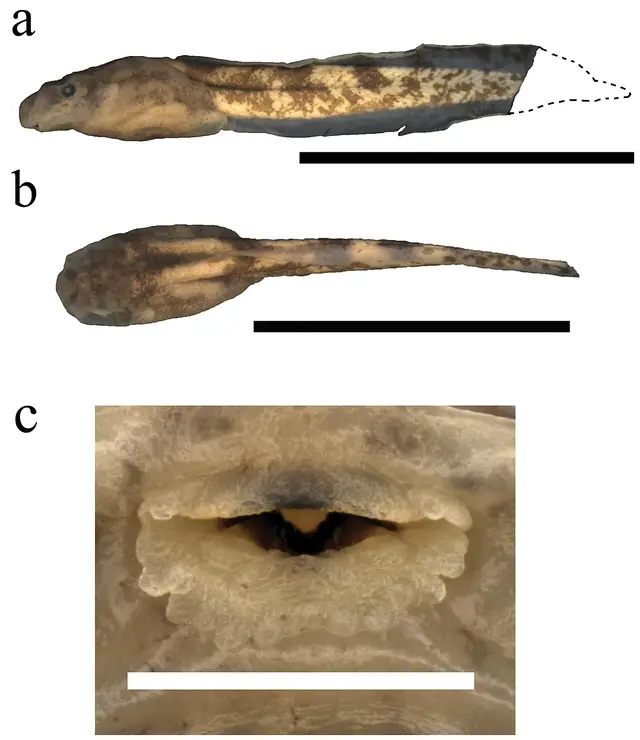
The same 2019 study found that the tadpoles of the close relative Astylosternus fallax are very similar to those of A. laurenti and to a third form it called A. cf. fallax, which is genetically intermediate. The uncorrected DNA difference between A. laurenti and A. fallax was 2.55 per cent, and 1.99 per cent between A. laurenti and the intermediate form.
The study concluded that more morphological and genetic work is needed to decide whether the three lineages are distinct species or one genetically variable species. So A. laurenti may turn out to be conspecific with A. fallax. The IUCN and GBIF currently list it as a valid species.
Why it is in trouble
The IUCN gives the population trend as decreasing and records a continuing decline in the area the frog occupies. The listed threats are small-holder farming, housing and urban development, and small-scale harvesting with unintended effects. The frog lives in lowland forest and streams, which these pressures clear or degrade.
The frog is known to occur in at least one protected area, and the IUCN lists protection of the habitat and of sites as the conservation actions needed.
Sources
Written for this catalog in our own words from the sources below, checked against them on 12 November 2026. Population figures are estimates and carry the year they were made. Status and assessment year: IUCN. 2026. The IUCN Red List of Threatened Species. Version 2026-1. iucnredlist.org.