Endangered
Cape clawed toad
Xenopus gilli
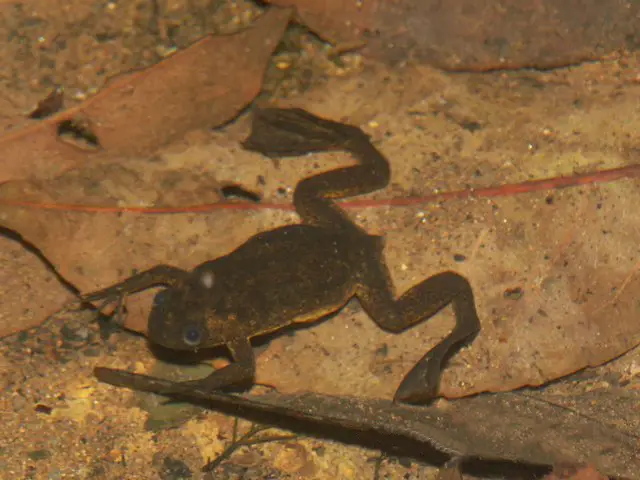
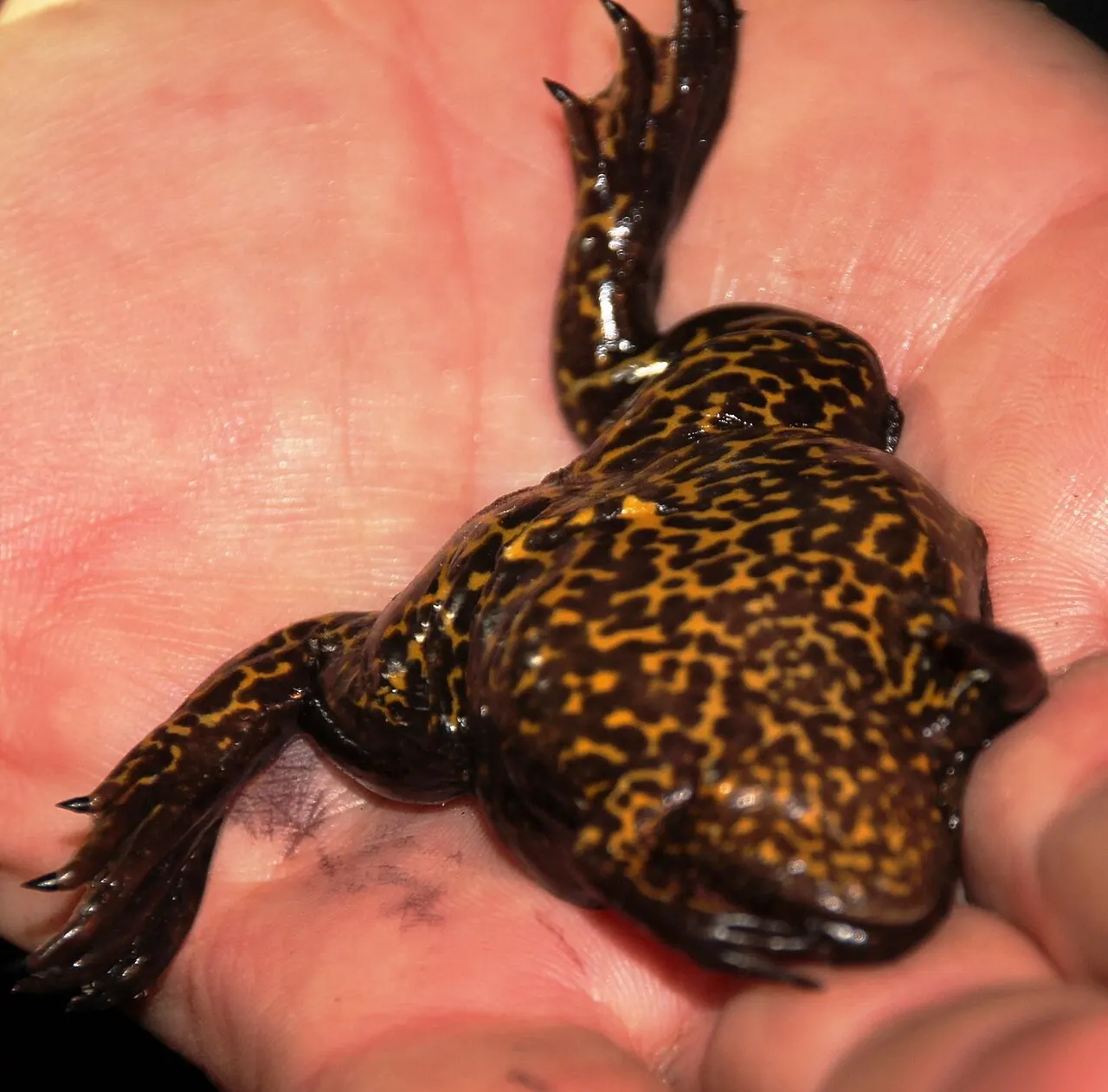
The Cape platanna (Xenopus gilli) is a small, fully aquatic frog of acidic, tea-coloured ponds in the lowland fynbos of South Africa's Western Cape. It is found in only three separate areas. The IUCN assessed it as Endangered in 2025, with a decreasing population.
Where it lives
The species is endemic to South Africa and occupies three disjunct patches of the south-western Cape. One is the Cape of Good Hope section of Table Mountain National Park, and the other two are near the towns of Kleinmond and Pearly Beach. Heavily modified land lies between them. The western population is inside a park, while the eastern ones are mostly on private, unprotected land.
The IUCN gives its extent of occurrence as about 4,724 square kilometres, at elevations from 10 to 140 m, and describes the population as severely fragmented.
Pins are Wikidata “endemic to” fields. Orange dots, when present, are GBIF occurrence tiles — survey bias included.
How it lives
This is a frog of seasonal and permanent freshwater pools and marshes under Mediterranean-type shrubland, and it also uses small artificial ponds. The pools are dark and acidic, stained by compounds leaching from the surrounding vegetation.
Why it is in trouble
Land development takes the ponds. The Red List names commercial and industrial areas, housing, tourism and recreation areas, and nutrient pollution. Alien invasive plants also degrade the wetlands, and a 2013 study in PeerJ called for urgent action against them.
The other pressure is the African clawed frog, which has moved into the platanna's ponds and can outnumber it three to one in some. The 2013 PeerJ study of 130 frogs from eight ponds found hybrids with Xenopus laevis throughout the range, reaching at least 27 percent in some ponds. A 2017 paper in Scientific Reports reported fewer hybrids in the Cape of Good Hope area, about 2.5 percent, against 8 to 27 percent in the east.
How much damage hybridisation does is debated. The 2017 genetic study found hybrids but no sign that genes were passing between the species, and suggested the hybrids have low fitness and rarely breed back. It also noted that the larger clawed frogs may crowd out platanna males at breeding time.
What is being done
In the mid-1980s managers in the Cape of Good Hope section walled off a pond, moved pure platannas to sites free of clawed frogs, and removed Xenopus laevis by hand. That removal stopped in 2000 and restarted in 2011. The eastern populations, largely on unprotected land, never got the same treatment.
The Red List records site management, wetland restoration, an area management plan and invasive species control in place.
Sources
Written for this catalog in our own words from the sources below, checked against them on 12 November 2026. Population figures are estimates and carry the year they were made. Status and assessment year: IUCN. 2026. The IUCN Red List of Threatened Species. Version 2026-1. iucnredlist.org.