Endangered
Munnar bush frog
Munnar bush frog
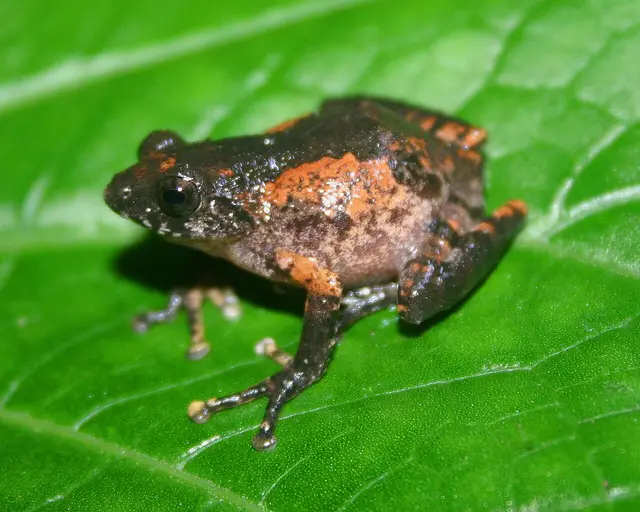
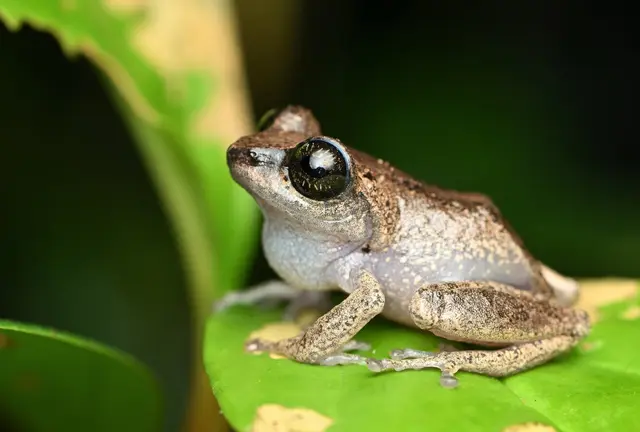
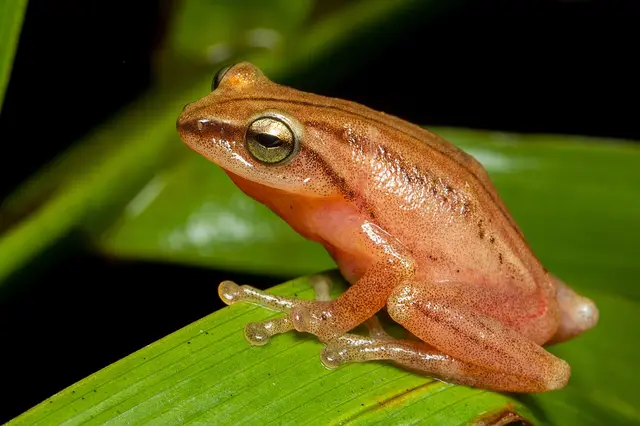
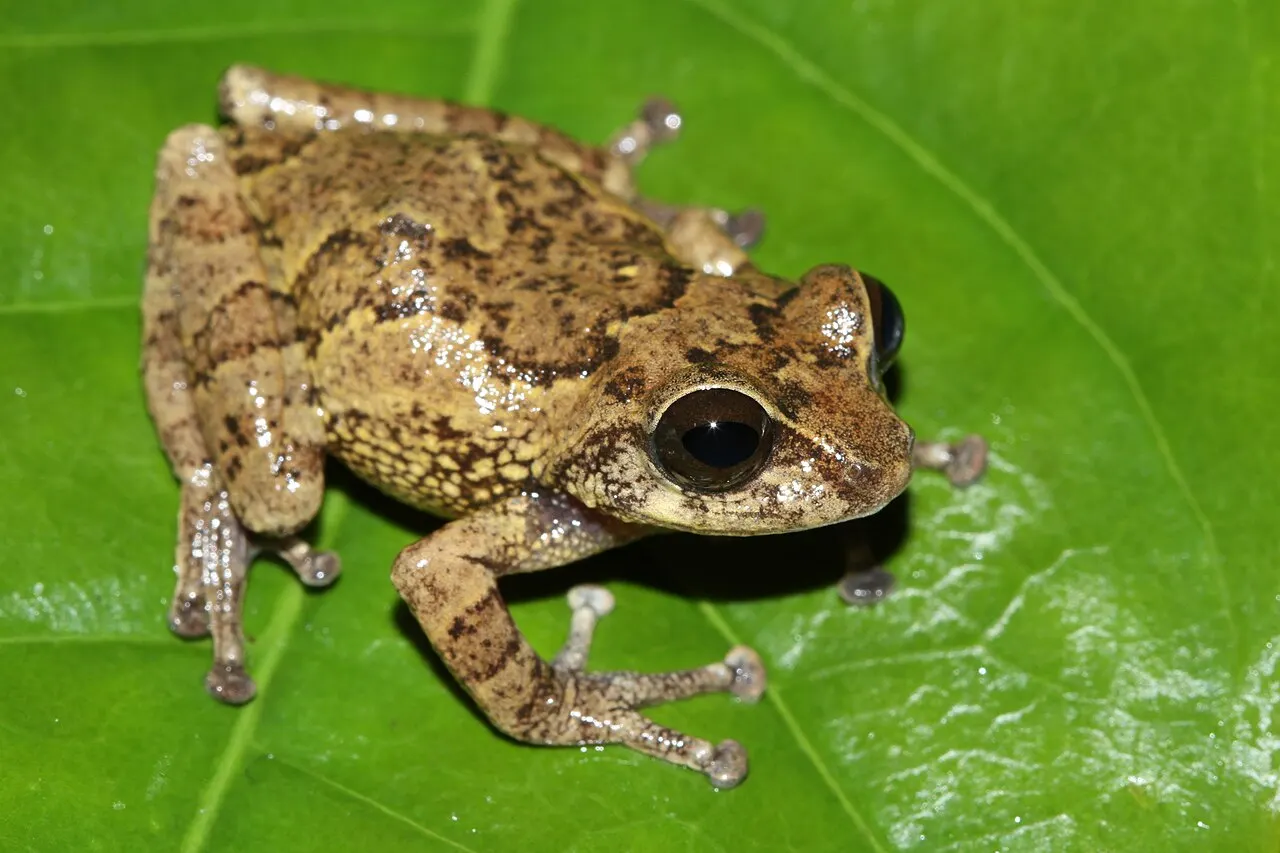
The Munnar bush frog is a small tree frog from the high hills of the southern Western Ghats in India. It was first described in 2009 from near Munnar in Kerala. The IUCN Red List assessed it as Endangered in 2022, as its montane forest habitat is being cleared and fragmented.
How to recognise it
It's a small, sturdy-bodied frog. Six adult males in the original description averaged about 30 mm from snout to vent, and the holotype measured 28.8 mm. The snout is rounded when seen from above, which separates it from the pointed-snouted Philautus signatus, a related frog it was compared with. The groin is light brownish yellow marbled with brown, and the fingers and toes carry prominent small tubercles.
Naming and classification
Biju and Bossuyt described it in 2009 as Philautus munnarensis, in a paper that named 12 new bush frogs from the Western Ghats. It has since been moved to the genus Raorchestes, and the name Pseudophilautus munnarensis also appears in the literature. The type locality is on the road from Munnar to Devikulam in Idukki district, Kerala. The Global Biodiversity Information Facility lists Munnar bush frog as an accepted species with no synonyms other than its original name.
Where it lives
The IUCN lists the frog from Kerala and from Tamil Nadu, and gives an elevation range of 1,400 to 2,000 m in moist montane forest. Older accounts described it as known only from a tiny area of under 20 square km of secondary vegetation beside forest along the Ghat road, with specimens found near, but not inside, a tea plantation. The 2022 IUCN assessment gives a much larger extent of occurrence, about 2,746 square km, though the population is still judged severely fragmented.
Like other Raorchestes frogs, it reportedly breeds by direct development, meaning eggs hatch into tiny froglets without a free-swimming tadpole stage. Little else about its daily life has been published.
Pins are Wikidata “endemic to” fields. Orange dots, when present, are GBIF occurrence tiles — survey bias included.
Why it is in trouble
The IUCN gives the trend as decreasing, with continuing decline in the area it occupies. The listed threats are agro-industrial plantations and farming, herbicides and pesticides, roads, and future habitat change. Older accounts name clearing for tea and eucalyptus and also cite climate change.
The chytrid fungus Batrachochytrium dendrobatidis is named in the IUCN threat list. It has been found on other Raorchestes species, so this frog is presumed susceptible. Around Munnar, a May 2023 report on the region's frogs cited Global Forest Watch data showing forest loss continuing into 2022 and 2023, with tourism development bringing roads and clearing for resorts and plantations.
What is being done
The IUCN notes that the frog occurs in at least one protected area and puts 41 to 50 percent of the population inside protected areas. Habitat and site protection are the actions it lists. Earlier accounts disagreed on this point, some saying the range lay outside protected areas and others placing about half the population in Eravikulam National Park and Anamalai Tiger Reserve.
Sources
Written for this catalog in our own words from the sources below, checked against them on 12 November 2026. Population figures are estimates and carry the year they were made. Status and assessment year: IUCN. 2026. The IUCN Red List of Threatened Species. Version 2026-1. iucnredlist.org.