Critically Endangered
Terrestrial Splayfoot Salamander
Chiropterotriton terrestris
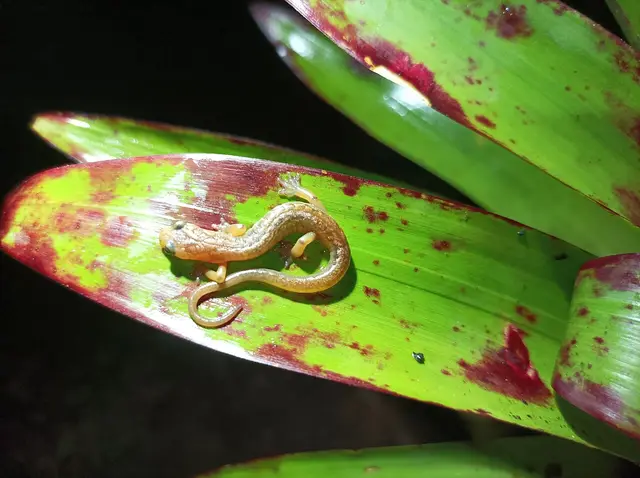
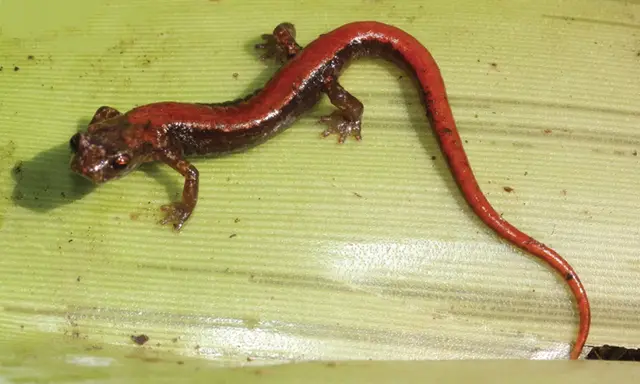
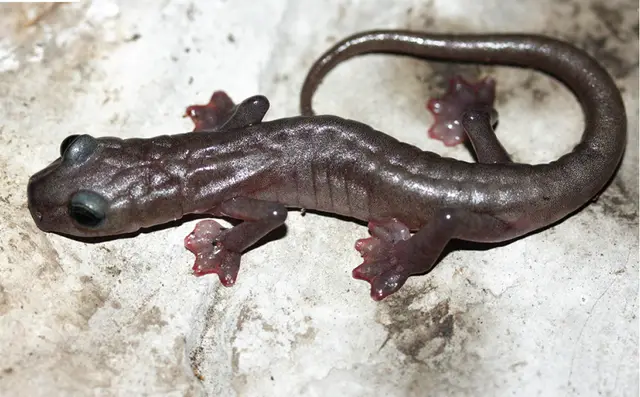
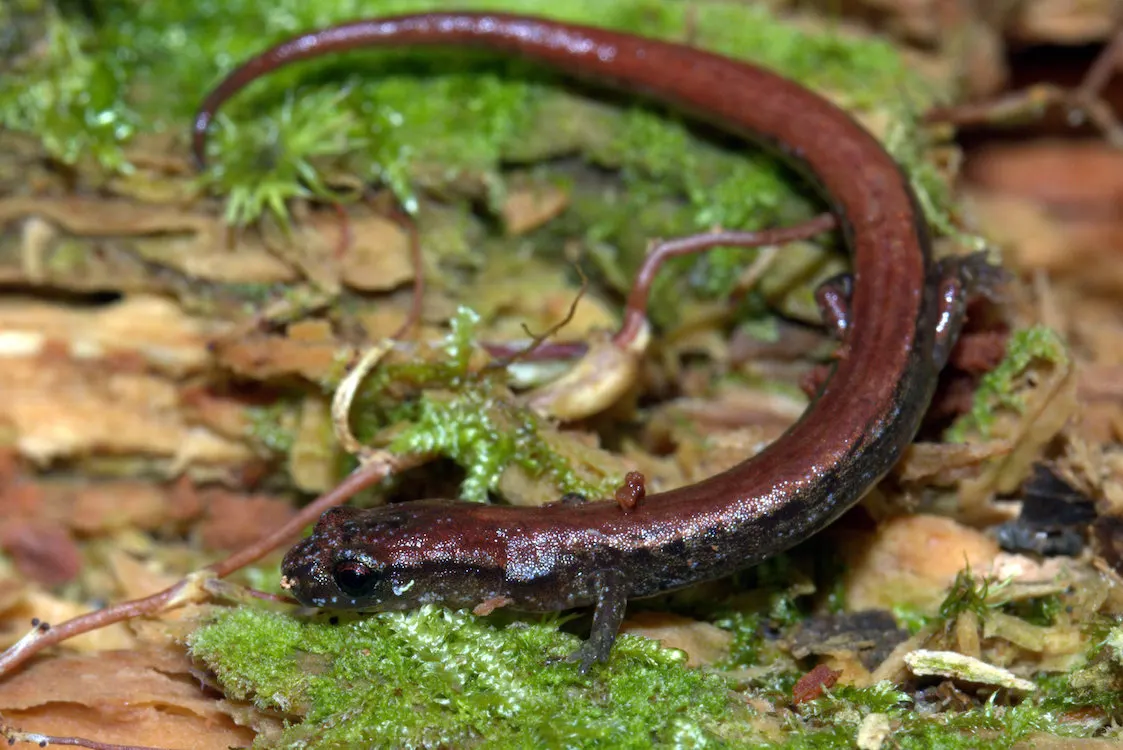
The terrestrial splayfoot salamander (Chiropterotriton terrestris) is a small amphibian known from humid mountain forest in eastern Hidalgo, Mexico. The IUCN Red List rated it Critically Endangered in 2020, because it is known from a single location, its forest habitat is shrinking, and it is not recorded from any protected area.
What kind of salamander it is
It belongs to the lungless salamander family, Plethodontidae, and to Chiropterotriton, a genus of small salamanders from Mexico and Central America. Edward Harrison Taylor described it in 1941. It is also listed under the older name Bolitoglossa terrestris, and goes by the alternative common name terrestrial flat-footed salamander.
Very little has been published about its appearance, diet or breeding, and no body size could be found in the sources available. Most of what is known comes from a handful of museum specimens.
Where it lives
The species is endemic to the Sierra Madre Oriental in eastern Hidalgo. Specimens in the GBIF database come from near Tianguistengo (collected in 1982 at about 1,950 m) and from El Potrero (collected in 1994 and 1995 at about 2,100 m). The Red List gives an elevation range of 1,640 to 2,100 m and an extent of occurrence of about 100 square kilometres, treated as one location.
Its habitat is humid pine and oak forest and cloud forest. The Red List lists temperate forest and subtropical or tropical moist montane forest as its habitats.
Some database records place the name in Veracruz, Puebla or Querétaro, but those entries are not accepted in the Red List range, which names only Hidalgo.
Pins are Wikidata “endemic to” fields. Orange dots, when present, are GBIF occurrence tiles — survey bias included.
Why it is in trouble
The main problem is the loss of its forest. The assessment names shifting agriculture, small-holder farming and small-holder grazing as ongoing threats, and records a continuing decline in the area of suitable habitat.
Disease may add to the risk. Amphibian pathogens can reportedly spread through the illegal pet trade, which is raised as a possible threat to this species.
No population estimate exists. The Red List gives the population trend as unknown, so nobody can say how many adults remain.
What is being done
Protection is minimal. The Red List records that the species does not occur in at least one protected area. The assessment lists land and habitat protection, site protection, and policies and regulations among the conservation actions it calls for, but none is recorded as in place.
Fresh surveys at the known sites would help most, since the species has been collected only a handful of times.
Sources
Written for this catalog in our own words from the sources below, checked against them on 12 November 2026. Population figures are estimates and carry the year they were made. Status and assessment year: IUCN. 2026. The IUCN Red List of Threatened Species. Version 2026-1. iucnredlist.org.