Critically Endangered
Pygmy Splayfoot Salamander
Chiropterotriton lavae
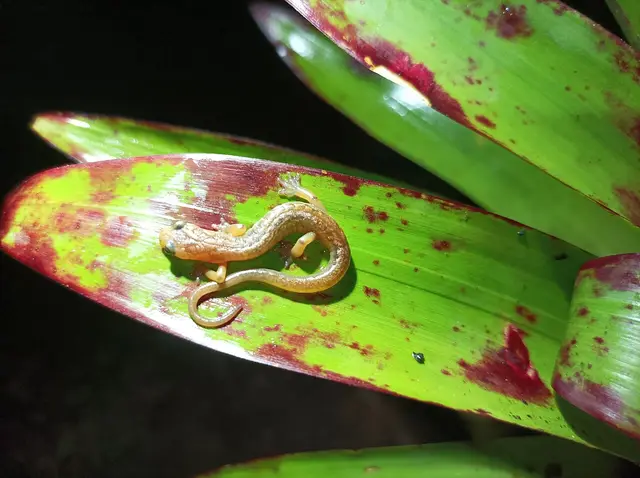
The pygmy splayfoot salamander (Chiropterotriton lavae) is a small, tree-dwelling amphibian known only from cloud forest near La Joya in central Veracruz, Mexico. The IUCN Red List rated it Critically Endangered in 2016. It lives in bromeliads, the water-holding plants that grow on trunks and branches.
How to recognise it
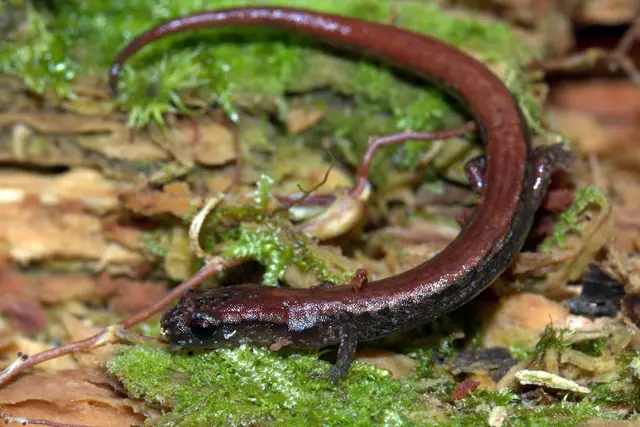
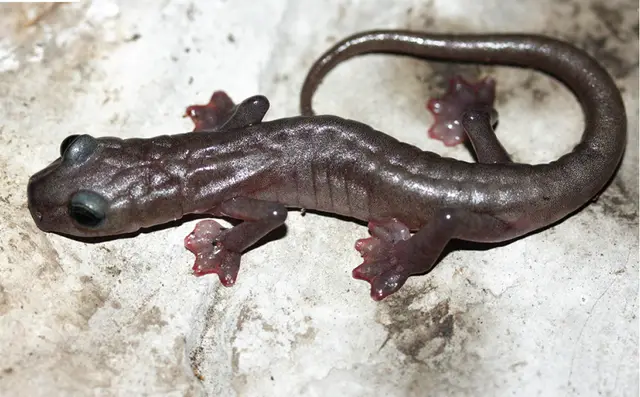
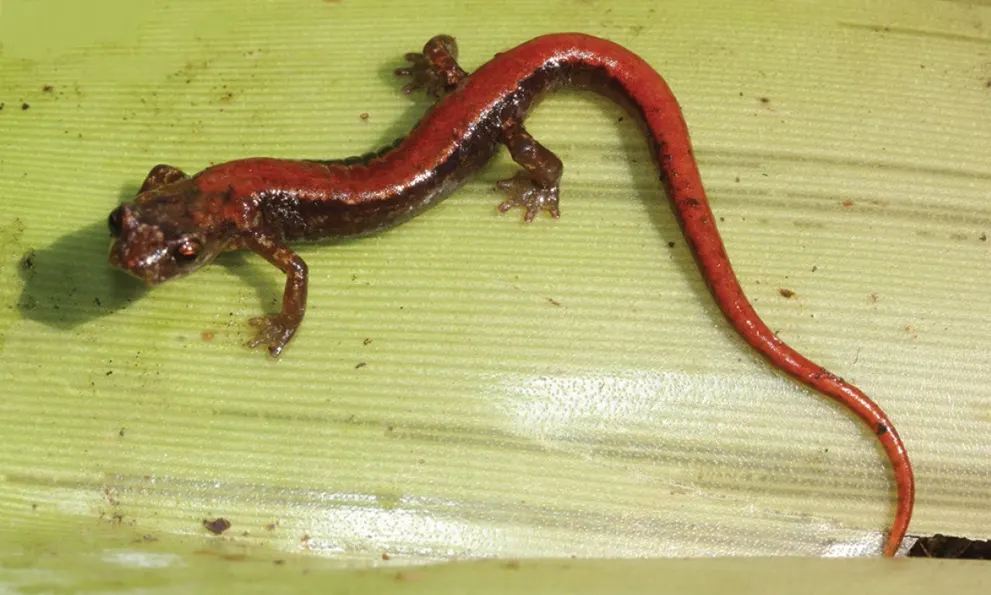
It's a small, slim member of the lungless salamander family (Plethodontidae). Adult males average about 32 mm from snout to vent (31 to 34 mm in measured specimens), and females about 32 mm too, with a wider spread of 28 to 35 mm. The tail is usually a little longer than the body.
The snout is bluntly rounded, and the eyes are large enough to stick out past the edge of the jaw when seen from below. The limbs are moderately to very long, the toe tips are slightly expanded, and the webbing between the toes is modest. Adult males have a small, oval chin gland.
Edward Taylor described it in 1942 under the genus Bolitoglossa, from a specimen collected about 2 miles west of La Joya. It was later moved to Chiropterotriton.
Where it lives
Its known range is a short stretch of forest between the villages of Toxtlacoaya and La Joya, along the road from Perote to Xalapa, near the Cofre de Perote volcano. A 2020 revision of the genus gives its elevation as 2,000 to 2,200 m. The IUCN assessment records 1,200 m, so the sources disagree on altitude, but both place it in the same small patch of Veracruz.
The IUCN treats the whole population as a single location. A related salamander from the same volcano, Chiropterotriton nubilus, lives about 8 km from La Joya at the nearest point, and the two have not been found together.
Of the 656 records in the Global Biodiversity Information Facility, 608 are preserved museum specimens. Only 45 are observations of living animals.
Pins are Wikidata “endemic to” fields. Orange dots, when present, are GBIF occurrence tiles — survey bias included.
How it lives
This is an arboreal species. It lives in bromeliads in cloud forest, and has also been found in somewhat disturbed forest in and around La Joya. A 2020 study in PeerJ described it as still relatively common wherever bromeliads survive, even where the forest has been opened up.
A sister lineage on the same mountain lives on the ground in pine forest near 3,000 m, so the two occupy very different surroundings despite being close relatives.
Why it is in trouble
The 2020 PeerJ study says much of the forest where it occurs is heavily disturbed or has been converted to pasture. The IUCN assessment lists shifting agriculture, small-holder farming, housing and urban growth, and mining and quarrying as ongoing threats, each rated low impact. It records the population as decreasing and the area of habitat as still shrinking.
Because the species sits at a single location, one stretch of clearing or one quarry could affect a large part of what is left. The same assessment says the species is not known to occur in any protected area.
What is being done
The IUCN assessment lists site protection and habitat protection among the conservation actions for the species. It records no population estimate.
Sources
Written for this catalog in our own words from the sources below, checked against them on 12 November 2026. Population figures are estimates and carry the year they were made. Status and assessment year: IUCN. 2026. The IUCN Red List of Threatened Species. Version 2026-1. iucnredlist.org.