Endangered
Long-toed Tree Frog
Leptopelis xenodactylus
The long-toed tree frog (Leptopelis xenodactylus) is a large green frog of the grassland wetlands of KwaZulu-Natal in South Africa, with a marginal extension into the Eastern Cape. The IUCN Red List rated it Endangered in 2025. It is rarely seen, and much of its biology, including its tadpoles, is still undescribed.
How to recognise it
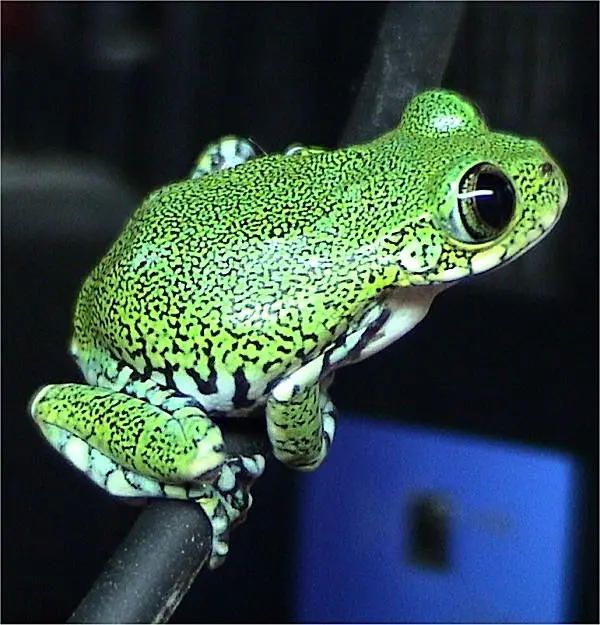
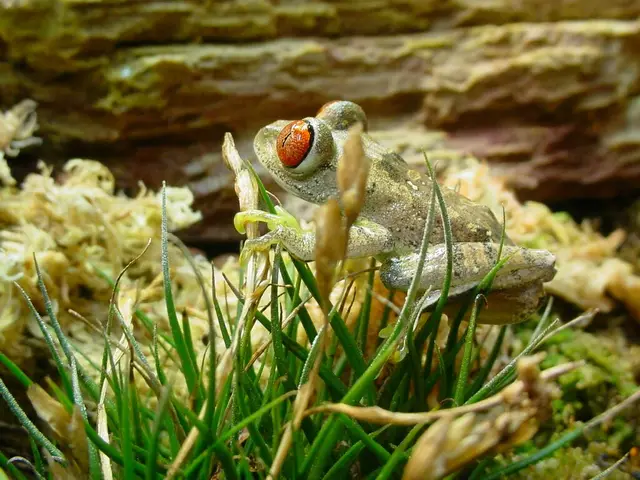
It is a big frog for the region, up to 50 mm from snout to vent, with a plain green back and a creamy white belly. It lacks the dark face mask of one relative (Leptopelis mossambicus) and the mottled back of another (L. natalensis).
The call is easy to miss. A male gives one or two short, pulsed croaks, each about a tenth of a second long, at long intervals, sometimes preceded by a soft buzz.
Where it lives
The species is known mainly from the southern KwaZulu-Natal highlands, from Weza in the south to Giant's Castle in the north, with a marginal presence in the Eastern Cape reported in an older atlas account. It lives in grassland and breeds in grassy wetlands and marshes. Most populations are around 1,000 m, one was recorded at 1,830 m in Giant's Castle, and the IUCN gives a range of 1,000 to 2,100 m.
A survey of three breeding seasons, published in the African Journal of Herpetology, found the frog at 21 wetlands not known before. Most records are in alluvial wetlands with hummocks in U-shaped valleys at mid-altitude. The survey raised the estimated area it occupies by 429 percent and its extent of occurrence by 9 percent. Protected sites that hold it include uKhahlamba-Drakensberg Park, Weza Forest Reserve and Minerva Private Nature Reserve.
Pins are Wikidata “endemic to” fields. Orange dots, when present, are GBIF occurrence tiles — survey bias included.
How it lives
Males call in December and January from hidden spots, at the base of grass tussocks, in burrows in the marsh and sometimes from grassy islands. It climbs vegetation in the wild, but despite the common name it seems to be the least arboreal of the three southern African Leptopelis species. One captive frog stayed buried by day and came out at night. The eggs are presumed to be laid in a ground nest near water, and neither eggs nor tadpoles have been described.
Why it is in trouble
The IUCN reports a decreasing, severely fragmented population. Threats include tree plantations and other farming, dams, more frequent fire, soil erosion and silt, and the draining of water for agriculture. Afforestation and invasive alien plants are named in an older account as the main causes of habitat loss.
The African Journal of Herpetology study also looked at climate change. Depending on the climate model, it estimated that up to 22 percent or up to 80.5 percent of the frog's range could be affected.
What is being done
The frog is protected under KwaZulu-Natal's nature conservation law, and the IUCN notes it occurs in at least one protected area. The IUCN lists site protection and management and control of invasive species as conservation actions. Researchers have called for more surveys, studies of its life history and monitoring of known populations.
Sources
Written for this catalog in our own words from the sources below, checked against them on 12 November 2026. Population figures are estimates and carry the year they were made. Status and assessment year: IUCN. 2026. The IUCN Red List of Threatened Species. Version 2026-1. iucnredlist.org.