Endangered
Raorchestes johnceei
Raorchestes johnceei
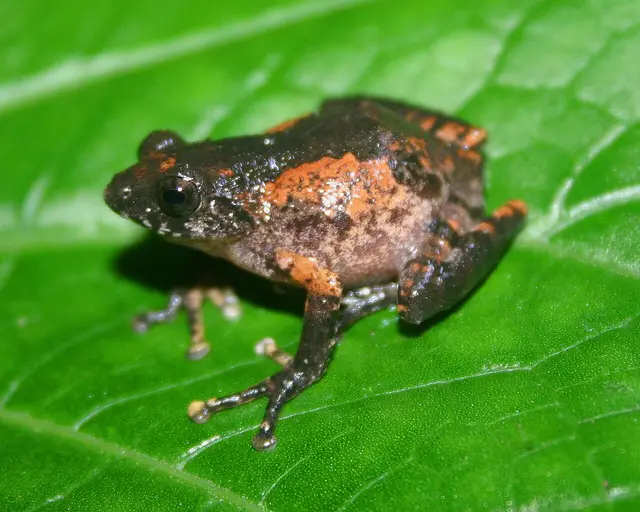
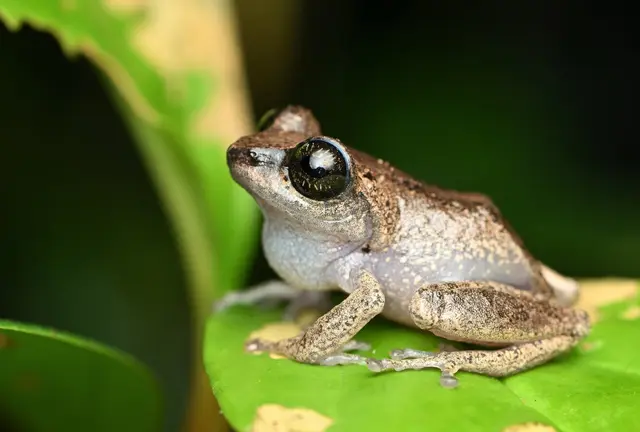
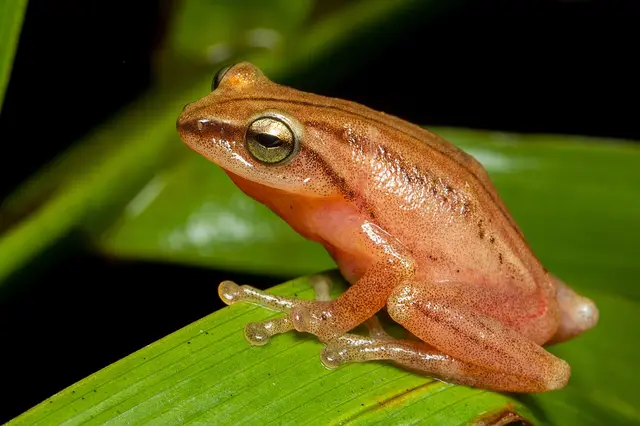
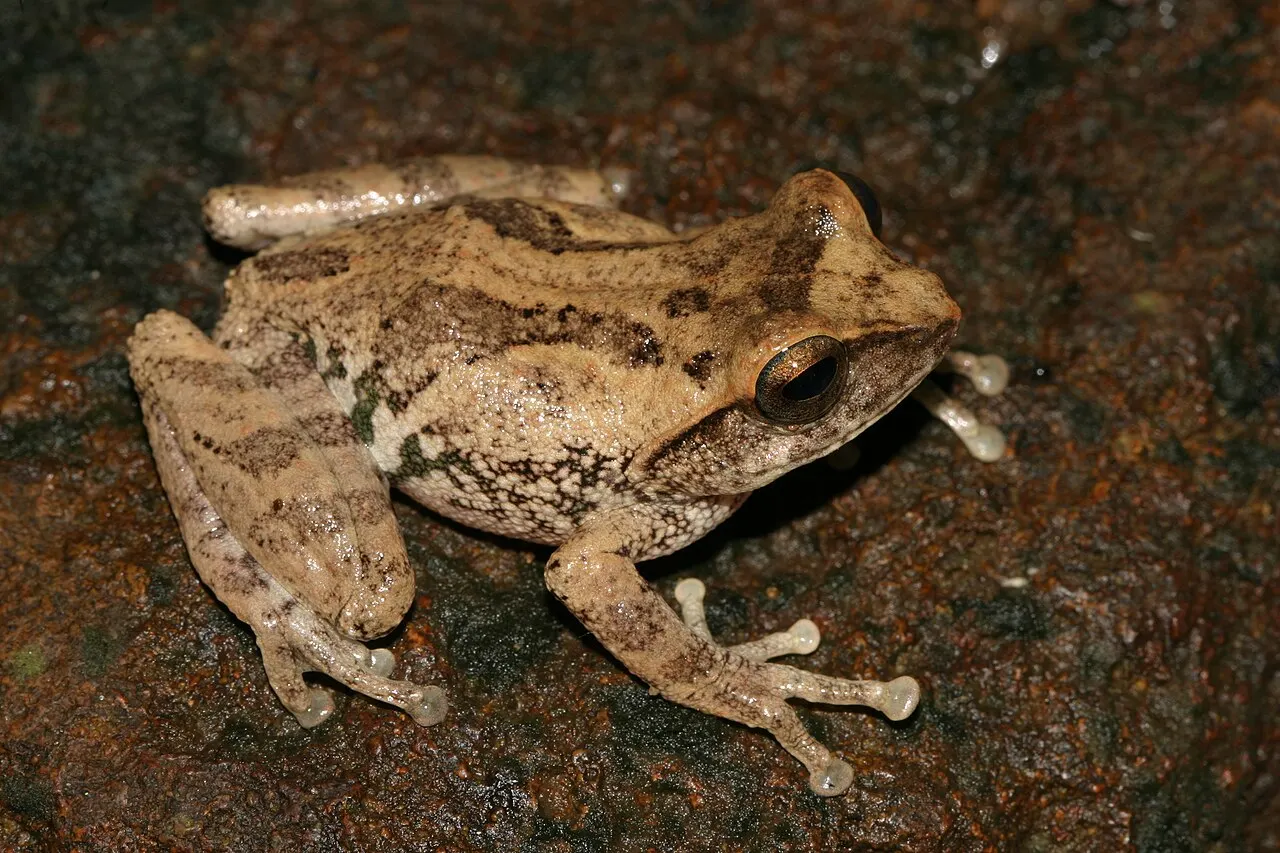
Raorchestes johnceei is a small bush frog from the Western Ghats of Kerala, India, recorded around Bonacaud and associated with highland reeds. The IUCN Red List assessed it as Endangered in 2022 because its range is tiny, shrinking and broken into pieces. It was only described in 2011.
A recent discovery
Raorchestes johnceei was one of nine new Raorchestes species published in 2011 by Zachariah and colleagues in the journal Biosystematica. The name honours the late Prof. John C. Jacob, known as Johncee. A press report from August 2011 said two of the nine were frogs living in bamboo reeds, and that four were found at Bonacaud.
Where it lives
The frog is known from Bonacaud in the Western Ghats of Kerala. The IUCN calculates an extent of occurrence of about 1,928 square kilometres and records it between roughly 600 and 1,200 m above sea level.
Habitats listed by the IUCN are moist lowland forest, moist montane forest and plantations. The assessment records the population as severely fragmented, and the frog does not migrate.
Pins are Wikidata “endemic to” fields. Orange dots, when present, are GBIF occurrence tiles — survey bias included.
How it lives
The frog has reportedly been seen perching on highland reed plants, including Ochlandra travancorica, and is said to breed in bamboo by direct development. That means eggs hatch as tiny froglets with no free-swimming tadpole stage. Little else is documented about its daily life.
Why it is in trouble
The IUCN records a continuing decline in the area of habitat and a decreasing population trend. Threat categories in the assessment include work and other activities, habitat shifting and alteration, garbage and solid waste, and recreational activities, with effects such as ecosystem degradation, disturbance and mortality of the frogs.
The reeds the frog depends on are reportedly harvested for fencing and to deter elephants, and frogs can be caught up in the cutting.
What is being done
The IUCN records that the frog occurs in at least one protected area. The conservation actions it lists as needed are site and area protection, protection of resources and habitat, and awareness and communications.
Sources
Written for this catalog in our own words from the sources below, checked against them on 12 November 2026. Population figures are estimates and carry the year they were made. Status and assessment year: IUCN. 2026. The IUCN Red List of Threatened Species. Version 2026-1. iucnredlist.org.