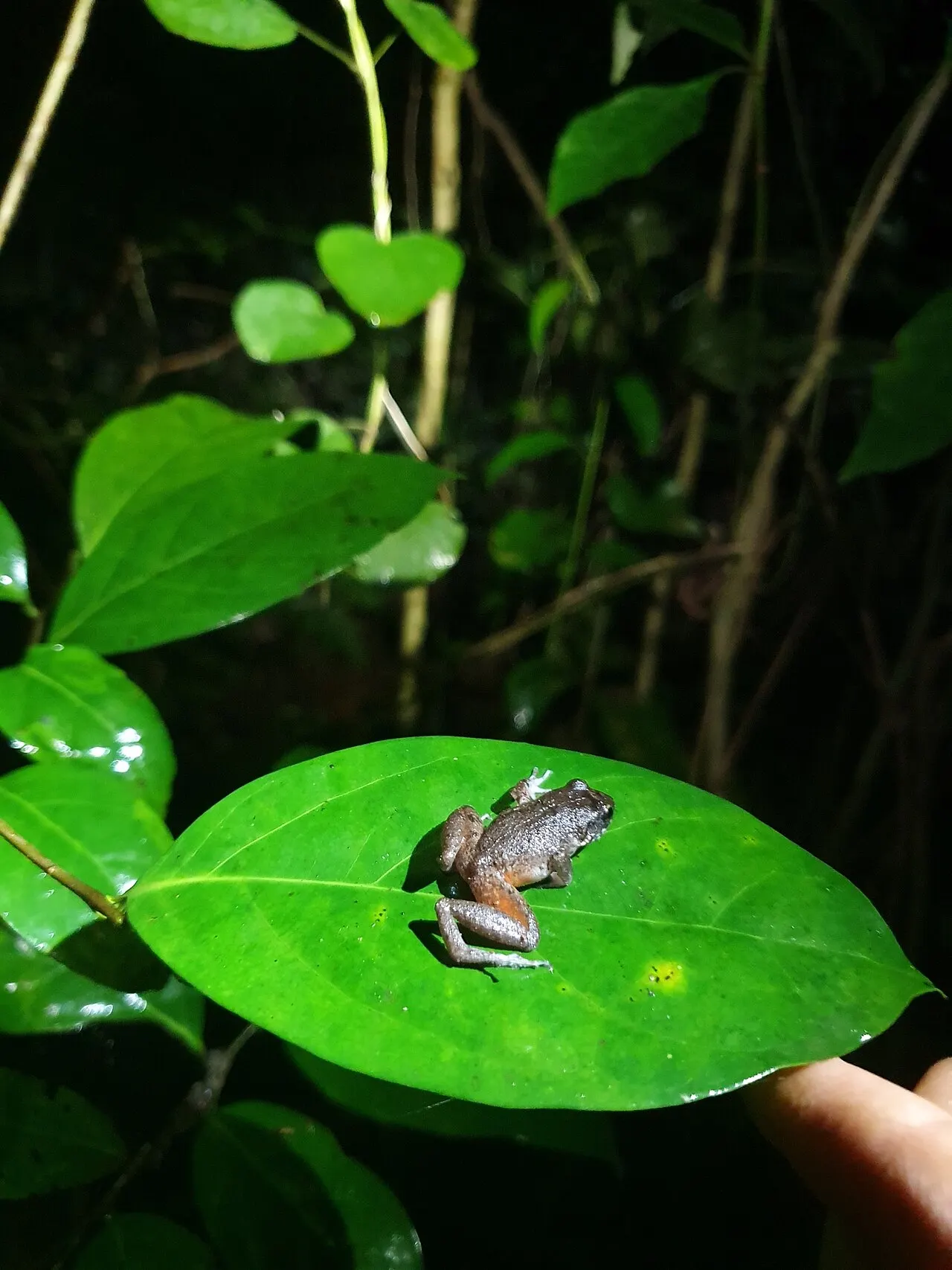
Critically Endangered
La Selle red-legged frog
Eleutherodactylus furcyensis
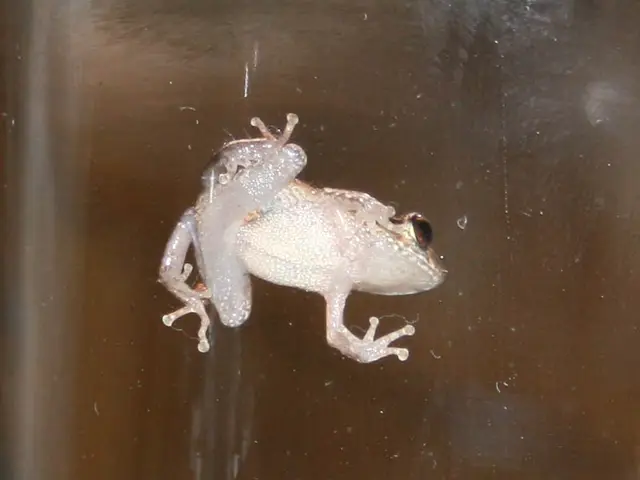
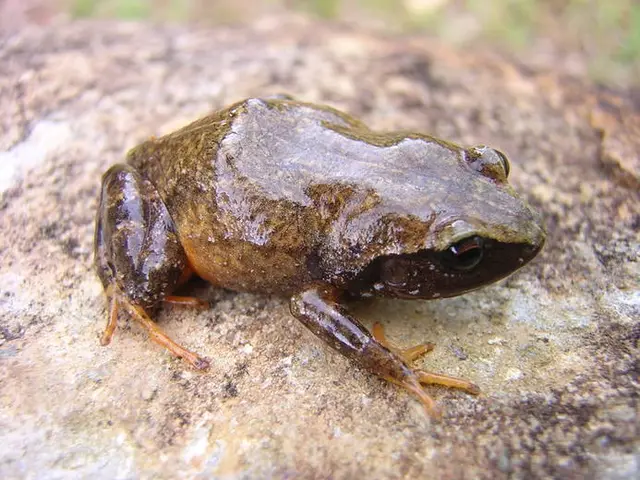
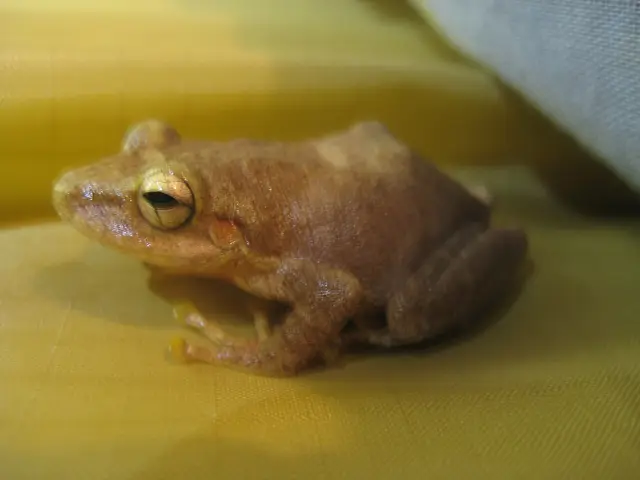
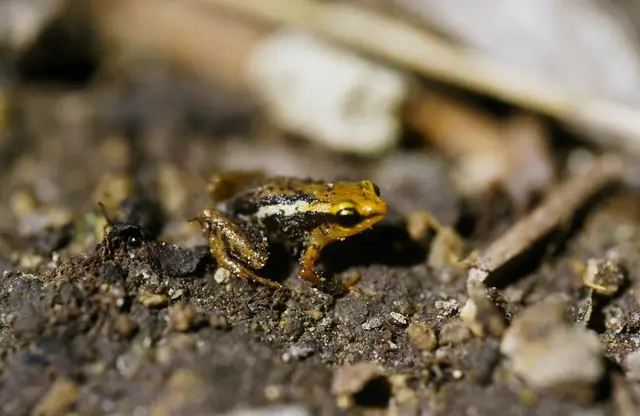
The La Selle red-legged frog (Eleutherodactylus furcyensis), also called the Furcy robber frog, lives only on southern Hispaniola, in Haiti and the Dominican Republic. The IUCN Red List (2022) rates it Critically Endangered, with an estimated population reduction of about 80 percent linked to habitat loss.
Where it lives
This frog, also called the Furcy robber frog, belongs to the family Eleutherodactylidae. Benjamin Shreve and Williams described it in 1963. It is found from the Massif de la Selle in Haiti to the western Baoruco Mountains in the Dominican Republic.
The IUCN gives an extent of occurrence of about 2,860 square kilometres, split between 2 locations, at elevations from roughly 700 to 2,100 metres.
Pins are Wikidata “endemic to” fields. Orange dots, when present, are GBIF occurrence tiles — survey bias included.
How it lives
The IUCN lists subtropical or tropical moist lowland forest and moist montane forest as its main habitats, and heavily degraded former forest as a marginal one. One general summary puts it in upland, moderately moist pine forest, where it is usually found under rocks and logs.
The assessment records it as non-migratory and estimates a generation at 2 to 3 years.
Why it is in trouble
The 2022 assessment uses criterion A4c, a population reduction based on the loss of habitat quality and area. It estimates a reduction of 80 percent, which is ongoing, and records that the cause is understood. The area of occupancy is still shrinking.
The IUCN lists small-holder farming, shifting agriculture, more frequent and intense fires, drought, and unintended effects of subsistence harvesting. It scores the harvesting effects as medium impact, affecting the majority of the population with rapid declines, and the farming as slower declines across a minority. Logging and agriculture are reportedly the main drivers of forest loss in its range, and clearing reportedly continues even inside protected areas.
What is being done
About 30 percent of the population is estimated to live inside protected areas. The listed conservation actions are site and area management, protection of the resource and habitat, awareness and communications, and restoration of habitat and natural processes.
Research needs listed are life history and ecology, and population size, distribution and trends.
Sources
Written for this catalog in our own words from the sources below, checked against them on 12 November 2026. Population figures are estimates and carry the year they were made. Status and assessment year: IUCN. 2026. The IUCN Red List of Threatened Species. Version 2026-1. iucnredlist.org.