Endangered
Aglyptodactylus australis
Aglyptodactylus australis
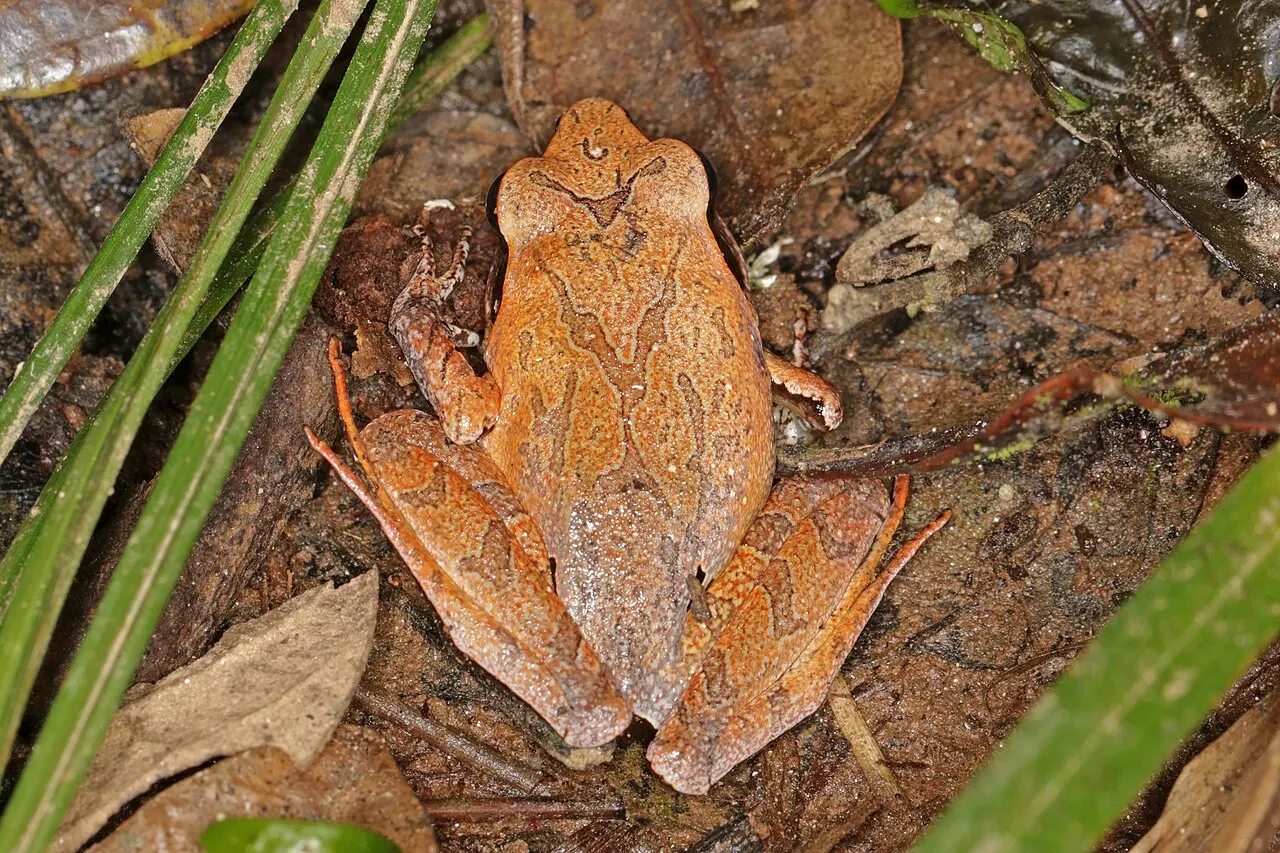
Aglyptodactylus australis is a large frog from the lowland rainforest of southeastern Madagascar. Scientists only named it in 2015, and it is known from a tiny area around Andohahela National Park. The IUCN Red List rated it Endangered in 2016 because its forest home is shrinking.
How to recognise it
This is the biggest frog in its genus. Females reach about 82.5 mm from snout to vent, larger than any of their close relatives.
Frogs in this genus are hard to separate on body shape alone. A 2015 revision in Zootaxa by Köhler, Glaw, Pabijan and Vences used advertisement calls and mitochondrial DNA to show that this southern form was a separate species. The Madagascar jumping frog, Aglyptodactylus madagascariensis, is now restricted to higher rainforest, at about 650 to 1,500 m.
Where it lives
The frog is found only in Madagascar. The specimen that defines the species, an adult male, was collected in late January 2004 at a campsite between Isaka and Eminiminy inside Andohahela National Park, at 247 m above sea level. The Red List gives its known elevation as roughly 247 to 350 m and counts 1 to 4 locations.
The describers thought it probably also lives in a rainforest fragment near Nahampoana, about 25 km to the southeast, but that had not been checked when the species was named. A large female Aglyptodactylus recorded in 1992 from Nahampoana forest remnants may belong to it too.
Pins are Wikidata “endemic to” fields. Orange dots, when present, are GBIF occurrence tiles — survey bias included.
How it lives
The assessment lists lowland moist forest as its habitat, and the frog is not a migrant. Reports describe it living in leaf litter on the forest floor in primary rainforest and bamboo forest. Little else about its breeding or diet has been published.
Why it is in trouble
With so small a range, any loss of forest matters. The Red List names several pressures: mining and quarrying, more frequent or intense fires, small-scale farming and grazing (including nomadic grazing), and unintended effects of local harvesting. Together they convert and degrade the forest, and the area the frog occupies is still declining. The population trend is listed as decreasing. No population count exists.
Part of the known range lies inside a protected area, which is the main safeguard so far. The listed conservation needs are site management and protection of the remaining habitat.
Sources
Written for this catalog in our own words from the sources below, checked against them on 12 November 2026. Population figures are estimates and carry the year they were made. Status and assessment year: IUCN. 2026. The IUCN Red List of Threatened Species. Version 2026-1. iucnredlist.org.




