Critically Endangered
Amargosa toad
Anaxyrus nelsoni
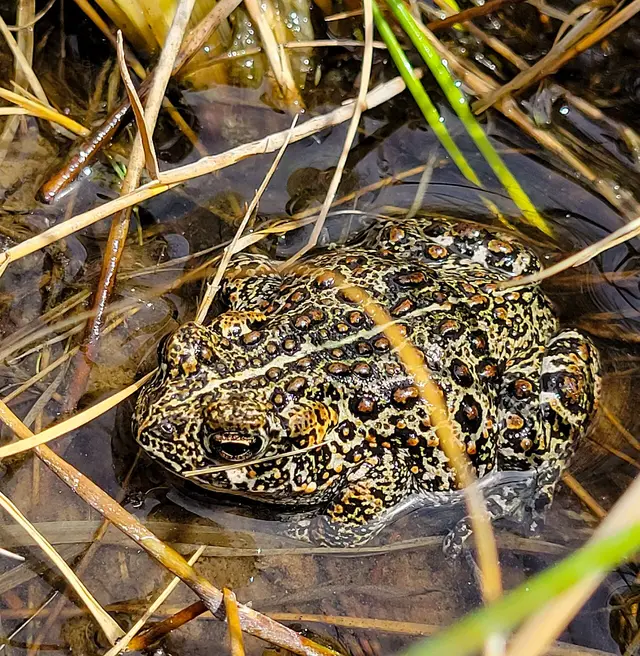
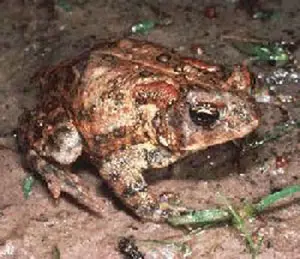
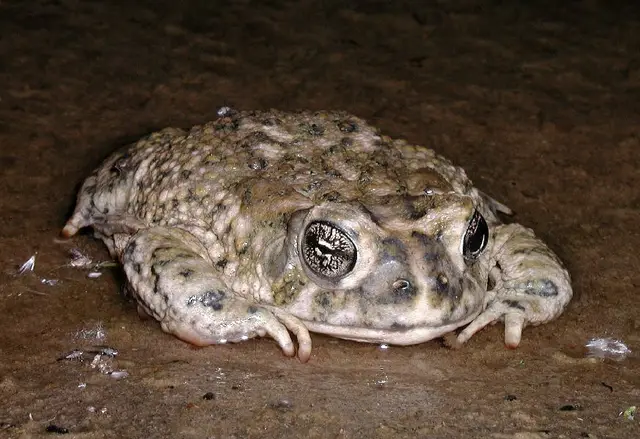
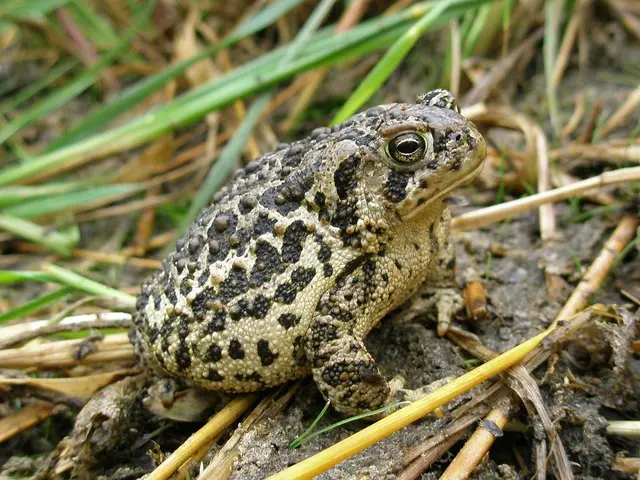
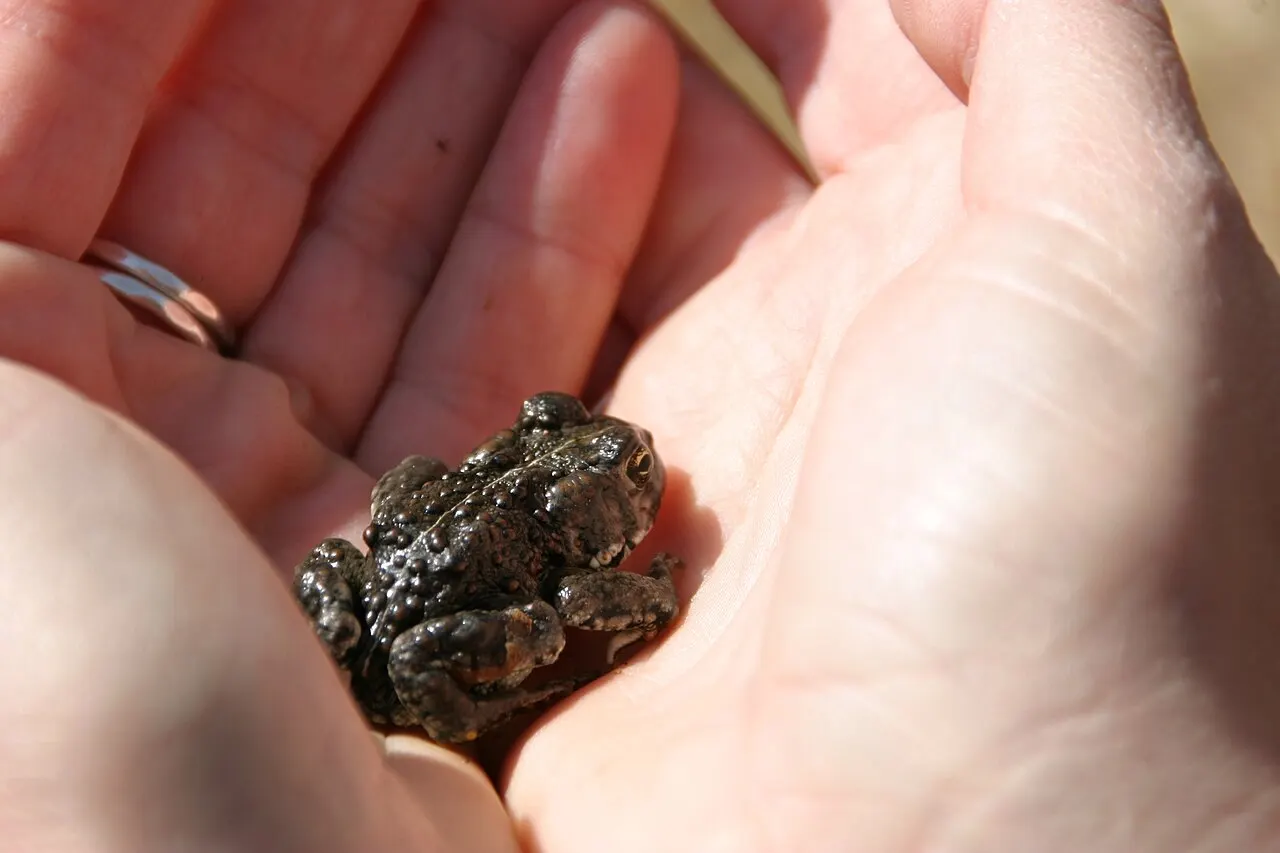
The Amargosa toad (Anaxyrus nelsoni) lives only along a short stretch of the Amargosa River and its springs in Oasis Valley, southern Nevada. The IUCN Red List rated it Critically Endangered in 2022, with a decreasing population. It is unusually quiet for a toad and calls only when it is picked up.
How to recognise it
It is a desert toad in the family Bufonidae and was once treated as a subspecies of the western toad. Adults are fairly large: males are typically 3 to 4 inches long and females 3.5 to 5 inches.
Unlike most frogs and toads, it does not call to attract mates. It makes a chirping release call only when grasped.
Where it lives
Its whole range is about 16 km (10 miles) of the Amargosa River and nearby connected springs between Springdale and Beatty, in Nye County, Nevada. The IUCN puts it at 1,000 to 1,070 m above sea level and gives its extent of occurrence as 93 square kilometres, treated as a single location.
The river is bordered by cottonwoods, sedges and cattails, and the toad needs open, shallow, slow water. Most of the available habitat is on private land.
Pins are Wikidata “endemic to” fields. Orange dots, when present, are GBIF occurrence tiles — survey bias included.
How it lives
By day, adults shelter in burrows, under debris and in dense plants. At night they feed along the water's edge, taking invertebrates such as spiders, insects and snails.
Breeding begins in mid-February and can run into July, though some sources give a narrower window. Females lay eggs in two long strands in shallow water with little or no flow. In warm water, eggs can become tadpoles in as few as three days, and tadpoles turn into small toads in about four to eight weeks. The water must last long enough for them to finish changing.
Why it is in trouble
The IUCN lists trampling and disturbance by wild burros, livestock and off-road vehicles, along with water diversion, pollution and invasive tamarisk. Introduced bullfrogs and crayfish eat eggs and tadpoles, and cattails and tamarisk can clog the springs where the toads breed.
The Red List infers a decline from the loss of habitat quality and extent. The total number of adults is uncertain. A 2009 estimate for the monitored sites was 1,623 toads, below the 1998 to 2008 average of 1,826, and the assessment also cites a range of 250 to 2,500 individuals. A 2010 Audubon article said numbers had risen from a few dozen to thousands over about a decade, so figures differ with source and year.
What is being done
The U.S. Fish and Wildlife Service declined to list the toad under the Endangered Species Act in July 2010, after a 2008 petition. Landowner habitat work was part of the reason. The Amargosa Toad Working Group, with agencies such as the Nevada Department of Wildlife and The Nature Conservancy, carries out a conservation agreement strategy.
Landowners and a local group, STORM-OV, have worked to remove bullfrogs, crayfish and invasive plants. State and federal staff, university staff and volunteers have run night mark-recapture surveys every year since 1998, recording more than 15,000 encounters. The Red List calls for continued habitat management, restoration and invasive predator control, and more monitoring.
Sources
Written for this catalog in our own words from the sources below, checked against them on 12 November 2026. Population figures are estimates and carry the year they were made. Status and assessment year: IUCN. 2026. The IUCN Red List of Threatened Species. Version 2026-1. iucnredlist.org.
- IUCN Red List assessment
- Amargosa toad (Wikipedia)
- Center for Biological Diversity, Saving the Amargosa toad
- Center for Biological Diversity, Amargosa toad natural history
- USFWS, Amargosa toad habitat restoration on private property
- Audubon, Nevada conservationists help keep toads hopping (2010)
- Desert Fishes Council abstract, Oasis Valley survey results