Endangered
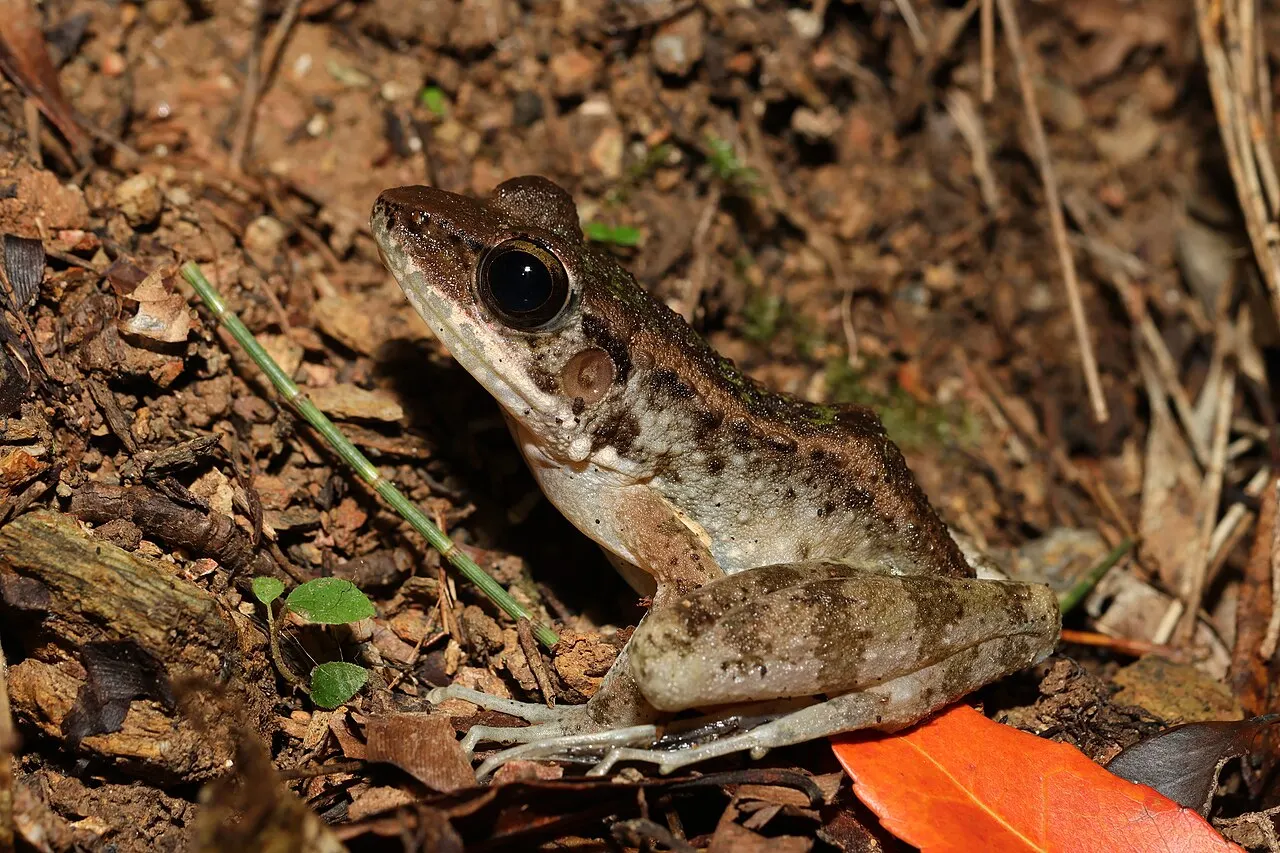
Ryukyu Tip-nosed Frog
Odorrana narina
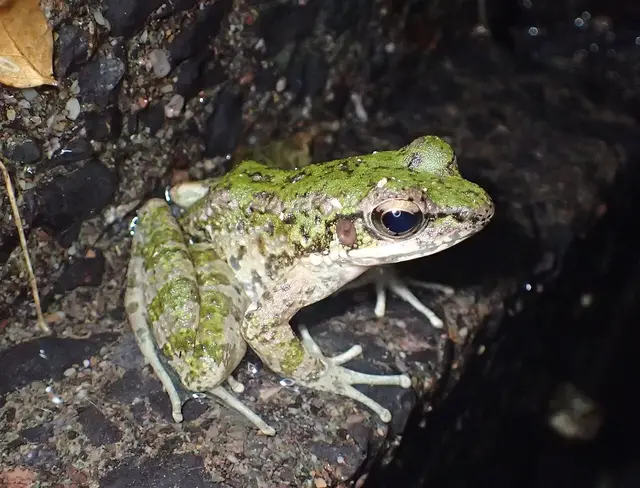
The Ryukyu tip-nosed frog (Odorrana narina) is a medium-sized stream frog found only in the forests of northern Okinawa Island, Japan. The IUCN Red List lists it as Endangered (assessed 2021). Its whole known range is a single area of forest with an estimated extent of about 360 square kilometres.
How to recognise it
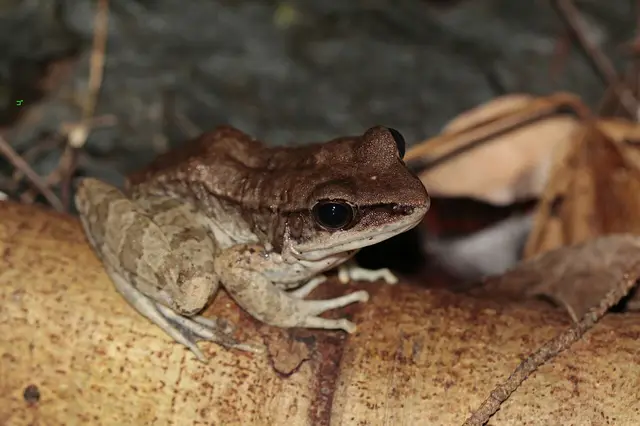
It's a medium-sized frog, typically 50 to 75 mm long. It belongs to the Ranidae, the family of true frogs, and to the large genus Odorrana.
Also known as the Okinawa tip-nosed frog or Ryukyu Island frog, it was first described by Leonhard Stejneger in 1901.
Where it lives
The frog is endemic to Okinawa Island, in the Yanbaru forest of the north. The Red List treats it as a single location and puts the extent of its range at about 360 square kilometres. It lives from near sea level up to 503 m, in and along streams surrounded by primary forest or well-recovered secondary forest of broad-leaved evergreen trees.
By day it hides in holes and crevices. At night it feeds on small insects, centipedes and other small invertebrates. After heavy rain it sometimes turns up on roads, apparently searching for food.
Pins are Wikidata “endemic to” fields. Orange dots, when present, are GBIF occurrence tiles — survey bias included.
How it lives
Breeding runs from December to March, at the base of waterfalls in mountain streams. The young develop as tadpoles. Frogs gathering at breeding sites are eaten by a snake, Ovophis okinavensis, according to the Red List.
Why it is in trouble
The Red List names the small Indian mongoose, introduced to Okinawa in 1910 to control venomous snakes, as the biggest threat. It affects most of the frog's range and causes slow but significant declines. Roads and dams each touch a smaller share of the range, with the same slow effect, and deforestation and river alteration have degraded habitat.
Roads are a hazard in two ways. They cut through the forest, and wet nights draw frogs onto the tarmac. Rivers across the Okinawa and Amami World Heritage area are widely modified by dams, intake weirs and check-dams, and almost none run free.
The 2021 assessment describes the frog as common within its remaining range and the population trend as stable, even though habitat quality and extent keep declining.
What is being done
A mongoose eradication programme run by Japan's Ministry of the Environment and Okinawa Prefecture has sharply cut mongoose numbers in the frog's range. The Red List says the frog is recovering strongly in good habitat where mongooses have been removed, though numbers remain far below historic levels. It lists site protection, site management and invasive species control as the actions in place or needed, and records that the frog's range was not covered by a protected area.
Northern Okinawa's forests are part of a World Heritage site. A fence has been built there to stop mongooses spreading north, though mongooses still live on the island.
Sources
Written for this catalog in our own words from the sources below, checked against them on 12 November 2026. Population figures are estimates and carry the year they were made. Status and assessment year: IUCN. 2026. The IUCN Red List of Threatened Species. Version 2026-1. iucnredlist.org.