Endangered
Xanthophryne tigerina
Xanthophryne tigerina
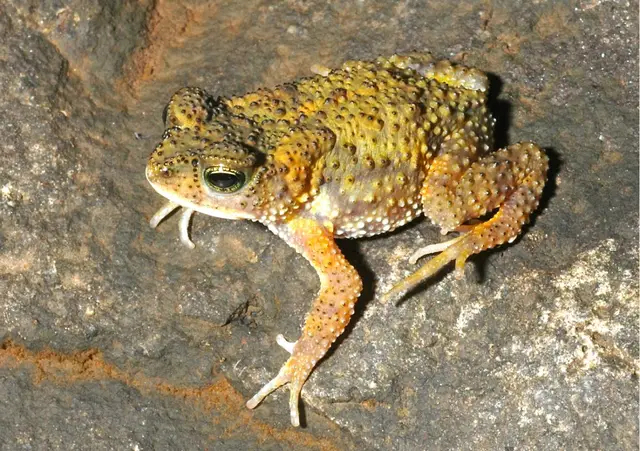
The Amboli toad, Beduka amboli (long known as Xanthophryne tigerina), is a yellowish, dark-striped toad found only on the rocky laterite plateaus around Amboli in Maharashtra, India. The IUCN Red List rated it Endangered in 2023, down from Critically Endangered in 2011, with one location and a decreasing population.
How to recognise it
This is a medium-sized toad by toad standards. Males measure about 28 to 33 mm from snout to vent, females 33 to 35 mm. The body is yellowish with dark stripes along the back and sides, which fits the tiger in its old species name. The canthal ridge on the snout is broken, and the fingers and toes have no webbing.
Biju and colleagues described it in 2009 as Xanthophryne tigerina. The Red List notes that this name was published only in an electronic journal before 2012, which made it invalid, and a 2021 revision by Dubois and colleagues moved the species to the genus Beduka as Beduka amboli. Older sources and some databases still use the earlier name.
Where it lives
It is endemic to the Western Ghats and known only from the vicinity of Amboli and nearby Kitawade, in Maharashtra. The Red List counts a single location, with an extent of occurrence of about 132 square kilometres at 720 to 854 m above sea level.
The habitat is exposed lateritic plateau, a harsh mix of bare rock, shallow monsoon pools, scattered woody plants and large loose rocks. The Red List also records seasonal pools and dry forest.
Pins are Wikidata “endemic to” fields. Orange dots, when present, are GBIF occurrence tiles — survey bias included.
How it lives
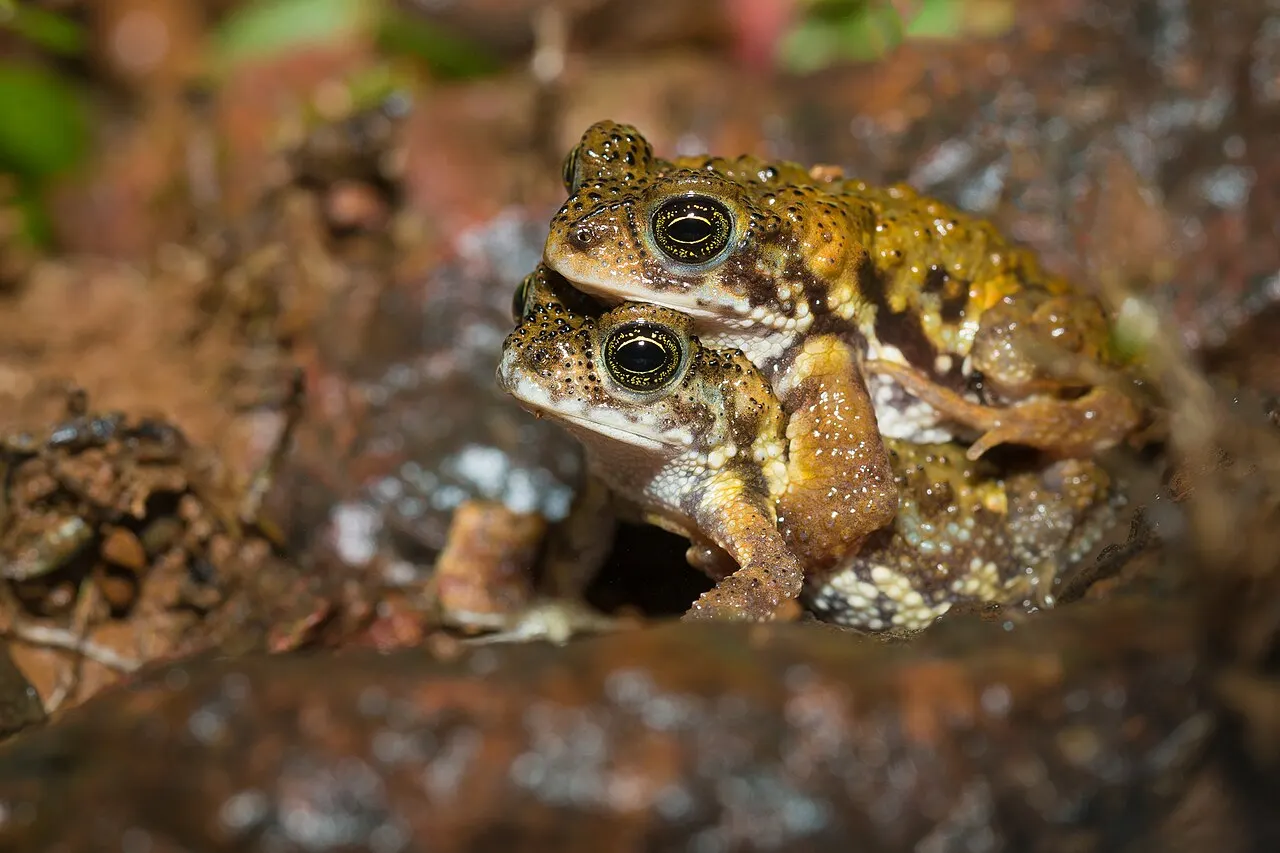
The toads are seen most often hopping about on the rock early in the monsoon. Males climb onto rocks to call during the breeding season, and females lay their eggs in small temporary pools that fill hollows and cavities in the laterite. A clutch is reportedly about 30 to 35 eggs. Tadpoles feed on organic material on the rock until they're big enough to move on.
A 2018 study in PLOS ONE led by the University of Plymouth surveyed 21 amphibian species across 14 plateau sites in the northern Western Ghats. It found the Amboli toad reliant on large loose rocks, where it shelters from predators and from drying out. The Red List describes it as not migratory.
Why it is in trouble
The Red List criterion B1ab(iii,v) reflects a tiny range, a single location, and continuing declines in habitat and in the number of adult toads. The population is put at 250 to 2,499 mature individuals and is still falling. The 2023 Endangered listing replaced an earlier Critically Endangered rating from 2011.
Threats scored as low impact include small-holder and agro-industrial farming, tourism and recreation, mining and quarrying, and habitat alteration. The 2018 study named mining, wind turbine installation and tourism as causes of habitat loss on these plateaus, and chytrid fungus as a disease risk. A 2023 photo-story from Amboli describes monsoon crowds, plastic litter and disturbed streams.
What is being done
The Red List says the toad does not occur in a protected area, and it calls for site and habitat protection plus research on threats, population trends and habitat trends. The 2023 photo-story quotes herpetologist Varad Giri crediting local residents and the forest department with keeping Amboli safe so far, though he was unsure how long that would last.
Sources
Written for this catalog in our own words from the sources below, checked against them on 12 November 2026. Population figures are estimates and carry the year they were made. Status and assessment year: IUCN. 2026. The IUCN Red List of Threatened Species. Version 2026-1. iucnredlist.org.