Endangered
Raorchestes signatus
Raorchestes signatus
Raorchestes signatus, the cross-backed bush frog, is a small tree-dwelling frog found only in the high hills of the Western Ghats in southern India. The IUCN Red List assessed it as Endangered in 2023 because its range is small and its forest habitat is shrinking. It develops in the egg and has no tadpole stage.
How to recognise it
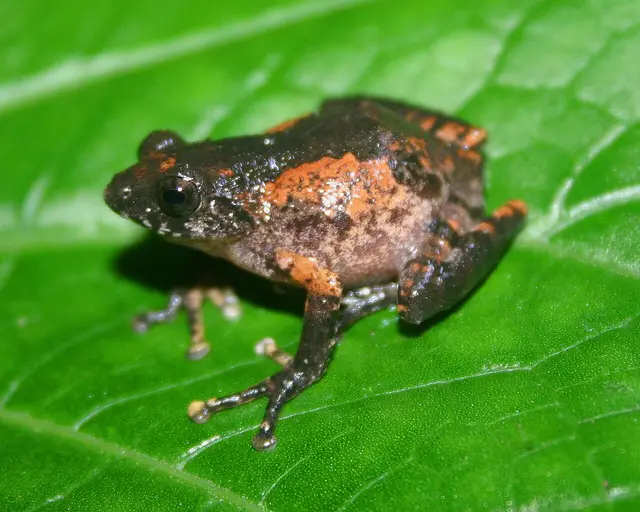
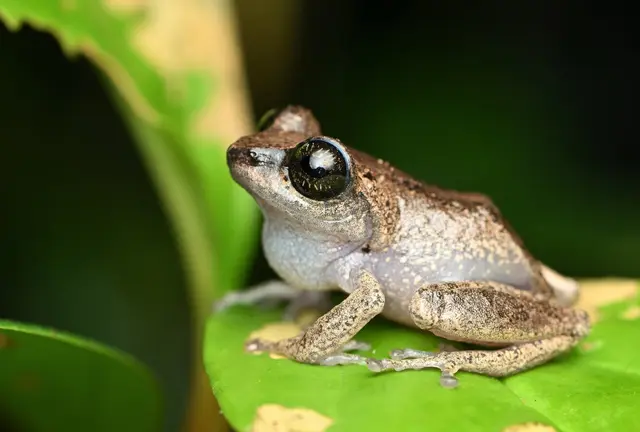
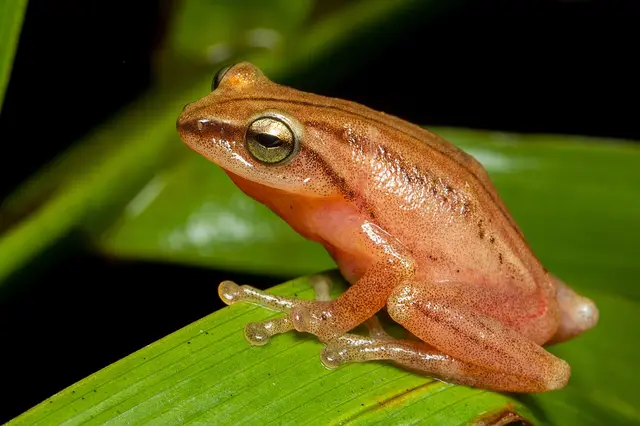
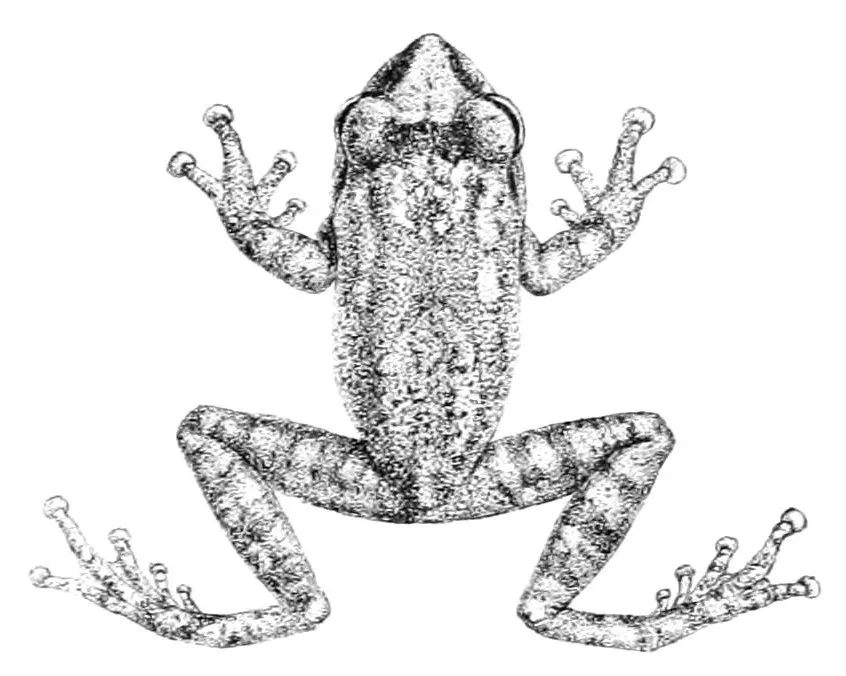
The name comes from the pattern on its back. A 2020 note in Zoo's Print on amphibians seen at Avalanche in the Nilgiris describes the back as anything from light grey to black, and the eye as black with white stripes. The wildlife photo site JungleDragon reports that only females show a star-like pattern in the eye, while males have plain eyes. That fits one of its other English names, star-eyed bush frog.
George Albert Boulenger described the species in 1882 as Ixalus signatus. It has since been placed in Philautus and Pseudophilautus before settling in Raorchestes, a large group of Asian bush frogs.
Where it lives
It is endemic to the Western Ghats. It is known mainly from the Nilgiri Hills in Tamil Nadu, and the IUCN also lists Kerala. It occurs between 1,780 and 2,465 m above sea level, with an extent of occurrence of about 2,150 square kilometres spread over three to five locations.
It is mainly a frog of montane evergreen forest and shola forests, and it is arboreal. It also turns up in high grassland, degraded former forest, rural gardens and farmland, and reportedly occasionally in towns and tea plantations. Avalanche, where one was recorded in August 2014, gets around 5,000 mm of rain a year.
Pins are Wikidata “endemic to” fields. Orange dots, when present, are GBIF occurrence tiles — survey bias included.
How it lives
Like other bush frogs in its genus, it reportedly breeds by direct development. The eggs hatch into tiny frogs, so the young never need a pond or stream. The IUCN classes it as not a migrant.
Deformed individuals have occasionally been seen, and overexposure to ultraviolet light has been suggested as a cause. That idea is a hypothesis, not an established cause.
Why it is in trouble
The Red List says the frog's range is small and its habitat is still declining. The threats it records include large and small plantations and farms, herbicides and pesticides, more frequent and more intense fires, temperature extremes, recreation, and shifting habitat. In the Nilgiris, warming has reportedly helped invasive eucalyptus and acacia spread into the frog's habitat. Scientists also believe the chytrid fungus Batrachochytrium dendrobatidis can infect it.
No population estimate exists, but the IUCN rates the trend as decreasing. The species occurs in at least one protected area.
What is being done
The Red List calls for site and area management and for awareness work, and records that the frog occurs in at least one protected area. It records no species-specific recovery plan.
Sources
Written for this catalog in our own words from the sources below, checked against them on 12 November 2026. Population figures are estimates and carry the year they were made. Status and assessment year: IUCN. 2026. The IUCN Red List of Threatened Species. Version 2026-1. iucnredlist.org.