Endangered
Sri Lanka tribal rock-frog
Sri Lanka tribal rock-frog
Sri Lanka tribal rock-frog, the Sri Lanka tribal rock-frog, is a small brown frog of rocky hilltops in the east of Sri Lanka, known from only a handful of sites. The IUCN Red List rates it Endangered (2020 assessment) because its range is small and its habitat is shrinking. It was described only in 2007.
How to recognise it
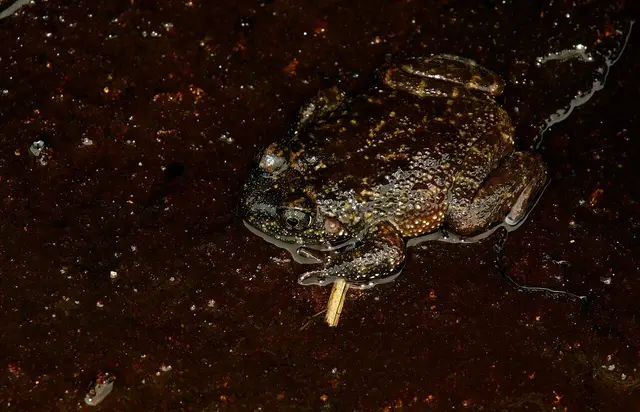
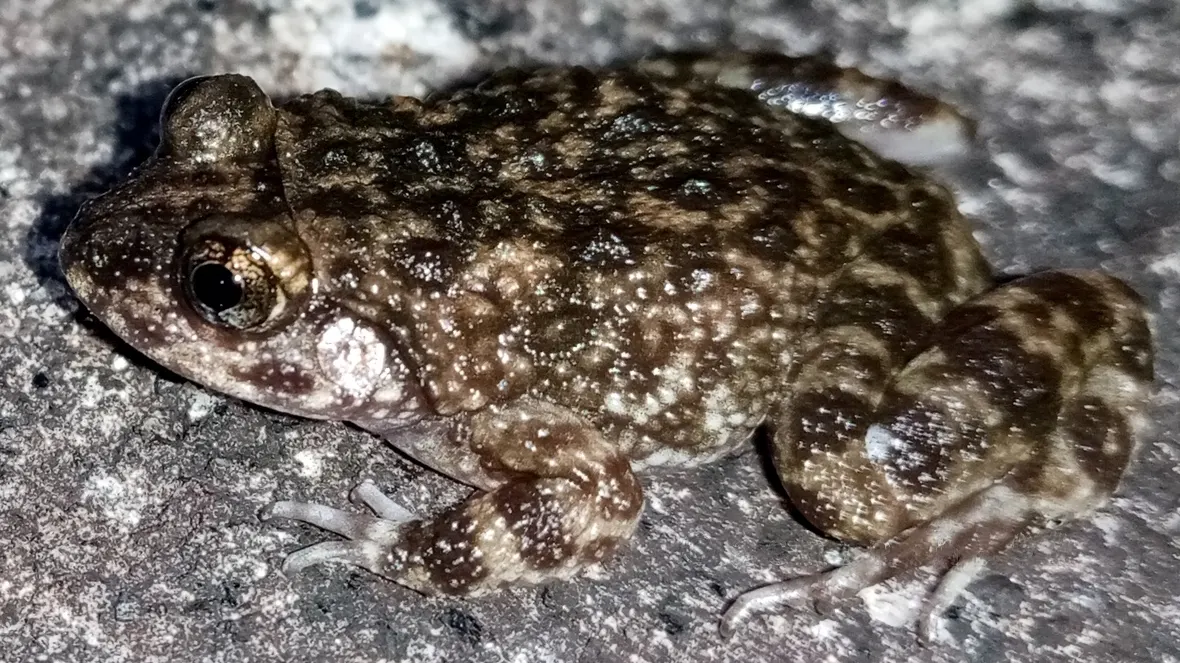
Males measure about 24 to 36 mm from snout to vent and females about 32 to 44 mm. The head is flattened and wider than long, with a rounded snout and a clear eardrum. The fingers and toes end in blunt tips and have no webbing. The skin on the back is rough, with warty bumps on the flanks, and the belly is smooth. Colour is brown with yellow-white marbling above, yellow-white bars across the limbs and a plain yellow-white belly.
Where it lives
The species is endemic to Sri Lanka and found in the east of the island. It was first recorded at Kokagala Hill in Ampara District and at Yakunhela near Bibile in Monaragala District. The IUCN's 2020 assessment adds recent records from Inginiyagala and from three hills in Polonnaruwa District (Nuwaragala, Athagala and Dananjayagala), which are based on unpublished data.
All records lie between 200 and 620 m above sea level. The IUCN gives an extent of occurrence of about 457 square kilometres and counts five or fewer locations. The frog lives around seasonal streams, wet rock surfaces and rock crevices on hillsides with scattered trees and a grass cover dominated by Cymbopogon.
Pins are Wikidata “endemic to” fields. Orange dots, when present, are GBIF occurrence tiles — survey bias included.
How it lives
The frog has a short activity period, from December to February, after which the habitat dries out and it hides underground, perhaps in deep rock crevices. It is more active at night and hides in rock crevices, grass clumps and mats of small wetland plants by day. In the morning it gathers on open plant mats to catch insects drawn to the flowers. The tadpoles probably live on wet rock surfaces beside streams, as in related frogs.
The IUCN calls it uncommon. About 100 frogs were recorded at the first site where it was found, while at other sites only 5 or 6 are seen at a time. It is not thought to tolerate habitat disturbance.
Why it is in trouble
The IUCN lists a decreasing trend, inferred from an ongoing decline in the quality and extent of its habitat, and describes the population as fragmented. It names shifting agriculture, small-holder farming, more frequent or intense fires, herbicides and pesticides, and small-scale harvest affecting the frog unintentionally as ongoing threats.
Human activity on the hilltops is increasing, including burning of grassland and felling of trees. These reduce the water the hills hold, which dries the small streams the frog depends on.
What is being done
The species occurs in the Kokagala Forest Reserve, the Nilgala Forest Reserve and the proposed Athagala Forest Reserve, and has been recorded on the edge of Gal Oya National Park. The IUCN calls for stronger management of these protected areas and wider protection of cloud forest elsewhere in its range, plus monitoring and more research on its distribution, population, ecology and threats.
The name naeyakai refers, reportedly, to the naeyaka, the spirits of dead relatives in the beliefs of the Vedda people who live near where the frog was first found.
Sources
Written for this catalog in our own words from the sources below, checked against them on 12 November 2026. Population figures are estimates and carry the year they were made. Status and assessment year: IUCN. 2026. The IUCN Red List of Threatened Species. Version 2026-1. iucnredlist.org.