Endangered
Pseudophilautus macropus
Pseudophilautus macropus
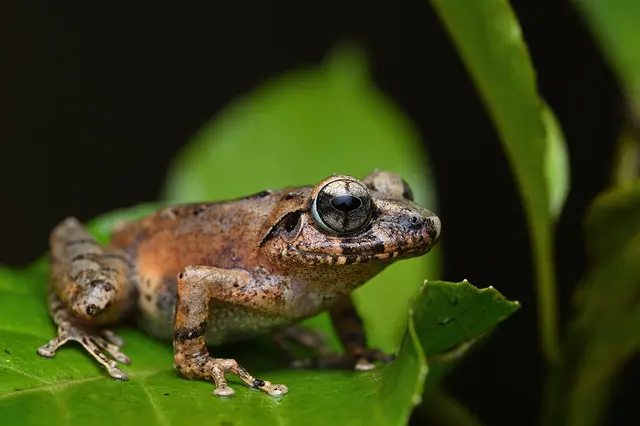
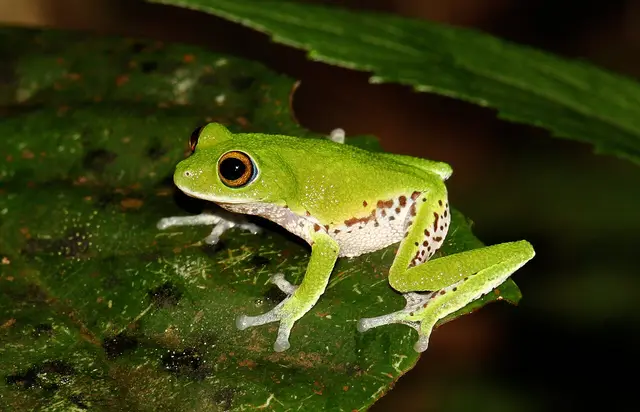
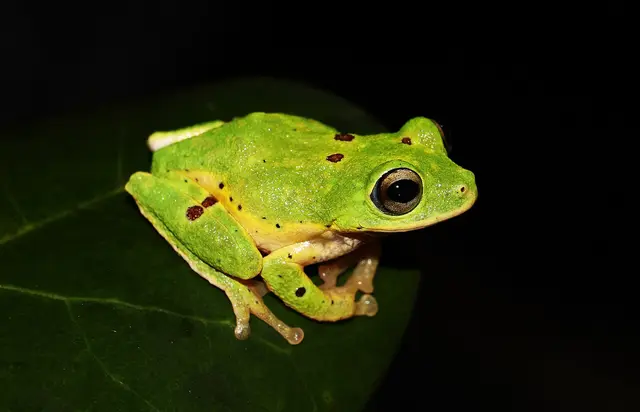
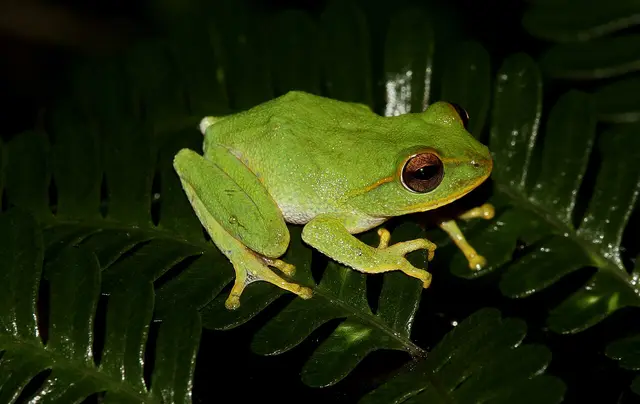
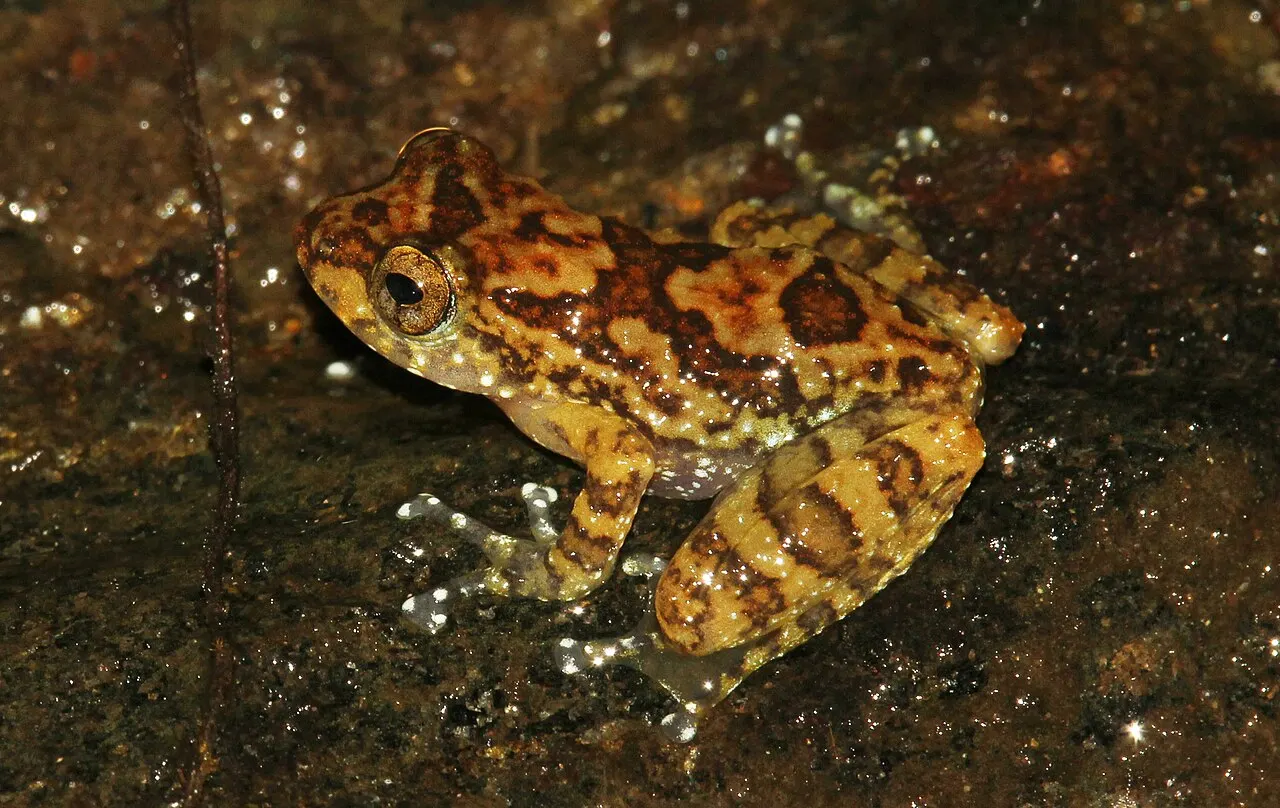
The bigfoot shrub frog (Pseudophilautus macropus) is a small tree frog found only in Sri Lanka, known mainly from the Knuckles hills of the central highlands. The IUCN Red List lists it as Endangered (assessed 2022), an improvement on its earlier Critically Endangered listing. It is a small frog, under about 4.3 cm long.
How to recognise it
This is a modest-sized shrub frog. A 2013 taxonomic paper in the Journal of Threatened Taxa gives its snout-to-vent length as 27.4 to 42.7 mm, so it measures roughly 3 to 4 cm.
Its common name is the bigfoot shrub frog, a translation of the species name macropus. It belongs to Pseudophilautus, a genus of Sri Lankan frogs that were long placed in Philautus, and it was first named in the nineteenth century as Ixalus macropus by Albert Günther.
Where it lives
The frog is endemic to Sri Lanka. The IUCN lists it from one to five locations, between about 603 and 760 metres above sea level. A 2013 paper and a 2012 survey of the Knuckles Forest Reserve both describe it as restricted to the Knuckles region. Old museum specimens recorded in GBIF come from further south and west, including Queenwood estate at Dimbula, and Bogawantalawa, so its range may once have been wider. Recent iNaturalist photo records held by GBIF come mostly from Matale district.
Pins are Wikidata “endemic to” fields. Orange dots, when present, are GBIF occurrence tiles — survey bias included.
How it lives
The IUCN gives its habitats as moist forest, plantations, rural gardens and permanent streams. The 2012 Knuckles survey describes it as an endemic frog found mainly near streams in sub-montane forest. The survey recorded a single specimen, found on mossy bark about 1.5 m above ground, near Bambarakanda. It does not migrate.
Why it is in trouble
It is listed under criterion B1ab(iii): a small range, few locations and shrinking habitat quality. The IUCN records its population as decreasing.
The pressures it lists are small-scale and industrial farming, pesticides and herbicides, housing, tourism and recreation, accidental effects of small-scale harvesting, and more frequent fires. Each is rated low impact in the assessment.
What is being done
The frog is recorded inside at least one protected area. The IUCN lists resource and habitat protection and site or area management as the actions needed, and research on taxonomy, population trends, ecology and threats. Its improvement from Critically Endangered in 2004 to Endangered in 2022 still leaves it at risk, since it depends on a very small range.
Sources
Written for this catalog in our own words from the sources below, checked against them on 12 November 2026. Population figures are estimates and carry the year they were made. Status and assessment year: IUCN. 2026. The IUCN Red List of Threatened Species. Version 2026-1. iucnredlist.org.
- IUCN Red List assessment, Pseudophilautus macropus (2022)
- Wikipedia, Pseudophilautus macropus
- Wickramasinghe et al. 2013, Journal of Threatened Taxa 5(4): eight new Pseudophilautus
- Samarawickrama et al. 2012, Amphibian and Reptile Conservation 5(2):81-89
- GBIF occurrences for Pseudophilautus macropus
- iNaturalist taxon record