Endangered
Myers' Surinam toad
Pipa myersi
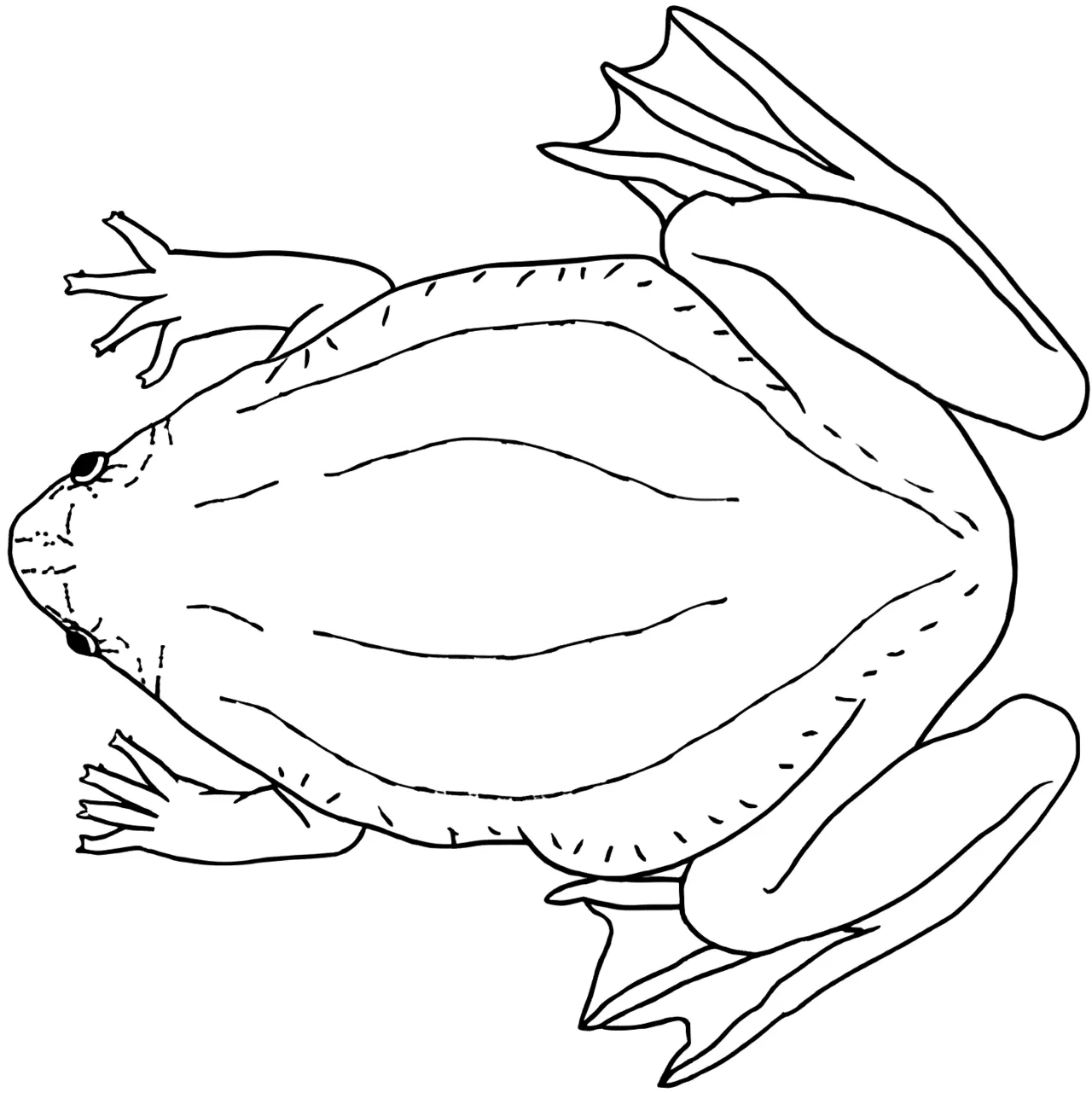
Myers' Surinam toad (Pipa myersi) is a small, flat, fully aquatic frog of the lowlands of Panama and northwestern Colombia. The IUCN Red List assessed it as Endangered in 2019 and records a decreasing population. It lives within a very small range, from sea level to about 30 m.
How to recognise it
Like other members of the family Pipidae, this is a flattened, water-bound frog. In a 2022 study of Colombian museum specimens, adults mostly measured about 35 to 44 mm from snout to vent, and the largest reached 51.6 mm, bigger than earlier reports had given.
Its skin carries tubercles of several kinds, some conical or spiny and some forming smooth plates. It has no barbels and no dermal flap, and each fingertip ends in four small lobes. Externally it looks very much like its relative Pipa parva. The 2022 study, in Papeis Avulsos de Zoologia, concluded that outward form alone does not separate the two.
Where it lives
Linda Trueb described the species in 1984 from Panama. Colombian specimens have since been documented from Antioquia (near Carepa and Turbo) and Choco (near Acandi), so its range is not limited to Panama. It occurs apart from Pipa parva, and the 2022 study called for a review of the characters that distinguish the two.
The IUCN records it only from sea level up to 30 m. Its habitat is permanent rivers and streams, swamps and marshes, and tropical swamp forest. The 2019 assessment counts a single location and puts the extent of occurrence at about 164 square kilometres.
Pins are Wikidata “endemic to” fields. Orange dots, when present, are GBIF occurrence tiles — survey bias included.
How it lives
Very little has been published on its day-to-day behaviour. The genus is known for females that carry eggs in pits in the skin of the back, but the Colombian study did not describe breeding for this species. It did record that Myers' Surinam toad has a larval stage, as Pipa parva does, rather than developing straight into froglets.
Why it is in trouble
The IUCN lists small-holder farming and grazing as the threats. They convert and degrade its wetland and forest habitat, and the area it occupies is still shrinking. The overall population trend is decreasing. No population size figure has been published.
What is being done
The IUCN records that the toad occurs in at least one protected area, and lists site protection and habitat protection as the conservation actions that apply. Beyond that, no species-specific programme or captive population appears in the sources available, and basic surveys of how many survive would help.
Sources
Written for this catalog in our own words from the sources below, checked against them on 12 November 2026. Population figures are estimates and carry the year they were made. Status and assessment year: IUCN. 2026. The IUCN Red List of Threatened Species. Version 2026-1. iucnredlist.org.




