Critically Endangered
Phrynobatrachus jimzimkusi
Phrynobatrachus jimzimkusi
Jim Zimkus' puddle frog (Phrynobatrachus jimzimkusi) is a small brown frog of cool mountain streams on the Cameroon volcanic line and the neighbouring Obudu Plateau in Nigeria. The Red List (2020) lists it as Critically Endangered after a steep decline in numbers.
How to recognise it
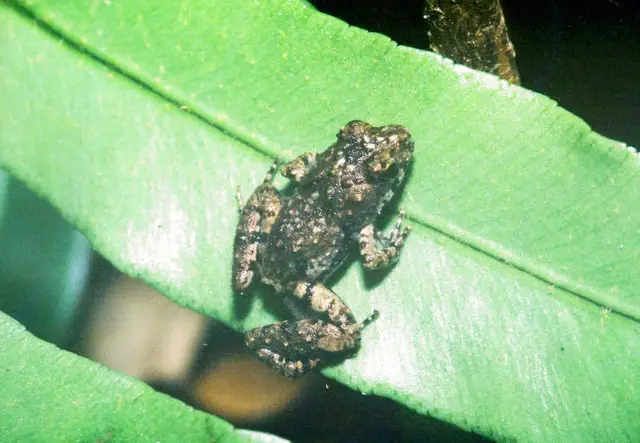
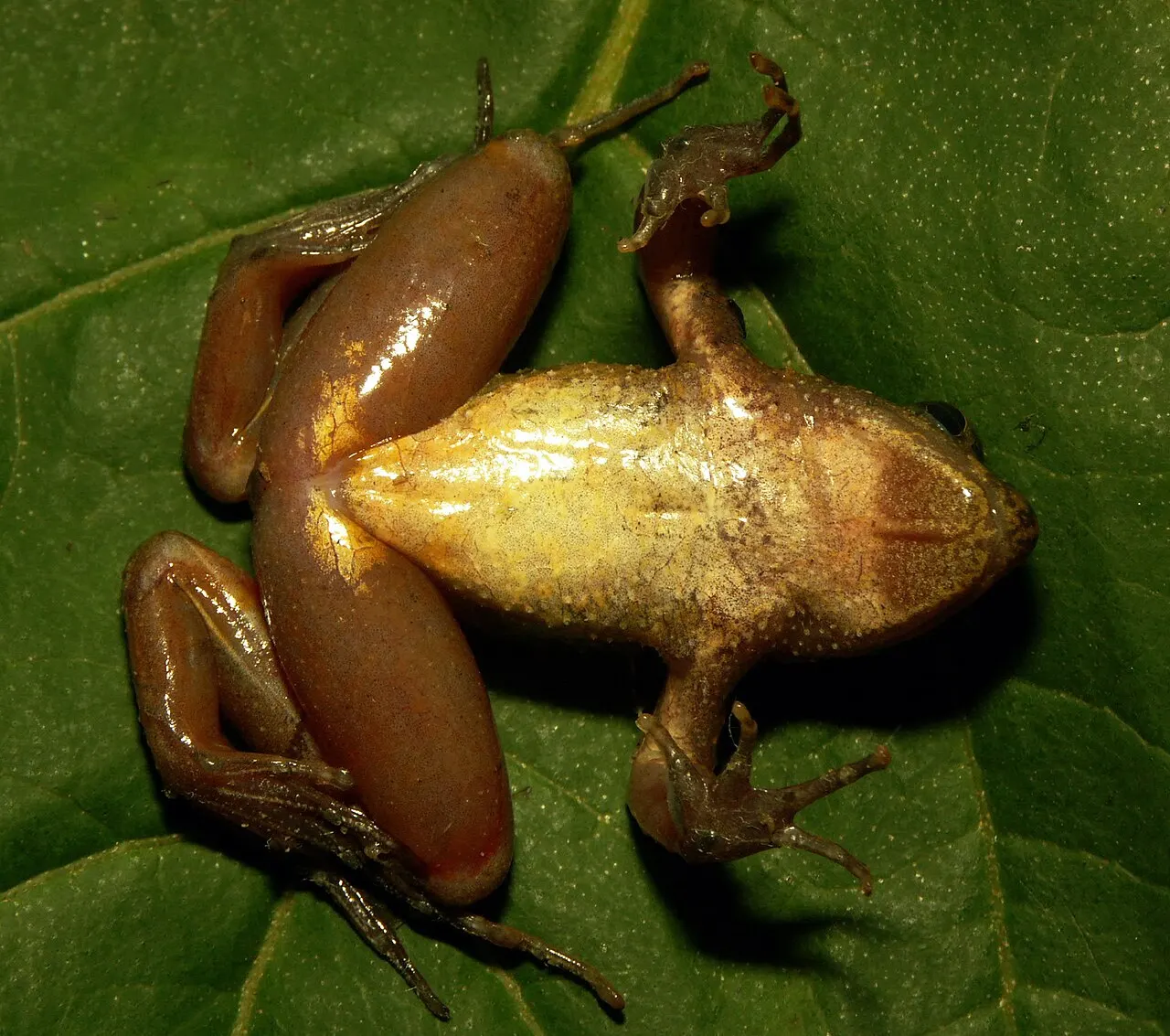
It is a compact frog with strong hind legs. Adult males measure about 32 to 34 millimetres from snout to vent, and females about 29 to 32 millimetres. The back is medium to dark brown, usually with lighter and darker spots, and some frogs have a thick light-brown stripe down the middle. The belly is mottled.
The fingers have no webbing but carry small discs, while the toes are moderately to extensively webbed. The eardrum is faint or hidden. The species was formally described in 2013 by Breda Zimkus, Václav Gvoždík and Nono Gonwouo, and Zimkus named it for her husband, James.
Where it lives
It occurs on several mountains of the Cameroon volcanic line, including Mount Manengouba, the Bamboutos Mountains, Mount Lefo and Mount Oku, and across the border on the Obudu Plateau in south-eastern Nigeria. The Red List records it from Cameroon and Nigeria, between about 1,300 and 2,900 metres above sea level, with an extent of occurrence of roughly 10,300 square kilometres across 1 to 10 locations.
Its home is the calm, pool-like stretches of fast streams in montane forest, including strips of forest along streams in highland savanna. It also turns up along streams in open grassland, and it can persist in heavily degraded former forest. It occurs in at least one protected area, Cross River National Park in Nigeria.
Pins are Wikidata “endemic to” fields. Orange dots, when present, are GBIF occurrence tiles — survey bias included.
How it lives
It appears to be active by day. Females attach small clusters of eggs to root hairs or plant material floating in the water, and the tadpoles develop in stream pools. The Red List gives a generation length of about 3 years.
Why it is in trouble
The frog was reportedly abundant in places not long ago. The Red List estimates a reduction of about 80 percent, based on direct observation and on the effects of pathogens and similar agents, and records the population as decreasing with its habitat still shrinking.
The cause is not proven. The pattern resembles losses that chytrid fungus has caused in other mountain amphibians. On Mount Oku, part of this frog's range, a 2017 review of the mountain's amphibians reported that puddle frogs in general are declining at alarming rates, with forest degradation named as the main threat. Chytrid has increased there in recent years, though one researcher noted it has been in Cameroon since 1934. A relative on Oku, the Lake Oku puddle frog (Phrynobatrachus njiomock), has not been seen since 2010.
Other threats on the Red List are smallholder farming and cattle grazing, herbicides and pesticides, more frequent and intense fires in highland grassland, housing growth, and firewood collection.
What is being done
The species occurs in at least one protected area, Cross River National Park in Nigeria. The Red List calls for site protection and resource and habitat protection, and lists population size, distribution and trends as a research need. No captive population is recorded.
Sources
Written for this catalog in our own words from the sources below, checked against them on 12 November 2026. Population figures are estimates and carry the year they were made. Status and assessment year: IUCN. 2026. The IUCN Red List of Threatened Species. Version 2026-1. iucnredlist.org.