Endangered
Jozani River Frog
Phrynobatrachus ungujae
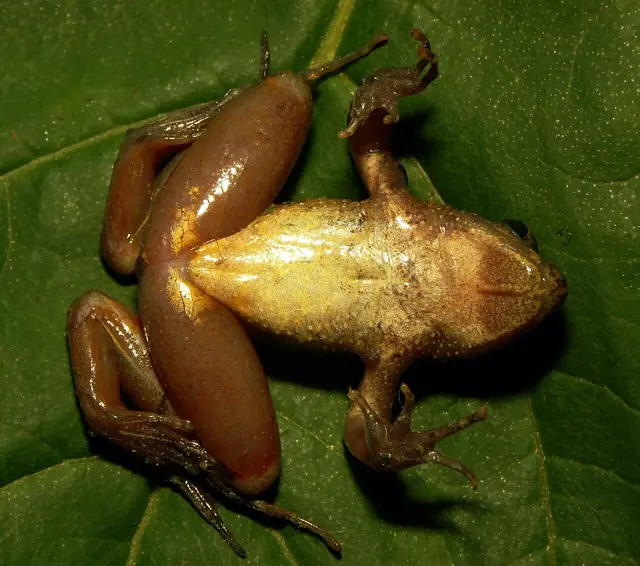
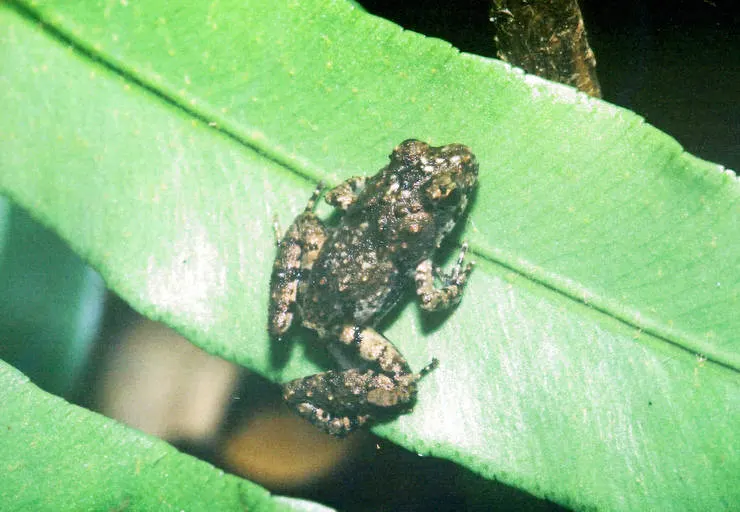
The Zanzibar puddle frog (Phrynobatrachus ungujae), also called the Jozani river frog, is a coastal forest frog known from Unguja Island in Tanzania and from Arabuko-Sokoke Forest in Kenya. The Red List rated it Endangered in 2016, mainly because its forest habitat is shrinking and its range is small.
What it is
Phrynobatrachus ungujae was described by Pickersgill in 2007. The type locality is Jozani Forest on Unguja, the main island of the Zanzibar archipelago. It belongs to the puddle frogs, family Phrynobatrachidae.
Two English names are in use. The Catalogue of Life and Wikispecies give Jozani river frog, while the African Amphibians database gives Zanzibar puddle frog. Both refer to the same species.
Where it lives
The Red List gives two range countries, Tanzania and Kenya. It is known from Jozani Forest on Unguja and Arabuko-Sokoke Forest on the Kenyan coast, and the assessors expect it in other coastal forests that have not been surveyed. Its estimated extent of occurrence is about 3,360 square kilometres, and the assessment lists two locations. The frog does not migrate.
Habitats include dry forest, moist lowland forest, inland marshes and seasonal freshwater pools under 8 hectares. It presumably breeds in water, with a tadpole stage. The assessors describe it as abundant in Jozani Forest, but they suspect the overall population is decreasing, and no population estimate exists.
Pins are Wikidata “endemic to” fields. Orange dots, when present, are GBIF occurrence tiles — survey bias included.
Where it has been found
The GBIF biodiversity database holds 41 records, 40 of them from Tanzania. The oldest preserved specimen was collected in Jozani Forest in April 1997. In February 2007 a team from Harvard's Museum of Comparative Zoology collected eleven at Jozani Chwaka Bay National Park, at about 25 metres above sea level.
Most of the other records are iNaturalist observations from Tanzania, the most recent dated July 2026, so people are still recording the frog.
A priority analysis of Jozani Chwaka Bay National Park lists it as one of two amphibians for which the park matters globally, and records its trend as decreasing.
Why it is in trouble
The Red List names small-holder farming as the pressure and lists expanding agriculture and timber removal as the main threats. The assessors consider the frog probably unable to adapt to the loss of its forest. They record a continuing decline in the area it occupies.
Its Endangered rating rests on criterion B1ab(iii): a small range, very few locations and falling habitat quality. The category has not changed since the first Red List assessment in 2008, which also rated it Endangered.
What is being done
The Red List records the frog in at least one protected area, Arabuko-Sokoke National Park in Kenya. Jozani Forest was then within the proposed Jozani-Chwaka Bay National Park. The assessors say both parks need better protection and that surveys should look for the frog elsewhere.
The assessment lists site and area management as the conservation action. No species-specific recovery programme is reported.
Sources
Written for this catalog in our own words from the sources below, checked against them on 12 November 2026. Population figures are estimates and carry the year they were made. Status and assessment year: IUCN. 2026. The IUCN Red List of Threatened Species. Version 2026-1. iucnredlist.org.