Endangered
Pseudophilautus asankai
Pseudophilautus asankai
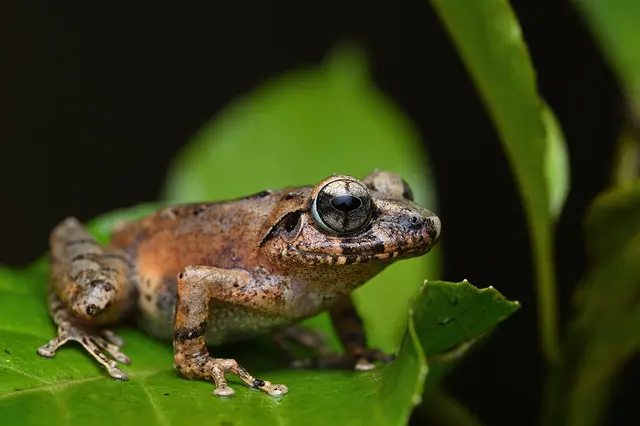
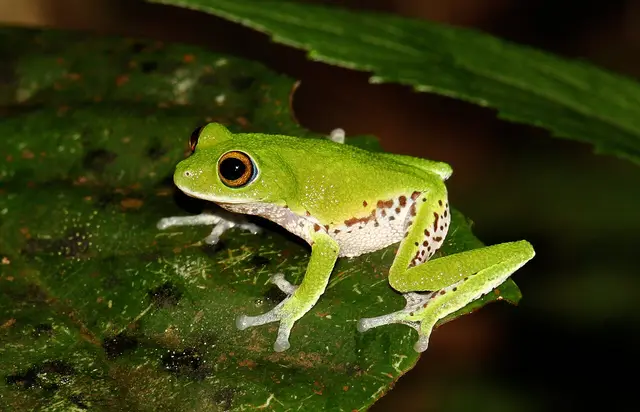
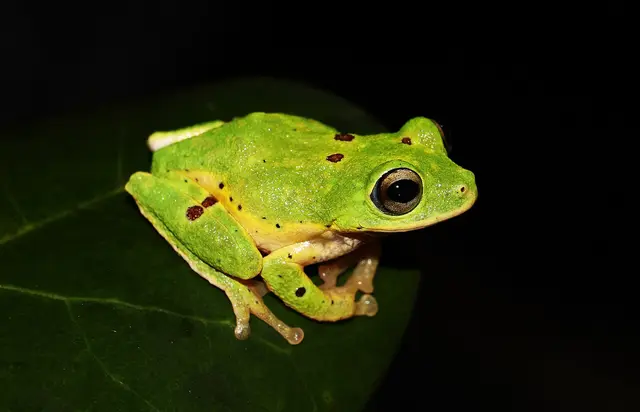
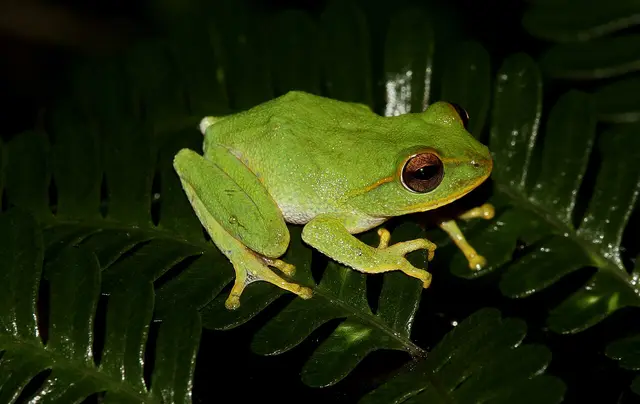
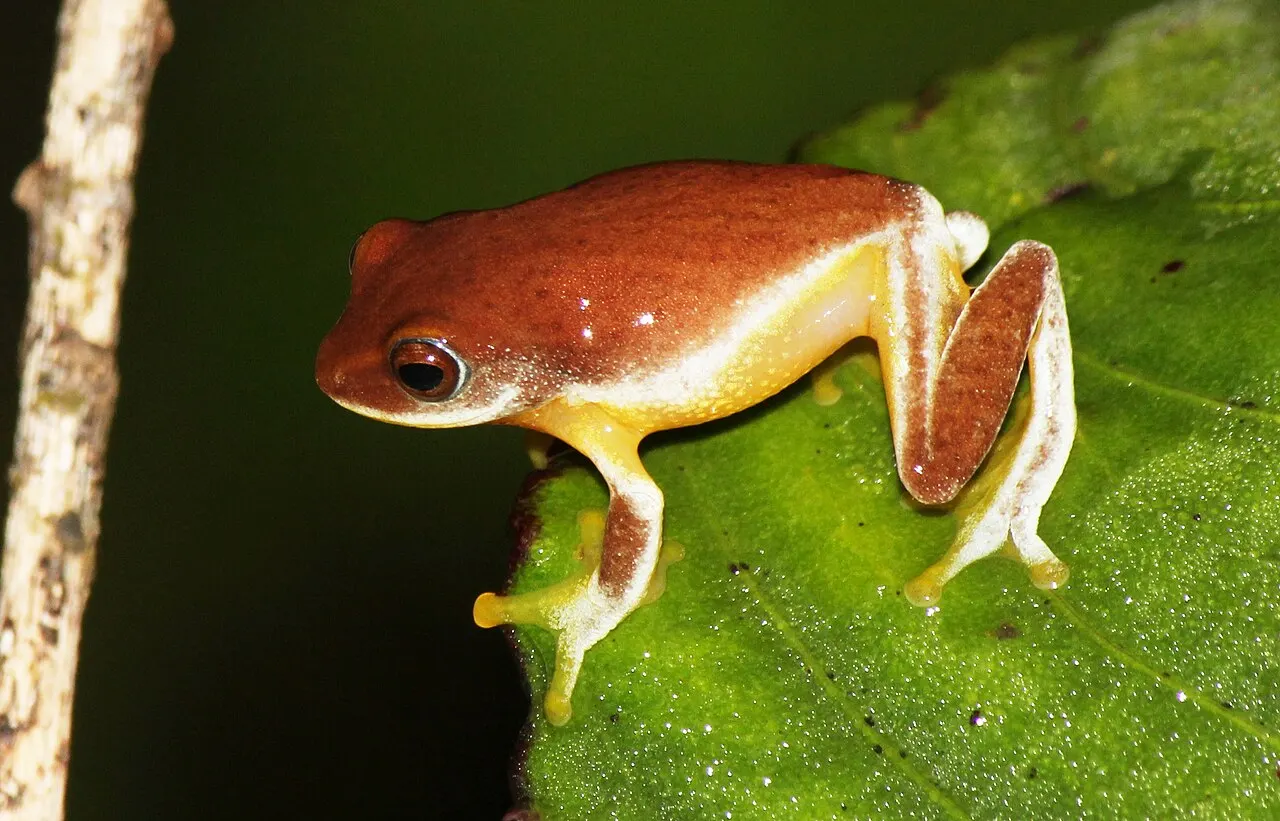
Asanka's shrub frog (Pseudophilautus asankai) is a thumbnail-sized frog found only in the hill forests of Sri Lanka. The IUCN Red List rated it Endangered in 2021, because it is known from just two locations and its habitat is still shrinking. It perches on shrubs and skips the tadpole stage entirely.
How to recognise it
This is a tiny frog. Adult males measure about 21 to 23 mm from snout to vent. The back and the tops of the legs are ash-brown, while the toes, parts of the legs and the belly are yellow. The middle and back of the legs carry small yellow spots.
The front toes have fringes of skin and the hind toes are webbed.
Where it lives
The species is endemic to Sri Lanka and lives in the central hill country. The Red List assessment records it from two locations, across an extent of roughly 2,600 square kilometres, at heights from 10 m up to about 1,830 m.
Its habitat is tropical moist montane forest, though it also turns up in heavily degraded former forest. It sits on shrubs, and it seems to favour spots where a gap in the canopy lets in enough sunlight.
Pins are Wikidata “endemic to” fields. Orange dots, when present, are GBIF occurrence tiles — survey bias included.
How it lives
Like other frogs of its genus, it develops directly. Tiny froglets hatch from eggs without ever being tadpoles, so the frog doesn't need standing water to breed. Little is recorded about its breeding season or clutch size.
A changing name
The frog was described in 2004 (some citations give 2005) and long treated as separate from a very similar frog, Pseudophilautus hoffmani. A 2021 study of Sri Lankan shrub frogs in PLOS ONE found only a 1.04 percent difference between them in the 16S rRNA gene. It proposed that hoffmani is likely a synonym and, acting as first revisers, gave asankai precedence.
The two had been thought of as isolates on separate mountains, but populations turned up in the valleys connecting them, with limited gene flow.
Why it is in trouble
The assessment lists the population as decreasing, with continuing decline in the area it occupies. The threats named are farming on both industrial and small-holder scales, herbicides and pesticides, garbage and solid waste, acid rain, recreational activities and light pollution. The assessment links these to conversion and degradation of its forest.
What is being done
The frog occurs in at least one protected area, and the assessment records it as subject to ex situ conservation. Recommended actions include site and habitat protection and site management. The assessment gives no population size, so the number of animals is unknown.
Sources
Written for this catalog in our own words from the sources below, checked against them on 12 November 2026. Population figures are estimates and carry the year they were made. Status and assessment year: IUCN. 2026. The IUCN Red List of Threatened Species. Version 2026-1. iucnredlist.org.