Endangered
Pseudophilautus silus
Pseudophilautus silus
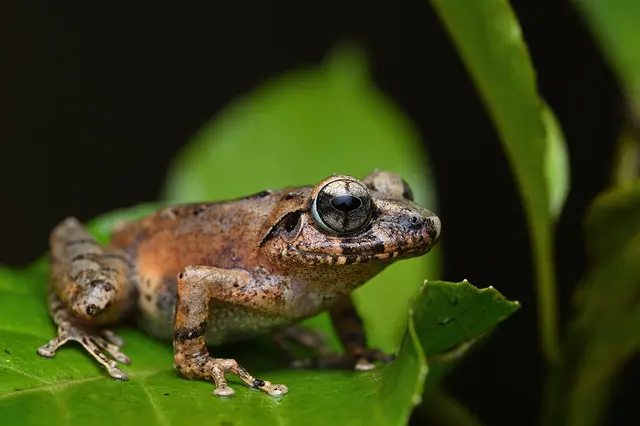
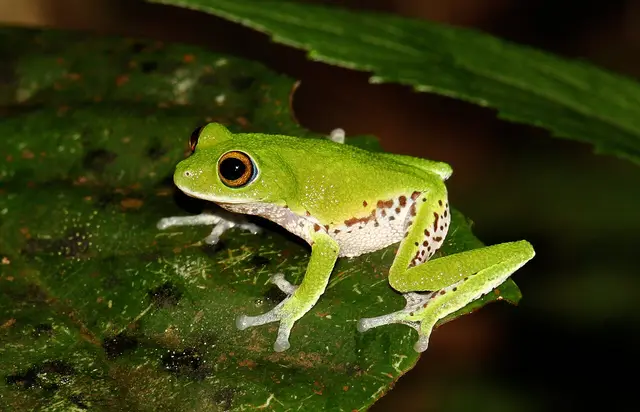
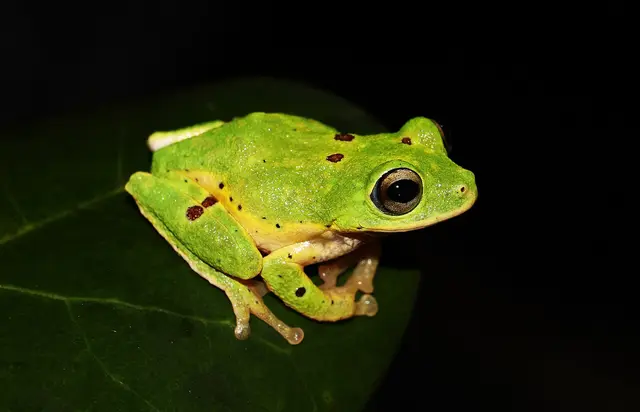
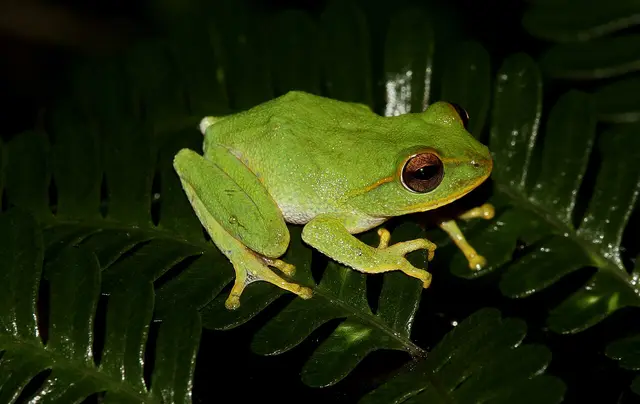
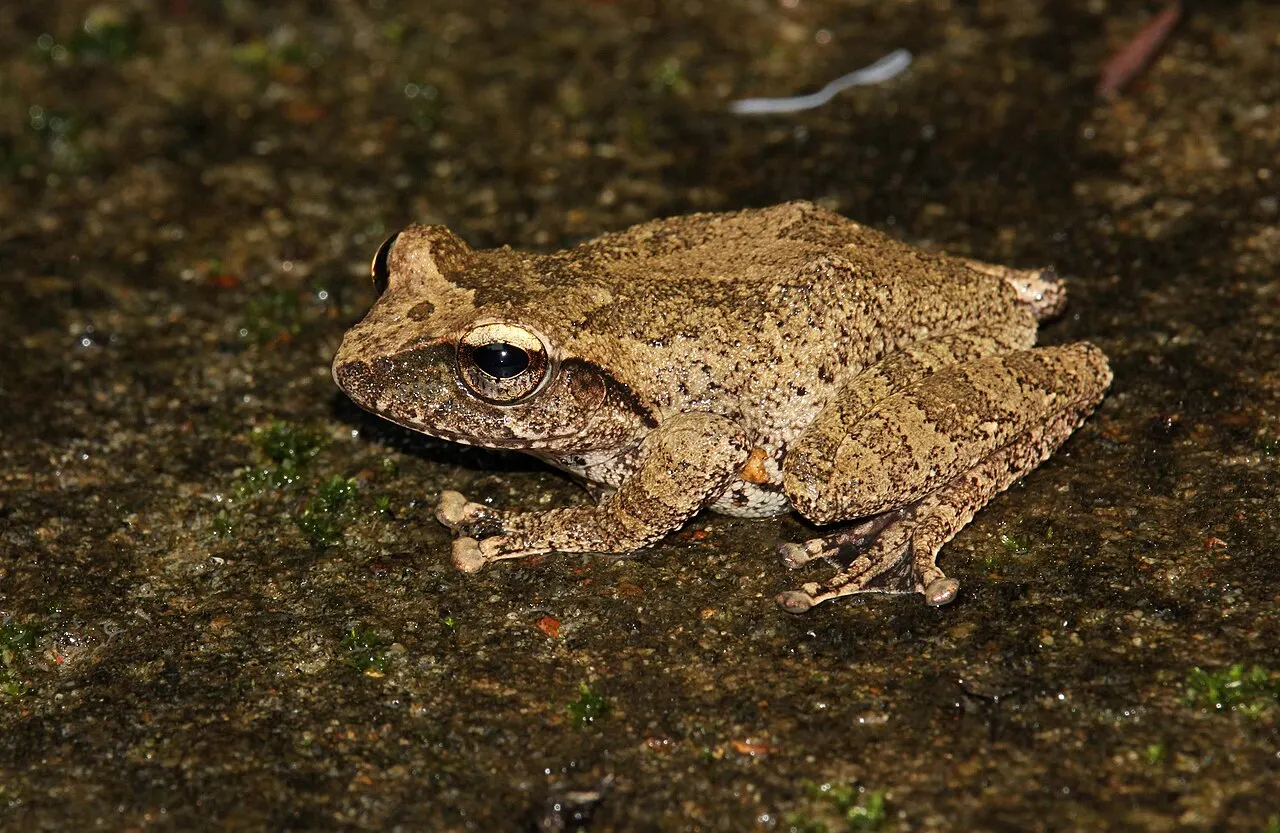
The pug-nosed shrub frog (Pseudophilautus silus) lives only in the Central Hill Country of Sri Lanka, on either side of the Horton Plains. The IUCN Red List assessed it as Endangered in 2020 because its range is small and its forest habitat keeps shrinking. A 2021 genetic study suggests it may not be a separate species.
Where it lives
Kelum Manamendra-Arachchi and Rohan Pethiyagoda described the frog in 2005 under the name Philautus silus. The type locality is the Agra Arboretum near Agarapatana, at about 1,555 m. It was first known from both sides of the Horton Plains, near Agarapatana and Haputale, and has since turned up at a few more sites in the same hills, including the Peak Wilderness Nature Reserve. It is not known anywhere else in the world.
The IUCN gives its elevation range as 1,200 to 1,600 m, an extent of occurrence of about 4,300 square km, and five or fewer locations. Its population is not considered severely fragmented.
Pins are Wikidata “endemic to” fields. Orange dots, when present, are GBIF occurrence tiles — survey bias included.
Habitat and breeding
It lives in closed-canopy forest and in some human-altered habitat, including shaded tea estates next to forest. Adults have been seen at night on stream banks and perched on branches 1 to 4 m above the ground. Assessors think it is unlikely to cope well with disturbance because it needs a canopy.
Like other shrub frogs, it develops directly and does not depend on standing water. The female digs a deep hole in the forest floor and lays her eggs in it.
Is it its own species?
A 2021 study in PLOS ONE, led by Gajaba Ellepola, compared genes across Sri Lanka's shrub frogs. One mitochondrial marker (16S) separated P. silus from the Knuckles shrub frog, P. fulvus, by only about 1 percent. The study proposed that silus is probably a synonym of fulvus, with the older name taking precedence. A nuclear gene, Rag-1, did not support the same grouping, and the study called its proposed mergers provisional until physical features are checked. The Red List still treats P. silus as a species, and its 2020 assessment predates the study.
Why it is in trouble
The IUCN records a decreasing population, inferred from the continuing loss in the quality and extent of its habitat. Tea growing is slowly expanding around the Peak Wilderness Nature Reserve, taking forest and adding pesticide pollution, and illegal tree felling for tea is described as a major threat. Expanding settlements and human-set fires also press on the frog. Firewood collection is reported as well.
The assessment also flags invasive plants in the forest and a drier, warmer climate that raises fire risk. Forest dieback and acid rain are listed as possible threats, though there is no direct evidence yet that amphibians are harmed by them.
What is being done
The frog occurs in the Tangamalai Sanctuary, the Peak Wilderness Nature Reserve and the Loolkandura, Piduruthalagala and Agra Bopath forest reserves. The IUCN says management of these areas needs to continue and be strengthened, more suitable habitat needs protection, and the population should be monitored. The assessment also records ex situ conservation, with no details given.
Sources
Written for this catalog in our own words from the sources below, checked against them on 12 November 2026. Population figures are estimates and carry the year they were made. Status and assessment year: IUCN. 2026. The IUCN Red List of Threatened Species. Version 2026-1. iucnredlist.org.