Critically Endangered
Cloud forest salamander
Bolitoglossa carri
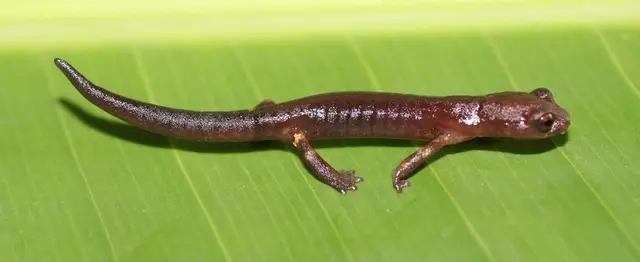
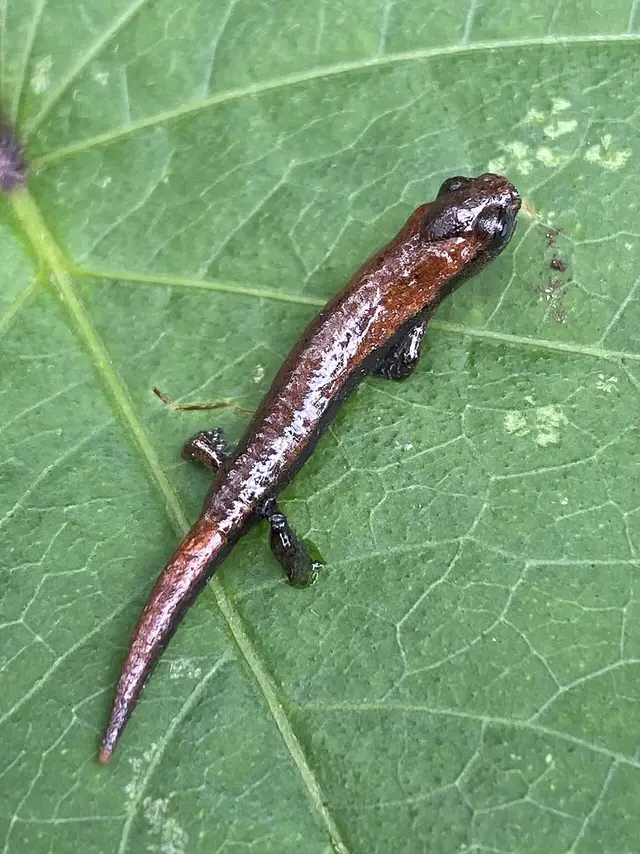
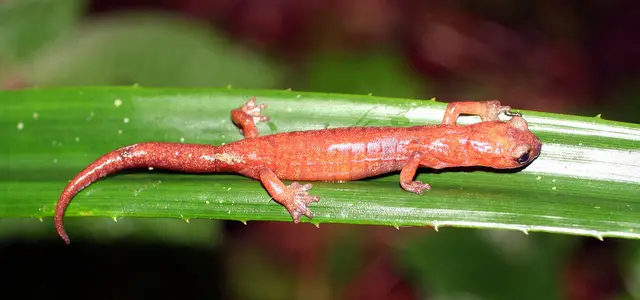
The cloud forest salamander (Bolitoglossa carri) is a lungless salamander found only in the highlands of Honduras. The IUCN Red List rated it Critically Endangered in 2019 and records its population as decreasing. Everything known about it comes from one patch of cloud forest with an extent of about 24 square kilometres.
What it is
Bolitoglossa carri belongs to the Plethodontidae, the lungless salamanders, in the large tropical genus Bolitoglossa. James McCranie and Larry David Wilson described it as a new species in 1993.
Published detail on its size, colour, diet and breeding is scarce. It is a poorly studied animal known from very few records.
Where it lives
It is endemic to Honduras and occurs nowhere else. The Red List counts a single location and gives an estimated extent of occurrence of 24.1 square kilometres. Records run from about 1,840 to 2,070 metres above sea level.
Its habitat is subtropical or tropical moist montane forest, the cool, mist-laden forest of the high ridges. The assessment treats it as a resident that does not migrate, and it does not consider the population severely fragmented.
Pins are Wikidata “endemic to” fields. Orange dots, when present, are GBIF occurrence tiles — survey bias included.
Why it is in trouble
The 2019 assessment placed it in the Critically Endangered category under criterion B1ab(iii). In plain terms, that means a very small range, a single location, and a continuing decline in the area or quality of its habitat.
The pressures listed are slow and local: small-scale farming and grazing, gathering of plants and wood, changes to the habitat, more frequent or fiercer fires, storms and flooding, landslides and roads. Each is scored as low impact on its own, but together they eat into a very small area.
The chytrid fungus Batrachochytrium salamandrivorans, which has killed salamanders in Europe, is recorded as a possible future threat. It is not listed as a current one.
What is being done
At least part of the range lies inside a protected area. The assessment lists site protection and management, habitat protection, awareness work, control of problem species and national-level policy among the conservation actions relevant to the species. It also lists research on population size, distribution and trends as needed, since no population estimate exists.
Sources
Written for this catalog in our own words from the sources below, checked against them on 12 November 2026. Population figures are estimates and carry the year they were made. Status and assessment year: IUCN. 2026. The IUCN Red List of Threatened Species. Version 2026-1. iucnredlist.org.