Endangered
Mindoro tree frog
Philautus schmackeri
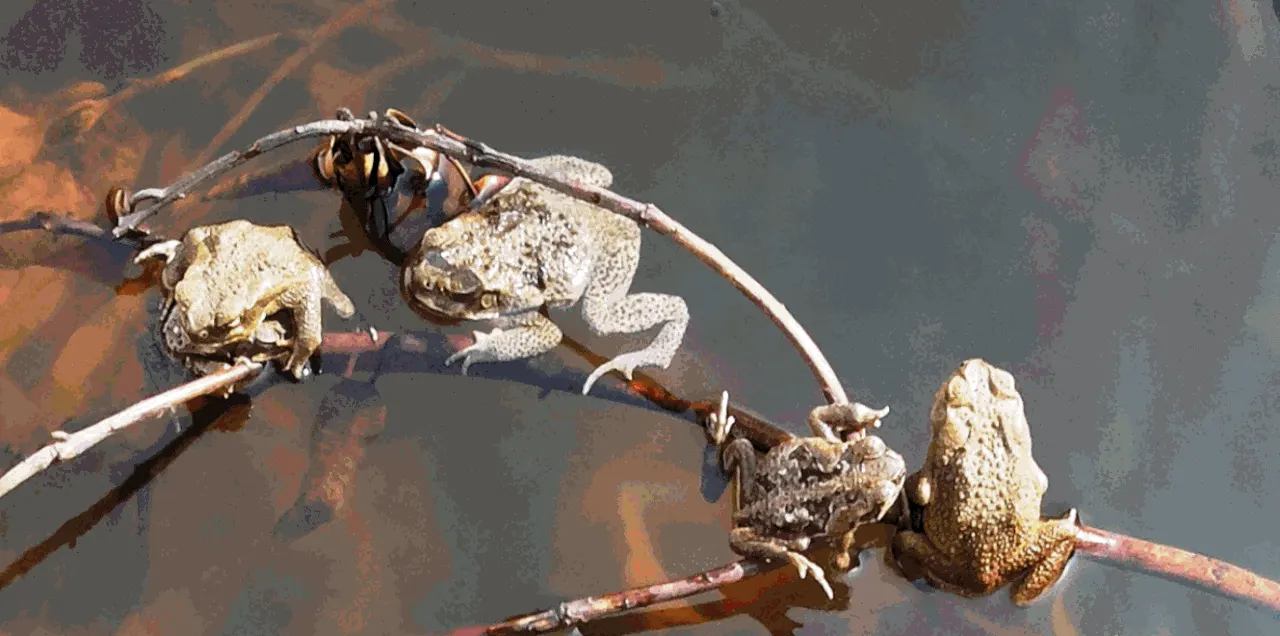
The Mindoro tree frog (Philautus schmackeri), also called Schmacker's tree frog, is a small forest frog found only in the Philippines, with museum records coming from Mindoro island. The IUCN Red List rated it Endangered in 2020. It is known from just two locations, and farms and logging are cutting into its forest.
Where it lives
The IUCN lists the species as endemic to the Philippines, with an elevation range of 100 to 1,650 m and an extent of occurrence of about 1,593 square km. It counts only two locations. Its habitats are lowland moist forest, moist montane forest and moist shrubland.
Museum collections show where it has been found. GBIF holds 539 records, nearly all preserved specimens and all from Mindoro. Most come from Oriental Mindoro, and 364 were collected in 1963. Another 43 were collected in 1991 on Mount Baco, with two from Mount Halcon that year. In Occidental Mindoro, 55 specimens came from Mount Siburan near Sablayan in 2005 and 2006, and one from Paluan in 2007. A handful date from 2015 and 2016.
Pins are Wikidata “endemic to” fields. Orange dots, when present, are GBIF occurrence tiles — survey bias included.
How it was named
Boettger described the frog in 1892 as Ixalus schmackeri. A second name, Ixalus mindorensis, was published by Boulenger in 1897 and is now treated as a synonym. The species sits in the tree frog family Rhacophoridae, in the genus Philautus.
Why it is in trouble
The IUCN lists small-holder farming, small-holder plantations and shifting agriculture as ongoing threats, along with accidental losses from small-scale timber cutting. Large-scale logging is rated a past threat that is likely to return. The assessment records a continuing decline in habitat area and a decreasing population.
Mount Siburan shows what is at stake. A 2020 camera-trap survey report there describes the area as a declared Key Biodiversity Area and Important Bird Area, lists Schmacker's tree frog among its Endangered species, and says the area has no protection figure. It cites a 2018 Haribon Foundation report describing very high human pressure on the forest.
What is being done
The IUCN records that conservation sites have been identified over part of the frog's range, and it calls for site protection and habitat protection. Whether any population lives inside a protected area is listed as unknown.
Sources
Written for this catalog in our own words from the sources below, checked against them on 12 November 2026. Population figures are estimates and carry the year they were made. Status and assessment year: IUCN. 2026. The IUCN Red List of Threatened Species. Version 2026-1. iucnredlist.org.

