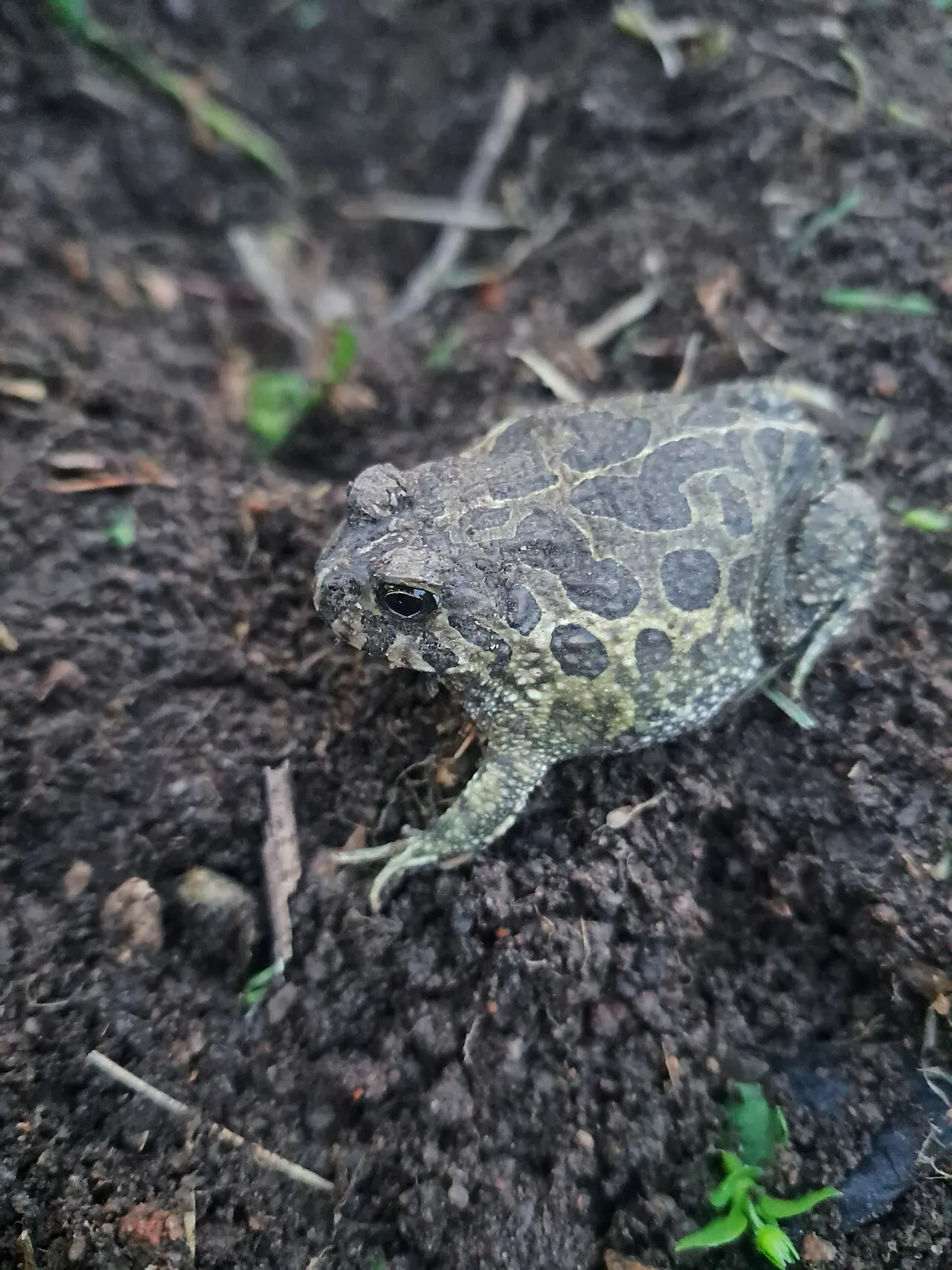
Critically Endangered
Proceratophrys palustris
Proceratophrys palustris
Proceratophrys palustris is a ground-dwelling frog from the mountains of Minas Gerais in south-eastern Brazil, described in 1993. The IUCN Red List rated it Critically Endangered in 2023. It lives in gallery forest and streams at 1,100 to 1,500 m, and that habitat is shrinking.
What kind of frog it is
It belongs to the Odontophrynidae, a family of ground-dwelling South American frogs. Giaretta and Sazima named it in 1993.
Its advertisement call is very similar to that of another species, Proceratophrys brauni. A 2012 study by Martins and Giaretta recorded calls from the Poços de Caldas population, and the researchers suggested the similarity reflects a close relationship between the two frogs.
Where it lives
It is recorded from Poços de Caldas in Minas Gerais, where Martins and Giaretta examined specimens. GBIF holds 24 records, all from Brazil.
The IUCN assessment gives an elevation range of 1,100 to 1,500 m, two to five locations, an estimated range of 70 to 957 square kilometres, and a severely fragmented population. It records the frog as absent from protected areas.
Pins are Wikidata “endemic to” fields. Orange dots, when present, are GBIF occurrence tiles — survey bias included.
How it lives
It is a terrestrial, nocturnal frog of gallery forest, the narrow strips of forest that follow streams. It is reported to breed in streams with muddy bottoms. The assessment lists seasonal and permanent streams and moist montane forest as its habitats.
Population size has not been counted. The assessment records a single subpopulation and lists 0 to 49 individuals for the largest.
Why it is in trouble
The threat list is long. It includes mining, quarrying and seepage from mines, farming and cattle ranching at small and industrial scale, plantations, housing and urban growth, and pollution from sewage, fertiliser, pesticides and run-off. Logging and forest conversion are also cited. Recreation and unintended harvest are named as sources of disturbance and mortality.
The population trend is decreasing.
What is being done
Two protected areas lie within the wider range, a municipal park in the Serra de São Domingos and a state park, but the frog has not been reported from either. The assessment lists habitat restoration, site protection and management, captive breeding, awareness work and species recovery as actions needed.
Sources
Written for this catalog in our own words from the sources below, checked against them on 12 November 2026. Population figures are estimates and carry the year they were made. Status and assessment year: IUCN. 2026. The IUCN Red List of Threatened Species. Version 2026-1. iucnredlist.org.




