Endangered
Boophis elenae
Boophis elenae
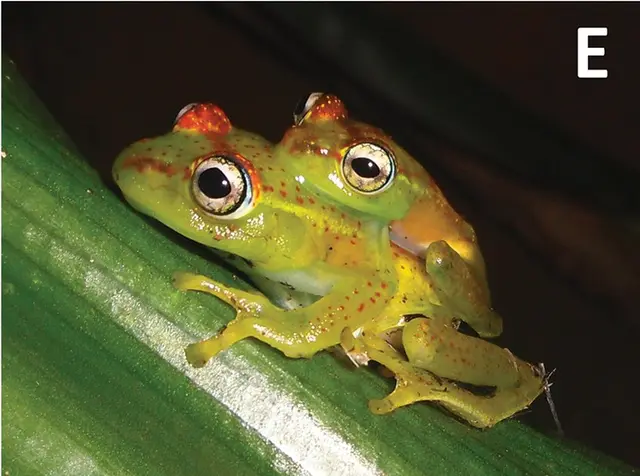
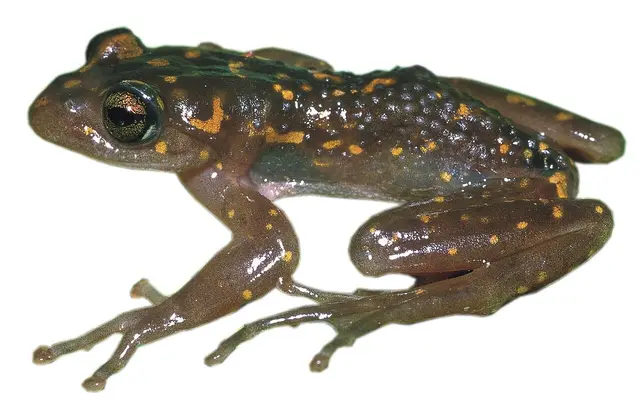
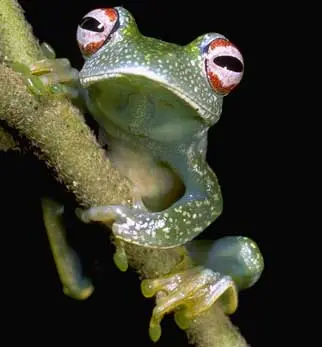
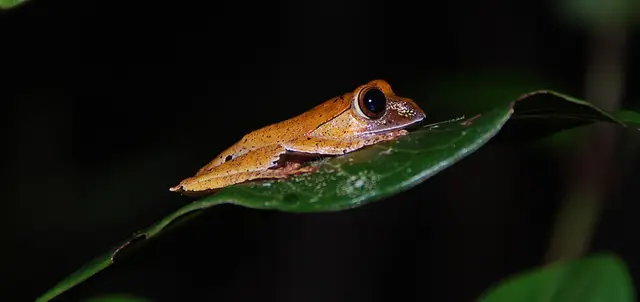
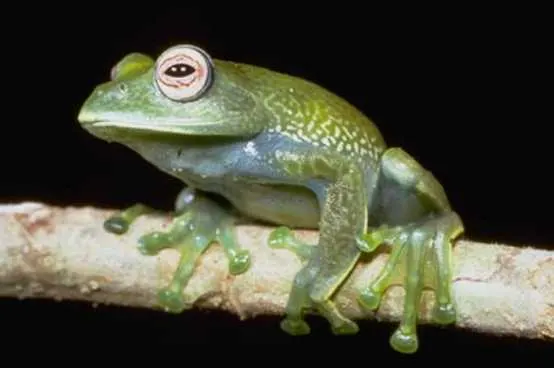
Boophis elenae is a Madagascan treefrog in the family Mantellidae, known only from Ranomafana National Park and Farimazava Forest near Antoetra. The IUCN Red List raised it from Near Threatened (2015) to Endangered in 2024, because its range is tiny and its habitat is shrinking.
Where it lives
The species is endemic to Madagascar and was described by Franco Andreone in 1993. Two sites are known: Ranomafana National Park, where it's reportedly abundant, and Farimazava Forest in Antoetra. The IUCN counts two locations and an extent of occurrence of about 1,496 square kilometres, at elevations of roughly 900 to 1,000 m.
It's tied to moist montane forest and streams, but it also turns up in altered surroundings. The Red List names arable land, plantations, rural gardens and heavily degraded former forest among its habitats.
Pins are Wikidata “endemic to” fields. Orange dots, when present, are GBIF occurrence tiles — survey bias included.
How it lives
The frog belongs to the Boophis luteus group, and the tadpoles of the species studied in the group are stream-adapted feeders. A 2010 study in Zootaxa by Tahiry Rasolonjatovo Hiobiarilanto and colleagues described the tadpole of this species for the first time, from larvae collected on 23 February 2006 at a Ranomafana site called Imaloka, at 950 m. The tadpole has a generalised body shape, and DNA matched it to an adult from Antoetra.
The same work noted that B. elenae and the look-alike Boophis sandrae are not sister species, even though adults look much alike. Their tadpoles differ in mouthpart details, which helps separate the two.
Why it is in trouble
The IUCN lists small-scale farming and grazing, shifting agriculture, housing, small-scale harvesting and an unspecified species among the threats. An older account adds timber extraction, charcoal making and invasive eucalyptus.
The assessment records a continuing decline in habitat area. The population trend is listed as unknown.
What is being done
Part of the range lies inside a protected area, according to the IUCN, which also lists site protection and site management as the actions in place or needed. The assessment describes no species-specific programme.
Sources
Written for this catalog in our own words from the sources below, checked against them on 12 November 2026. Population figures are estimates and carry the year they were made. Status and assessment year: IUCN. 2026. The IUCN Red List of Threatened Species. Version 2026-1. iucnredlist.org.