Endangered
Afrixalus clarkei
Afrixalus clarkei
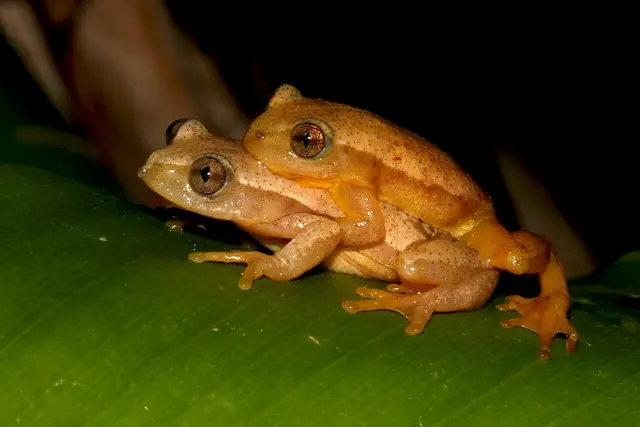
Clarke's banana frog (Afrixalus clarkei) is a tiny green frog found only in southwestern Ethiopia. The IUCN Red List rated it Endangered in 2020 because its forest and wetland habitat is shrinking, though a 2016 survey found it in more places than were previously known. It breeds in marshy pools.
How to recognise it
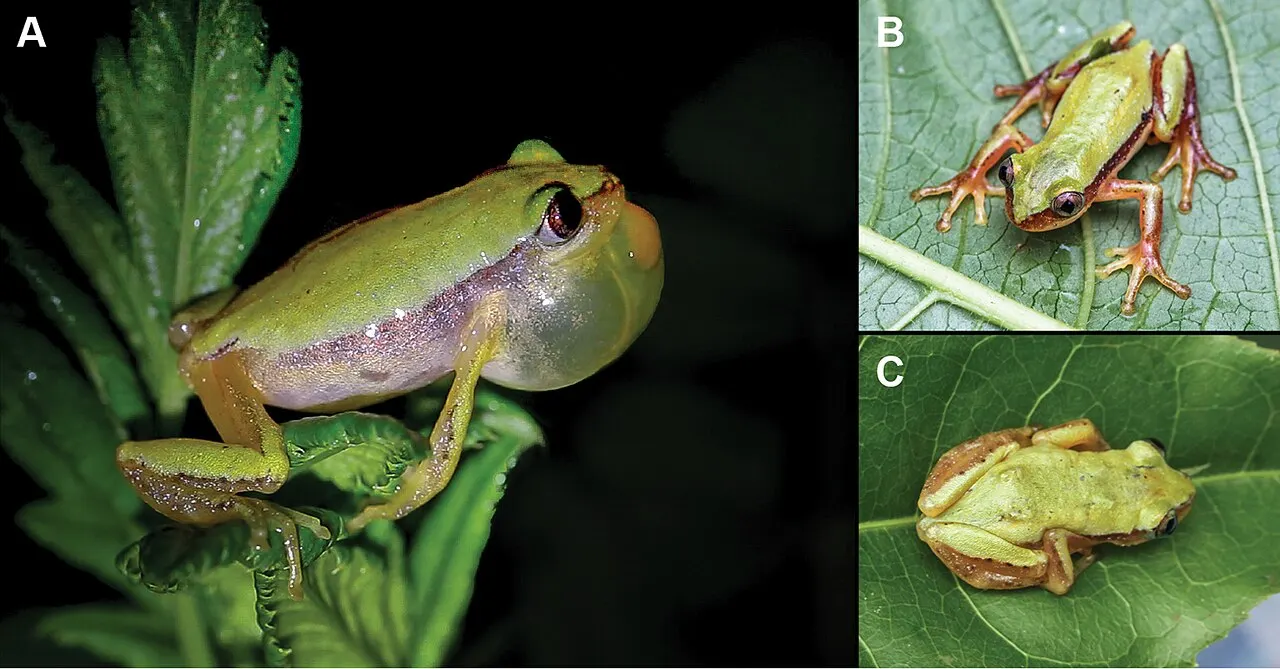
This is a small member of the family Hyperoliidae. Males reach about 23 mm from snout to vent and females about 24 mm. In a 2016 survey the average male measured 20.3 mm and weighed 0.52 g, and the average female 23.2 mm and 0.71 g.
Most frogs have a plain green back with brown lines running down the sides that fade toward the rear, and one male in the survey was turquoise. Males reportedly have a yellow throat sac and call with a creak followed by a few metallic clicks.
Where it lives
The frog is endemic to southwestern Ethiopia. It was first known from two populations near Bonga, and a 2016 survey in ZooKeys by Mertens and colleagues added the banks of the Kito River south of Jimma, a swamp in a river floodplain south of Chira, and montane forest around Afalo. That stretched the known range about 40 km north and 70 km east.
It has been recorded from 820 to 2,030 m above sea level, the top figure coming from Chira. It reportedly occurs in the Kafa Biosphere Reserve.
Pins are Wikidata “endemic to” fields. Orange dots, when present, are GBIF occurrence tiles — survey bias included.
How it lives
Besides moist montane forest, the Red List names marshes, seasonal pools, dry forest and plantations as habitats. The 2016 survey found frogs in marshes and floodplains in open, disturbed land, and concluded the species copes with forest disturbance better than expected. It reportedly breeds in marshy pools with emergent plants.
Why it is in trouble
Forest and wetland are being converted for small-holder and commercial farming and for housing, and the area the frog occupies continues to decline. The 2016 paper cites a figure that forest cover across Ethiopia has fallen below 3 percent.
The survey recorded at least 100 frogs and called the species more common than previously thought. The Red List still treats the population trend as unknown.
What is being done
Protection of sites and of habitat is the response listed in the assessment, and the frog occurs in at least one protected area. No dedicated recovery plan is documented.
Sources
Written for this catalog in our own words from the sources below, checked against them on 12 November 2026. Population figures are estimates and carry the year they were made. Status and assessment year: IUCN. 2026. The IUCN Red List of Threatened Species. Version 2026-1. iucnredlist.org.