Endangered
Puran Appu's shrub frog
Puran Appu's shrub frog
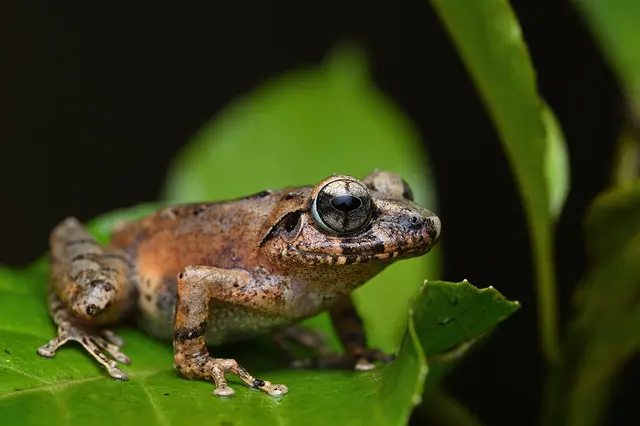
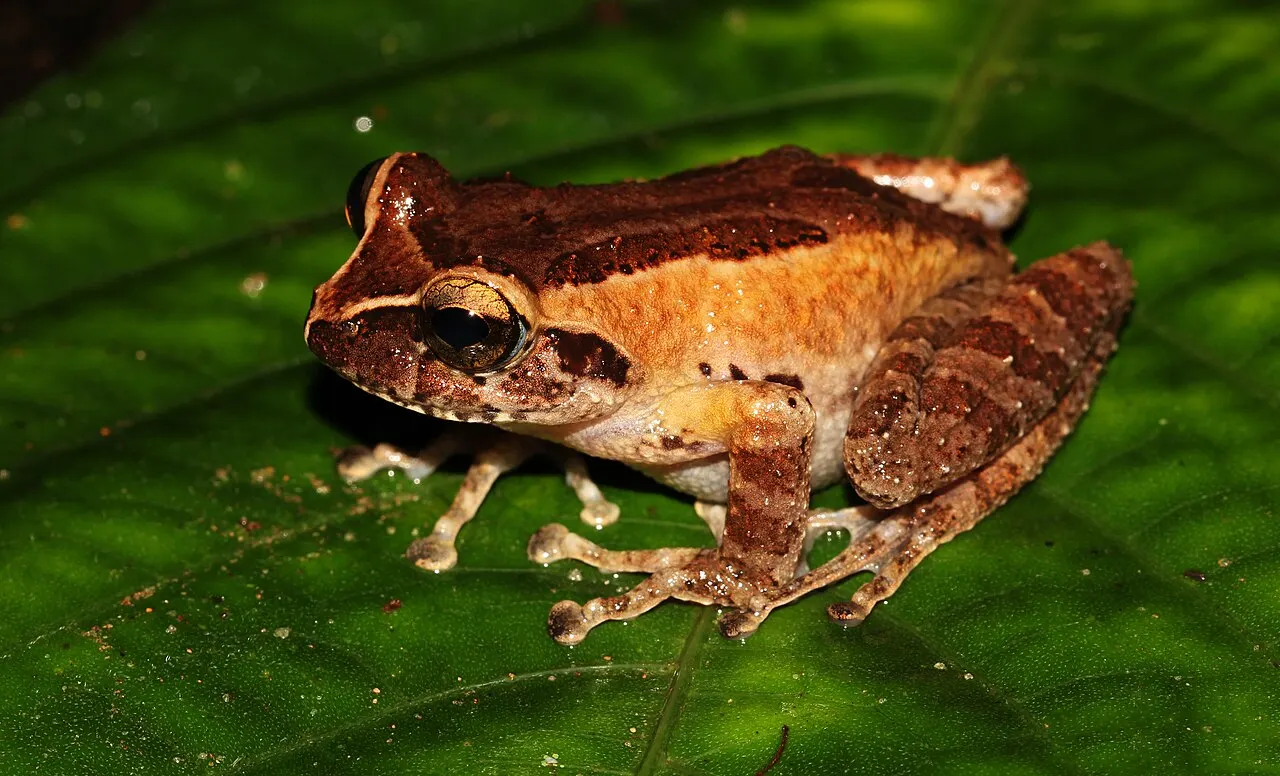
Puran Appu's shrub frog (Puran Appu's shrub frog) is a small brown frog with a maroon hourglass marking on its back, known only from the Sripada (Adam's Peak) area of Sri Lanka's Peak Wilderness. The IUCN Red List rated it Endangered in 2020. It was described in 2013 and lives on a mountain top visited by pilgrims.
How to recognise it
Adult males measure about 33.6 to 34.2 mm from snout to vent. The only female in the original description was much larger, at about 51 mm. The back is light brown, with a maroon band running from the snout to the vent in the shape of an hourglass. In the male holotype the band is broken in the middle of the back, while in the paratypes the broad patch stays intact.
The sides of the body are paler with a greenish tinge, and the limbs are dark brown with blackish-maroon bars. The belly is off-white, marbled with dark brown. Among the specimens collected, the area outside the hourglass patch ranged from pink to yellowish.
Where it lives
The species is endemic to Sri Lanka. The type locality is Sripada (Adam's Peak) in the Peak Wilderness, Nuwara Eliya District. Most records come from 2,000 to 2,100 m, with small numbers from around 1,800 m. The IUCN gives the same 1,800 to 2,100 m band and confirms the frog from three localities: Sripada, the Chariot path in Central Province, and Nonpareil Estate in Sabaragamuwa Province.
Its habitat is rocky ground, including mountain peaks, and high-altitude shrubland. Experts consulted by the IUCN describe it as common where suitable habitat remains.
It was described in 2013 in the Journal of Threatened Taxa, in a paper by Wickramasinghe and colleagues that named eight new shrub frogs from the Sripada area. The name honours Veera Puran Appu (1812 to 1848), a leader who stood up against British rule.
Pins are Wikidata “endemic to” fields. Orange dots, when present, are GBIF occurrence tiles — survey bias included.
How it lives
It is active in daylight as well as at night. The describers found it perched on rocks in shaded spots by day, and sitting on bushes about 1 m high after dark. It was mostly seen where there was no tree canopy, including disturbed ground on the summit itself.
Why it is in trouble
The IUCN lists the population as decreasing, inferred from the continuing loss in the quality and extent of its habitat. Its threat list covers small-holder farming, recreational activities, garbage and solid waste, light pollution, acid rain, shifting habitat and drought.
The 2013 paper named problems across the wider Sripada area: rubbish left during the roughly six-month pilgrim season, illegal gem mining on river banks, expanding tea cultivation, illegal tree felling, and forest die-back that may be tied to pollution or climate change. It proposed Critically Endangered for the new frogs, citing a range under 100 square km and single locations. The 2020 IUCN assessment placed this species one step lower, as Endangered.
What is being done
The IUCN records the frog in the Peak Wilderness Protected Area and the Piduruthalagala Forest Reserve. It lists continued and strengthened management of protected areas, and wider protection of suitable habitat, as the actions needed. The Peak Wilderness sanctuary around Sripada has been described as a World Heritage Site.
Sources
Written for this catalog in our own words from the sources below, checked against them on 12 November 2026. Population figures are estimates and carry the year they were made. Status and assessment year: IUCN. 2026. The IUCN Red List of Threatened Species. Version 2026-1. iucnredlist.org.