Endangered
Eleutherodactylus grandis
Eleutherodactylus grandis
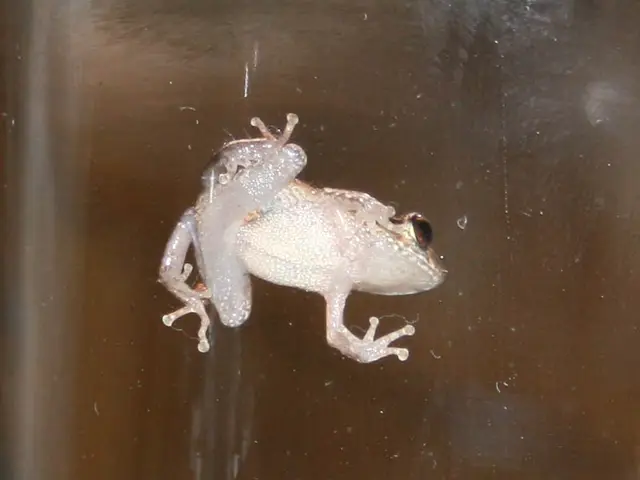
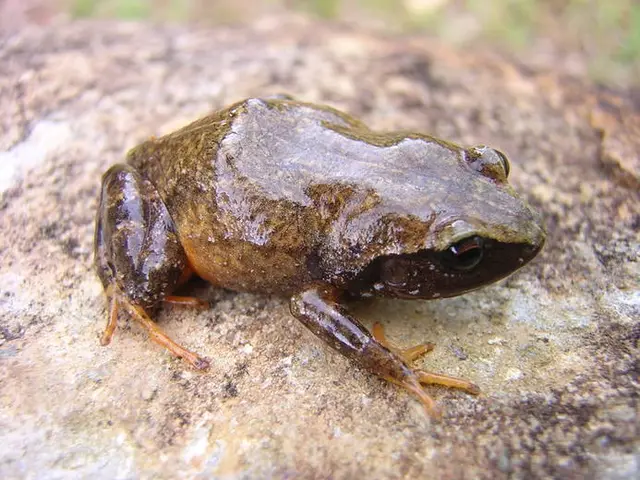
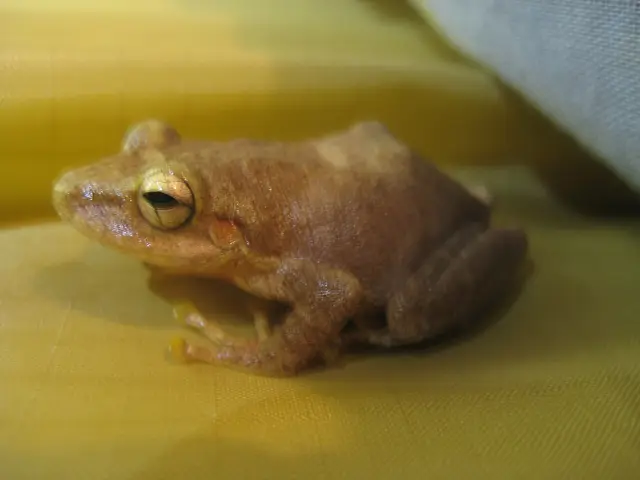
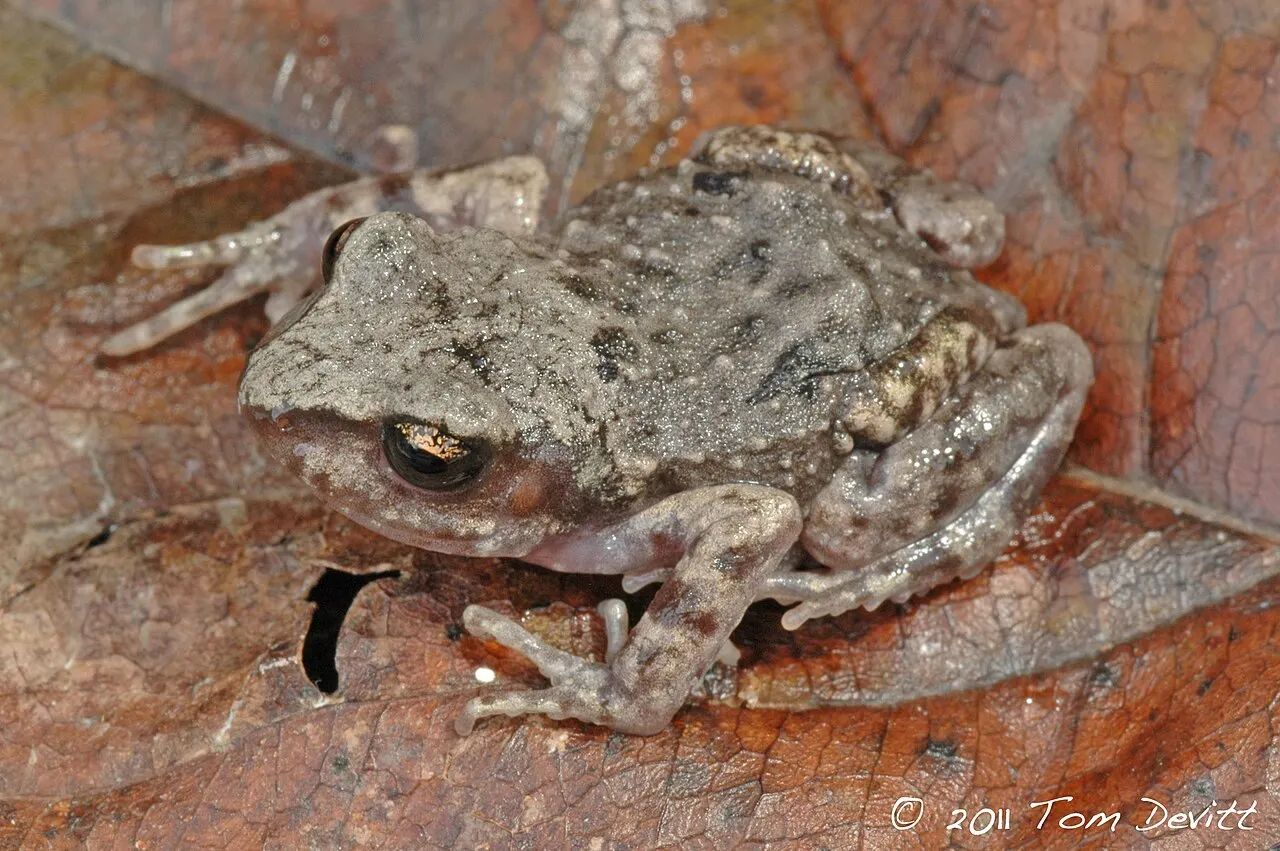
The Pedregal frog, or great peeping frog (Eleutherodactylus grandis), is a small whistling frog of the volcanic lava rock in and around southern Mexico City. The IUCN Red List rated it Endangered in 2020, down from Critically Endangered in 2004. It has no tadpole stage, and most of its habitat has been built over.
How to recognise it
It is a tiny frog, with a maximum length of about six centimetres according to a 2025 news report in Posta. Females are usually a few millimetres longer than males.
You are far more likely to hear this frog than see it. Males give a short, single-note whistle, repeated about one to six times a minute. A 2016 study found that each male's pitch changes very little, which Serrano suggests may help frogs recognise each other.
Where it lives
The frog is endemic to Mexico. It is known from the Pedregal del Xitle, the lava flow left by the Xitle volcano, in the south of Mexico City. The IUCN gives its elevation as 2,200 to 2,682 metres, with an extent of occurrence of 118 square kilometres. It adds that recent surveys found the frog at several other localities in the city and the State of Mexico, and that it is likely wherever lava rock occurs.
Its best-known strongholds are protected areas in and around the city, including the Reserva Ecológica del Pedregal de San Ángel on the university campus, the Ecoguardas park and the Parque Ecológico de la Ciudad de México. It lives among large, solid rocks, and avoids crumbly volcanic soil where shifting stones could crush it. The IUCN says it historically lived in dry shrubland, but now occurs mainly in urban areas.
Pins are Wikidata “endemic to” fields. Orange dots, when present, are GBIF occurrence tiles — survey bias included.
How it lives
The IUCN says it breeds by direct development, with no free-swimming tadpoles. Males call from bare rock and from clumps of grass, mostly from late May to mid-August. Calling peaks at the start of the rainy season and is stronger after rainy days.
Tracking over 20 nights found that males moved less than two metres on average. Many vanish from their calling rock within two or three nights, and where they go is unknown. A 2023 review put the home range of one frog at about 0.4 square metres, citing a 2022 thesis.
Why it is in trouble
Mexico City grew over most of the lava field. The IUCN describes the Pedregal reserve as an isolated vegetation fragment of 160 hectares with no natural corridors. A 2016 paper in Revista Mexicana de Biodiversidad put the frog's intact range at under 10 square kilometres. The 2025 Posta report said the ecosystem had shrunk from more than 80 square kilometres to about 13. The two figures differ, but both describe a very small remnant.
The Red List scores housing, roads, recreation and acid rain as ongoing, low-impact threats, and records a continuing decline in the area the frog occupies. Its population trend is decreasing.
What is being done
The frog occurs in the Pedregal reserve and is protected in Mexico under the Special Protection category. The 2020 assessment lists site management, species recovery and habitat protection among the actions needed, including a recovery programme and species management plans, and calls for survey work on its current status.
The IUCN calls the species not particularly common and difficult to collect, though more often found in the rainy season, from June to October. A 2023 review, citing a 2022 study, says it appears relatively abundant in the few lava-field reserves that remain. A group of biologists studied the frog in 2015 with support from the Conservation Leadership Programme, according to the Posta report.
Sources
Written for this catalog in our own words from the sources below, checked against them on 12 November 2026. Population figures are estimates and carry the year they were made. Status and assessment year: IUCN. 2026. The IUCN Red List of Threatened Species. Version 2026-1. iucnredlist.org.
- IUCN Red List assessment, Eleutherodactylus grandis (2020)
- IUCN taxon record, Eleutherodactylus grandis
- Serrano 2016, Revista Mexicana de Biodiversidad 87: 535-539
- Ciencia (Academia Mexicana de Ciencias), Pedregal frog article
- Flores-Solis et al. 2023, Herpetologia Mexicana 6: 87-98
- Posta, La fauna endemica de CDMX (30 March 2025)
- Eleutherodactylus grandis, English Wikipedia