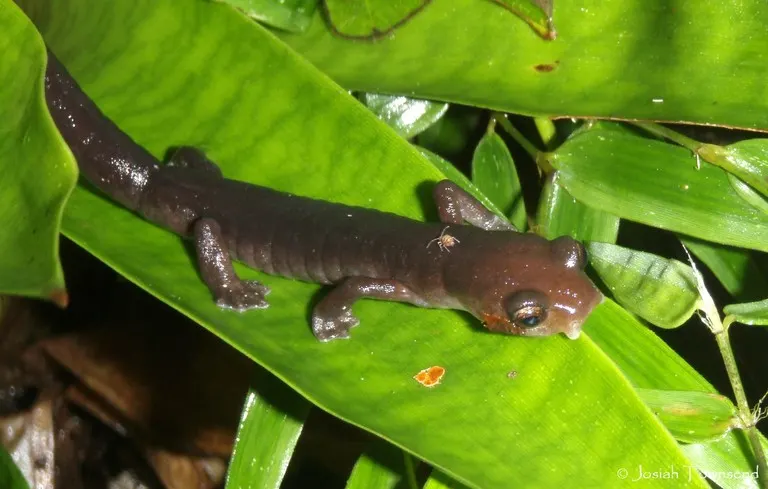
Endangered
El Cusuco salamander
Bolitoglossa diaphora
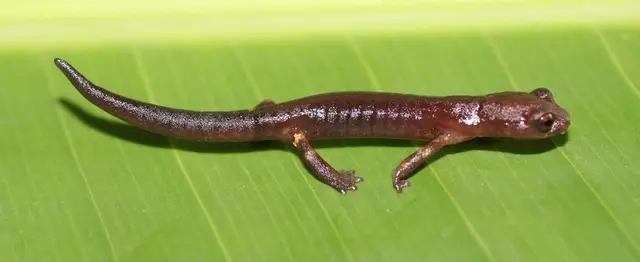
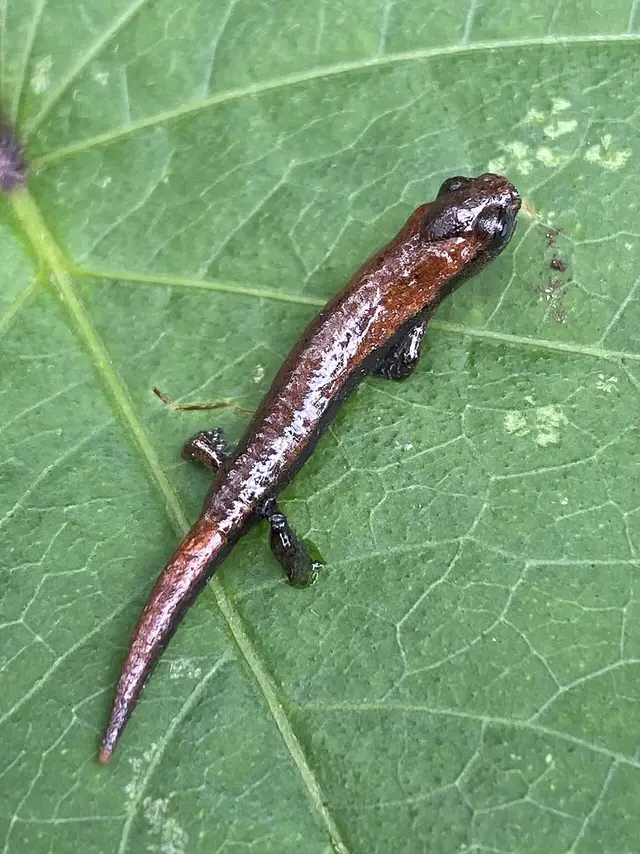
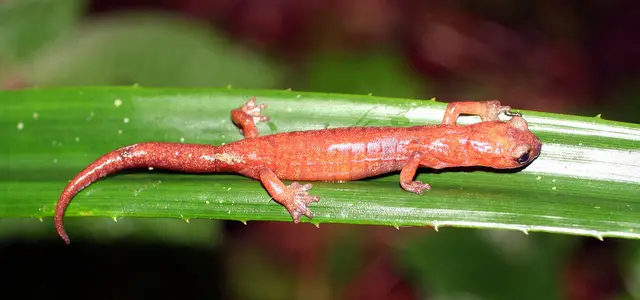
The El Cusuco salamander (Bolitoglossa diaphora) lives in montane forest in the Sierra de Omoa of northwestern Honduras, centred on Cusuco National Park. It was only described in 1995. The IUCN assessed it as Endangered in 2019, after three earlier assessments as Critically Endangered, and its forest habitat is still shrinking.
How to recognise it
It belongs to the family Plethodontidae and the genus Bolitoglossa. James McCranie and Larry Wilson described it in 1995, which makes it a recent addition to the list of Honduran amphibians.
When handled, it gives off a pale milky skin secretion. Two related salamanders in the same park, B. dunni and B. conanti, produce a yellow one.
Where it lives
Its range is very small. The IUCN counts a single location and estimates the extent of occurrence at about 137 square kilometres, all of it in Honduras. Records centre on Cusuco National Park in the Sierra de Omoa, in the department of Cortés.
It lives in subtropical or tropical moist montane forest, at about 1,470 to 2,200 metres above sea level according to the IUCN. Occurrence records in GBIF (88 in 2026) are almost all from Cortés, many of them labelled with Cusuco National Park localities such as the visitor centre area, and their elevations run from about 1,450 to 2,200 metres.
Pins are Wikidata “endemic to” fields. Orange dots, when present, are GBIF occurrence tiles — survey bias included.
How it lives
Very little has been published on its diet, breeding or lifespan. What is on record comes mostly from defence behaviour. A 2018 paper by Cristina Arrivillaga and Tom Brown in the journal Reptiles & Amphibians described how salamanders in the park protect themselves.
The skin secretion of B. diaphora was sticky enough to glue together the plastic bags used to hold captured animals. The same paper reports that salamanders with dropped or regrowing tails were seen in several Bolitoglossa species in the park, including this one. Losing the tail is a common escape tactic in the genus.
Why it is in trouble
The IUCN records a continuing decline in the area of forest the species occupies and a decreasing population. The threats it lists include small-holder farming, shifting agriculture, small-scale and nomadic grazing, and housing. Landslides, storms and flooding, and droughts add natural pressure.
Because the whole species depends on one block of mountain forest, a single bad event, or steady loss of forest at the edges, could matter a great deal. The 2018 park paper, citing the 2010 assessment, lists it as one of two salamanders in the park rated Critically Endangered at that time.
What is being done
The salamander occurs inside a protected area. The Red List lists site and area protection, site management, resource and habitat protection, and awareness work among the actions that apply. Cusuco National Park is also a regular site for amphibian surveys, including the June to August fieldwork of 2012 to 2017 behind the 2018 paper.
Sources
Written for this catalog in our own words from the sources below, checked against them on 12 November 2026. Population figures are estimates and carry the year they were made. Status and assessment year: IUCN. 2026. The IUCN Red List of Threatened Species. Version 2026-1. iucnredlist.org.