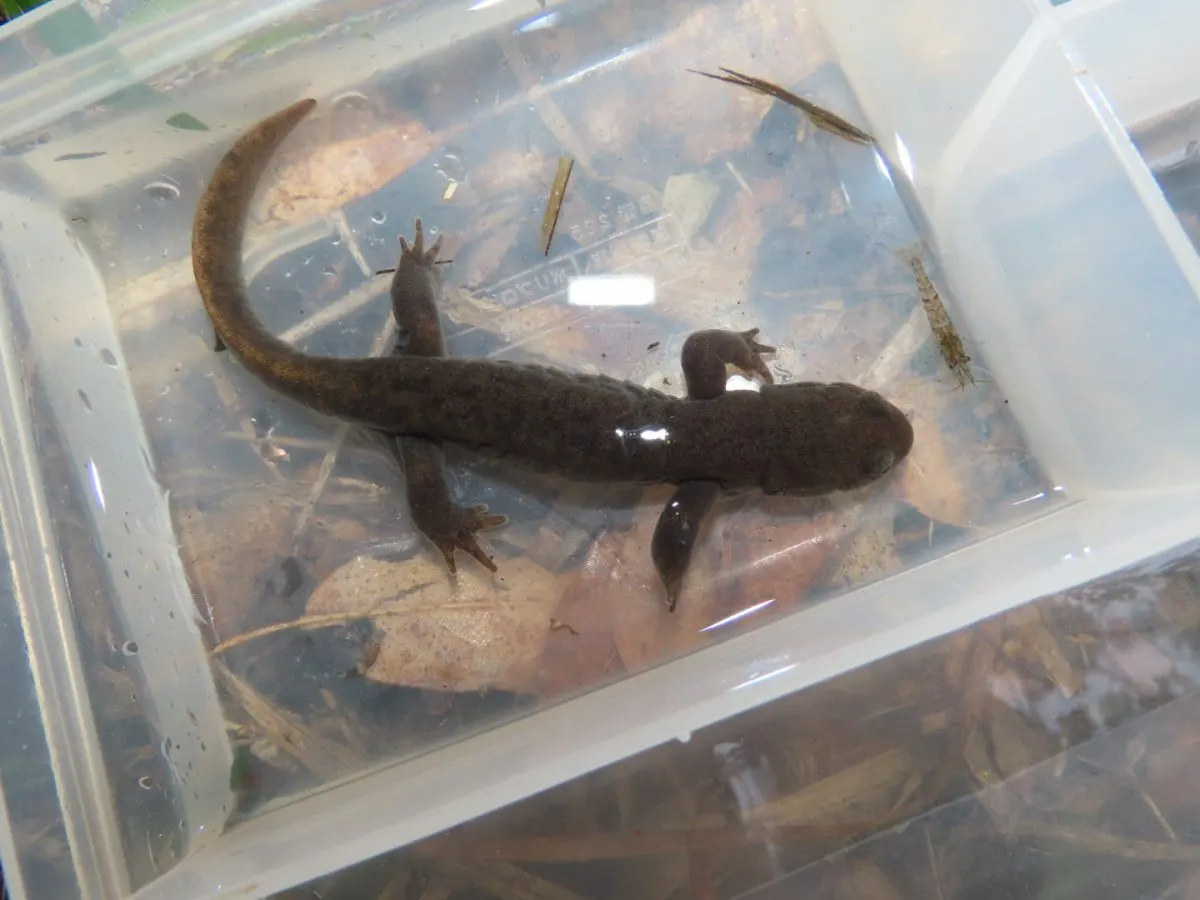
Endangered
Hynobius abuensis
Hynobius abuensis
The Abu salamander, Hynobius abuensis, is a small forest salamander from the Chugoku region of western Honshu, Japan, found in Shimane and Yamaguchi prefectures. It was named only in 2019. The IUCN Red List rated it Endangered in 2021, with targeted use and habitat loss among the threats.
How to recognise it
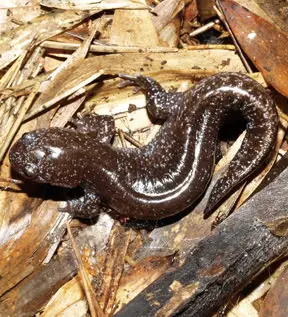
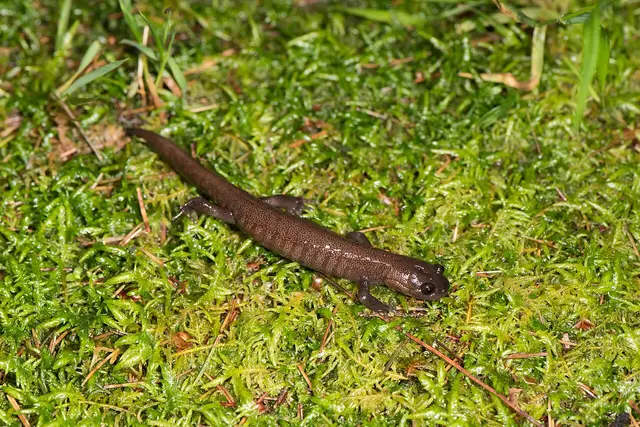
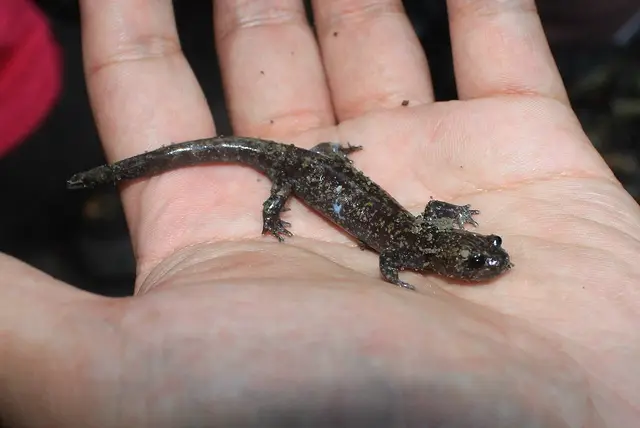
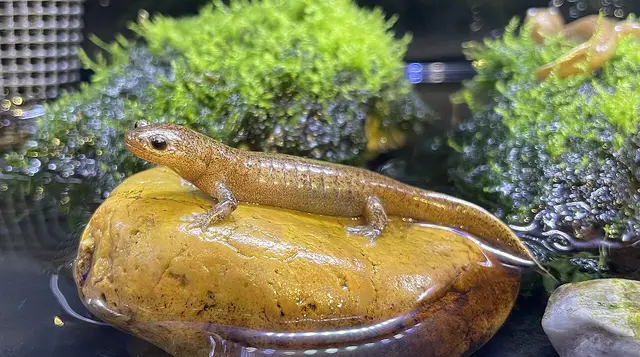
Adults are reportedly about 10 to 12 cm long including the tail. Like other Hynobius salamanders it has long legs, clawless fingers, vomerine teeth and a tail slightly shorter than the head and body together. The back is olive and the underside paler, dotted with silvery-white spots. Unlike the lungless Onychodactylus salamanders, it has lungs.
For years it was lumped in with the Japanese clouded salamander, Hynobius nebulosus. A 2019 study in Current Herpetology by Matsui and colleagues used mitochondrial DNA and nuclear genotyping to show that this widely distributed species is actually at least nine, and described seven of them as new, including the Abu salamander.
Where it lives
The known range is in Shimane and Yamaguchi prefectures, at roughly 150 to 970 m. The name refers to the Abu district of Yamaguchi Prefecture. The Red List estimates 1 to 5 locations and says it is not a migrant. It is recorded as not occurring in any protected area.
Pins are Wikidata “endemic to” fields. Orange dots, when present, are GBIF occurrence tiles — survey bias included.
How it lives
It lives in temperate forest near still water, including puddles, marshes, small pools and drainage ditches. Breeding reportedly takes place in still water from about February to March. Larvae usually turn into land-living adults within the year, though some spend the winter as larvae and change the next spring.
Why it is in trouble
The Red List names several threats: use that targets the species itself, housing and urban development, farming, roads and railways, and other changes to its ecosystems. The population is declining and the area it occupies is still shrinking.
Conservation needs listed include protecting sites, managing harvest and trade, and policies and regulations. No population count is available.
Sources
Written for this catalog in our own words from the sources below, checked against them on 12 November 2026. Population figures are estimates and carry the year they were made. Status and assessment year: IUCN. 2026. The IUCN Red List of Threatened Species. Version 2026-1. iucnredlist.org.