Endangered
Anodonthyla rouxae
Anodonthyla rouxae
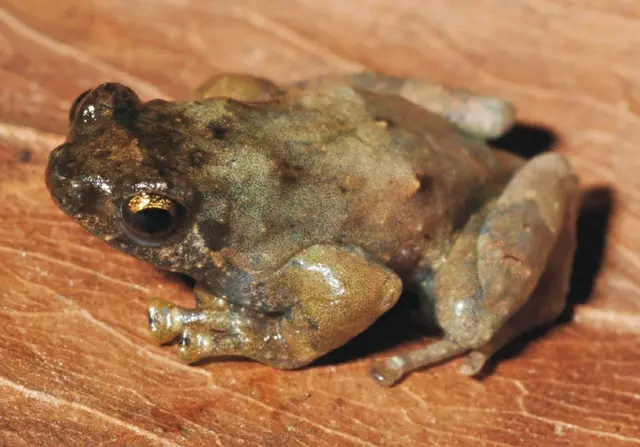
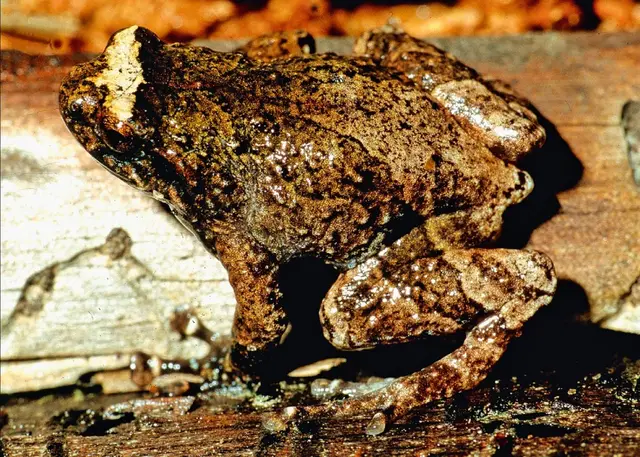
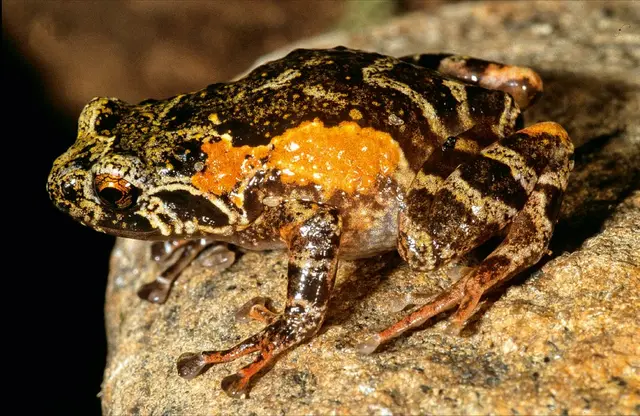
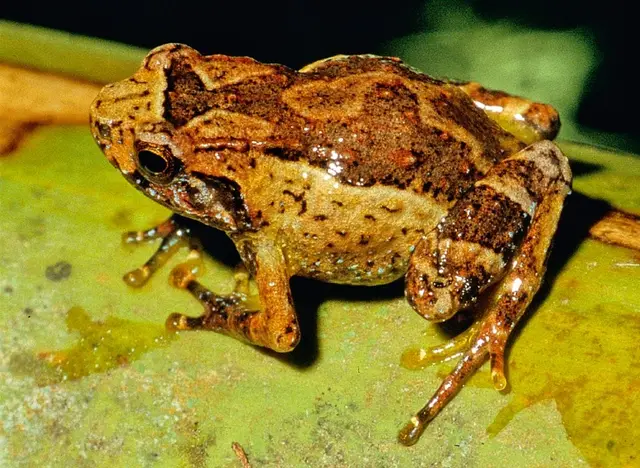
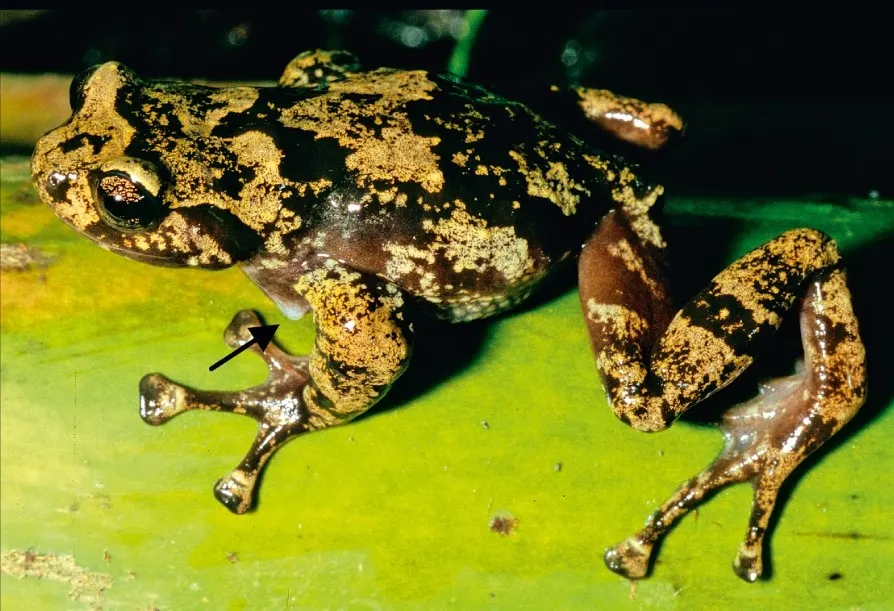
Anodonthyla rouxae, sometimes called the Madagascar climbing frog, is a small microhylid frog known only from montane forest in Madagascar. The IUCN Red List rated it Endangered in 2025. It occupies just two locations, and its forest is still shrinking.
What it is
This frog belongs to the Microhylidae, in the subfamily Cophylinae, and to the genus Anodonthyla, a group of twelve Madagascar-only species. Males in the genus have a large spur-like structure (the prepollex) running along a very short first finger, and the first finger is short in both sexes. Molecular data suggest the genus is the sister group of all other cophylines.
Jean Marius René Guibé described the species in 1974, and it is named for the French herpetologist Rolande Roux-Estève. The holotype is held at the Muséum national d'Histoire naturelle in Paris. Its recorded type locality reads 'Chaînes Anosyennes, bambous', meaning the Anosy mountain chains, with a note of bamboo. Detailed field accounts of its appearance and behaviour are scarce.
Where it lives
The species is endemic to Madagascar and lives in subtropical or tropical moist montane forest. The IUCN gives an elevation range of 850 to 1,900 m and counts only two locations, so the range is classed as restricted. It is known to occur in at least one protected area.
Pins are Wikidata “endemic to” fields. Orange dots, when present, are GBIF occurrence tiles — survey bias included.
Why it is in trouble
The 2025 assessment uses the criteria B1ab(iii)+2ab(iii), which rest on a small range and continuing decline in the area and quality of habitat. The population trend is recorded as decreasing, and no population size has been estimated. General summaries of the species also name habitat loss as the main threat.
Listed threats are housing and urban growth, small-holder farming and grazing, and shifting agriculture, along with wider alteration of habitat. Droughts and temperature extremes are also named.
What is being done
The conservation actions the IUCN records for the frog are site and area management and awareness and communications work.
Sources
Written for this catalog in our own words from the sources below, checked against them on 12 November 2026. Population figures are estimates and carry the year they were made. Status and assessment year: IUCN. 2026. The IUCN Red List of Threatened Species. Version 2026-1. iucnredlist.org.