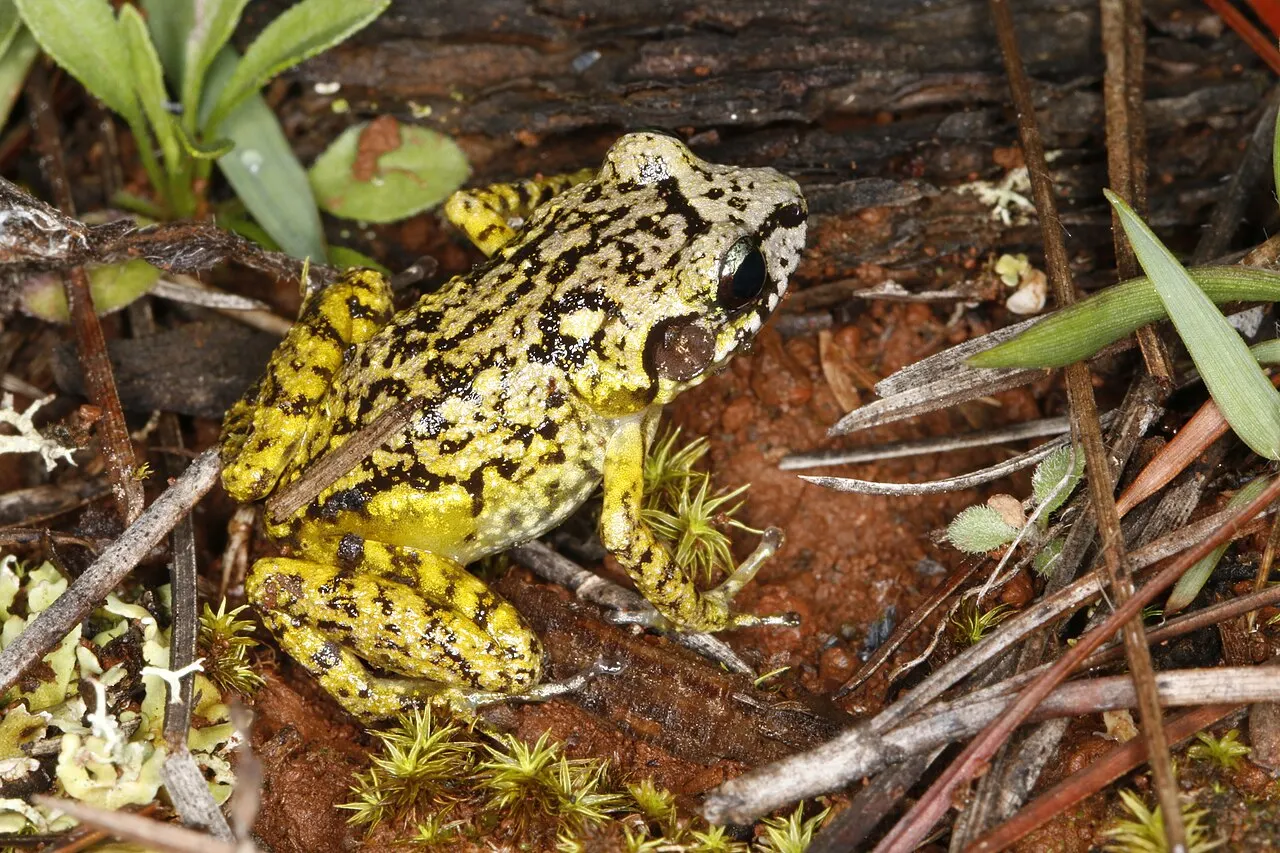
Endangered
Southern pastel frog
Eleutherodactylus leoncei
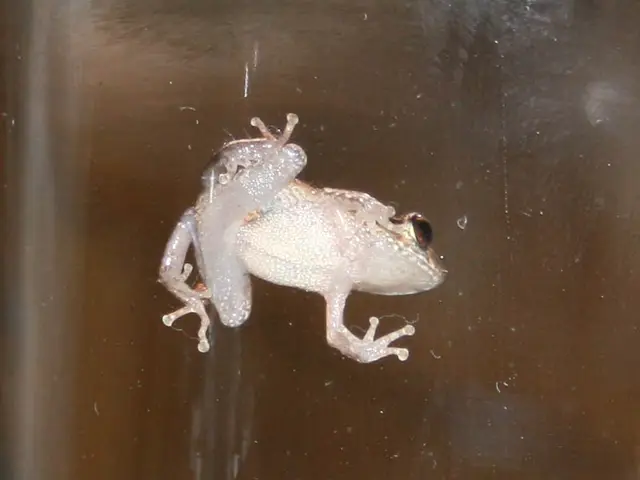
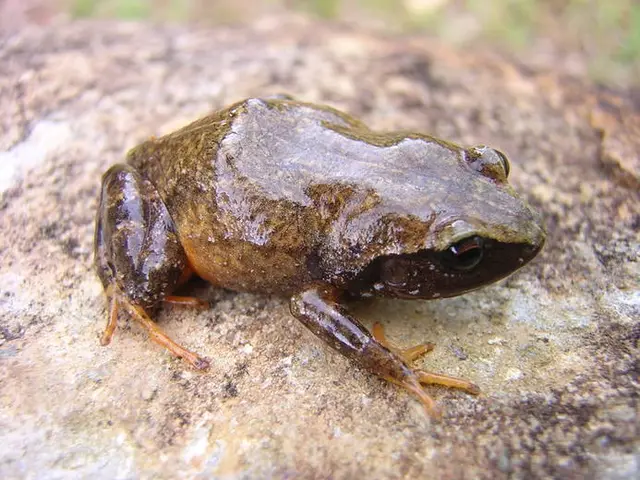
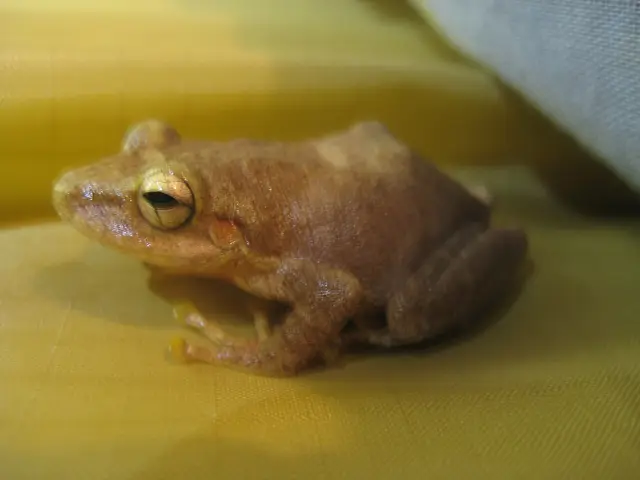
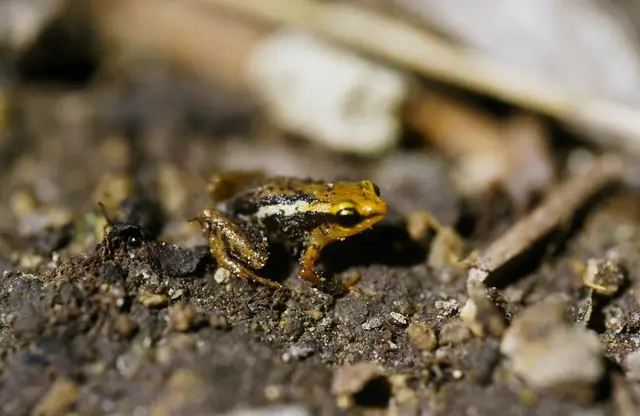
The southern pastel frog (Eleutherodactylus leoncei), also called the Hispaniola robber frog, is a small terrestrial frog found only in the mountains of Haiti and the Dominican Republic. The IUCN Red List assessed it as Endangered in 2022, with a decreasing population and a very small, shrinking range.
What it is
This is a member of the family Eleutherodactylidae, the robber frogs, which develop directly and skip the tadpole stage. Eggs are laid on the ground. Shreve and Williams described the species in 1963. The type locality is the Foret des Pins near Pic La Selle in Haiti, where the original specimen, an adult female, was collected on 26 February 1959.
Where it lives
It occurs only on Hispaniola. It's known from the Massif de la Selle, which spans the Haiti and Dominican Republic border, and from the Sierra de Bahoruco in the Dominican Republic. The IUCN counts one to five locations and gives an elevation range of 1,182 to 2,335 m, though another source gives 2,303 m as the upper limit.
The only habitat the IUCN lists is moist montane forest, and the species is described as living in upland pine forest. It is a ground-dweller that favours shady spots, with specimens mostly found under rocks and logs. Males call from the ground.
Pins are Wikidata “endemic to” fields. Orange dots, when present, are GBIF occurrence tiles — survey bias included.
Why it is in trouble
The 2022 assessment applies criterion B1ab(iii), which describes a restricted range with continuing decline in habitat quality. The IUCN records a continuing decline in the area it occupies and a decreasing population trend. The threats listed are shifting agriculture, small-holder farming, small-scale wood harvest, more frequent or intense fires, and drought, all ongoing. Charcoal-making and slash-and-burn clearing are blamed for much of the forest loss, and some fires in the Sierra de Bahoruco are reported to start from illegal activity inside the park.
The frog was rated Critically Endangered in 2004 and 2010, and Endangered in 2022. The 2022 category is lower, but the IUCN still records the population as decreasing.
What is being done
The species occurs in at least one protected area, Sierra de Bahoruco National Park. The IUCN lists site and area management, habitat protection, awareness and communication, and habitat restoration as the actions needed. Habitat degradation is reported to be continuing in the Sierra de Bahoruco, and the surrounding region is poorly protected. Very little else has been published about the animal.
Sources
Written for this catalog in our own words from the sources below, checked against them on 12 November 2026. Population figures are estimates and carry the year they were made. Status and assessment year: IUCN. 2026. The IUCN Red List of Threatened Species. Version 2026-1. iucnredlist.org.