Haiti
5 catalog pins
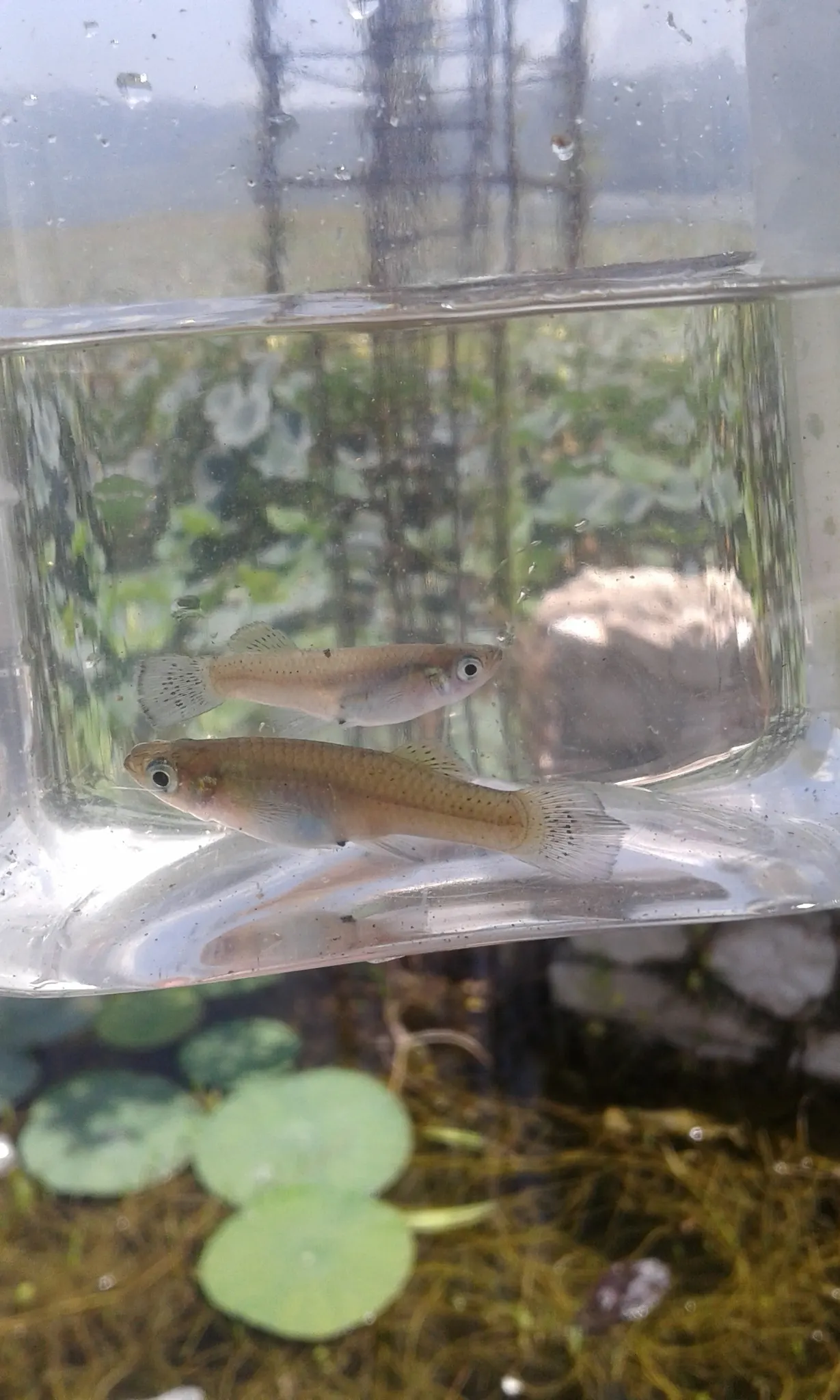
5 animals in this catalog carry a structured country pin for Haiti. That is a filing fact, not a claim that the crisis is only here.
The photograph is one of those animals: Humpbacked limia. Open a dossier for the text, the status, and the map. Use the world map to jump to another country. Confirm official distributions on the Red List.
Haiti covers the western part of the island of Hispaniola in the Greater Antilles, sharing it with the Dominican Republic. It has nine life zones, from dry lowlands to cloud forest, plus mangroves along the coast and coral reefs. Steep mountains give it an unusual mix of habitats for its size.
The Convention on Biological Diversity profile says Haiti and the Dominican Republic together have the second most diverse flora in the Caribbean. It estimates about 37 percent of plant species are endemic and, of more than 2,000 vertebrate species, 75 percent are considered endemic. A count cited on Wikipedia gives 266 bird species as of 2013, two of them endemic.
Where the pressure comes from
Less than 2 percent of the original forest remains, according to a Wikipedia summary (undated), after clearing that began under French colonisation and continued through the 20th century. Undisturbed rainforest covers only about 200 square kilometres. The CBD profile names poverty and population growth, alien species, habitat fragmentation from agriculture and development, and weak institutions.
The Ricord's iguana lives on both sides of the Haiti and Dominican Republic border. Its wild population was assessed at 3,000 to 4,000 animals in 2018, with a decreasing trend. Cattle grazing and charcoal production are described as pressures in Pedernales Province, on the Dominican side.
What is being done
A law of 23 June 1983 protected the biodiversity of identified regions, and La Visite National Park was established in 1983. The four national parks, La Visite, Pic Macaya, Pine Forest and Historic Citadel, protect 25,000 hectares. The CBD profile, which is a draft, says effective protected areas cover no more than 0.3 percent of the land, and that the national biodiversity strategy was never finished after work stopped around the disputed 2000 elections. The Ministry of Environment signed an agreement with The Nature Conservancy. A biosphere reserve with the Dominican Republic across the Massif de la Selle and Sierra de Bahoruco has been proposed but not established. Protected Planet lists 27 protected areas (UNEP-WCMC, November 2026).
Reading the catalog for Haiti
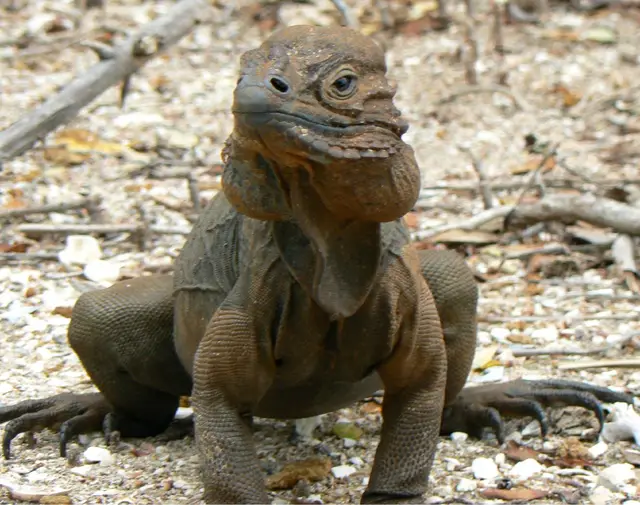
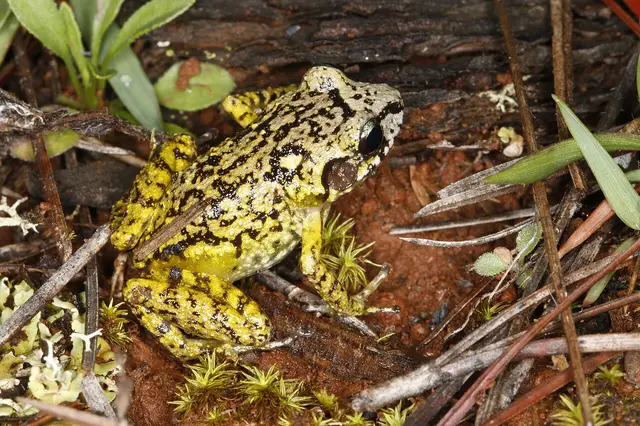
Haiti's list in the catalog is short, with 1 Critically Endangered and 4 Endangered animals. Lizards are the largest group, with the Ricord's and rhinoceros iguanas, alongside a frog, a butterfly and a fish. The list shows only animals the Red List has assessed and tied to Haiti, so it is not a count of everything at risk.
Sources for this section
- CBD country profile, Haiti: Flora, endemism, threats, protected area coverage, draft status, NBSAP
- Wildlife of Haiti (Wikipedia): Forest loss, ecoregions, parks, 1983 law, birds
- Cyclura ricordii (Wikipedia): Iguana 2018 population estimate and trend; grazing and charcoal in Pedernales (Dominican Republic)
- Protected Planet, Haiti: 27 protected areas, November 2026
What the catalog records for Haiti
The catalog has 5 animals with a country pin for Haiti: 1 Critically Endangered and 4 Endangered. By GBIF class the largest groups are Squamata (2), unknown (1), Insecta (1), Amphibia (1). The families with the most records are Iguanidae (2), Poeciliidae (1), Nymphalidae (1). A pin means a structured source (Wikidata or a GBIF match) places the animal in Haiti; it does not say the animal lives only there.
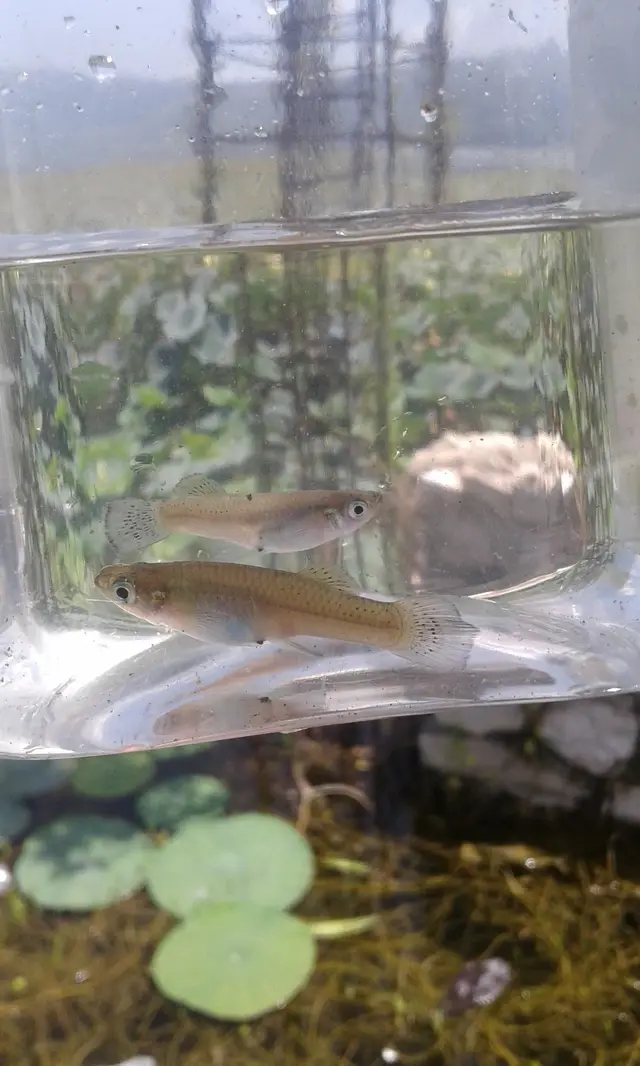 CR
Humpbacked limia
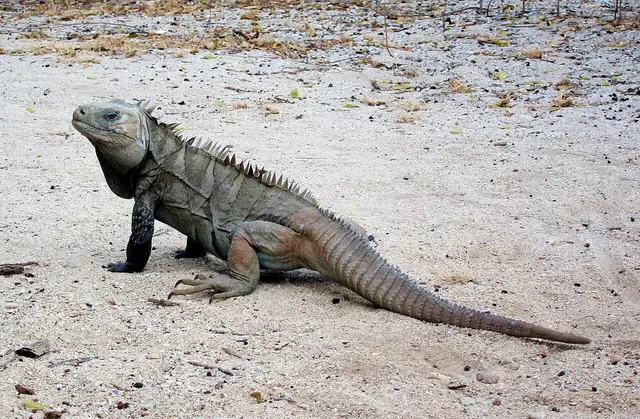 EN
Cyclura ricordii
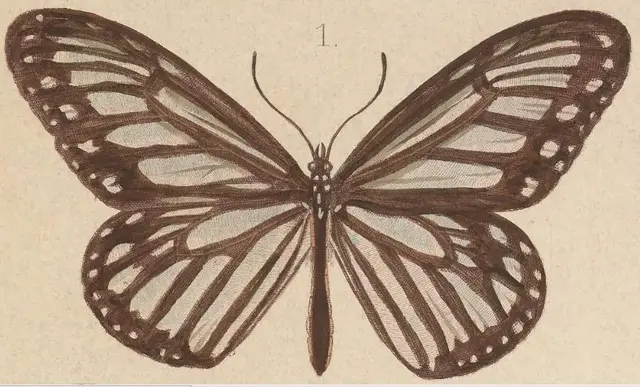 EN
Hewitson's Small Tree-nymph
 EN
Rhinoceros iguana
 EN
Southern pastel frog
Total pins: 5.
Quick answers
- Do all these animals live only in Haiti?
- No. A pin means a Wikidata place field resolved here. Official ranges can be wider.
- Is this a government list?
- No. It is a slice of this catalog.