Dominican Republic
8 catalog pins
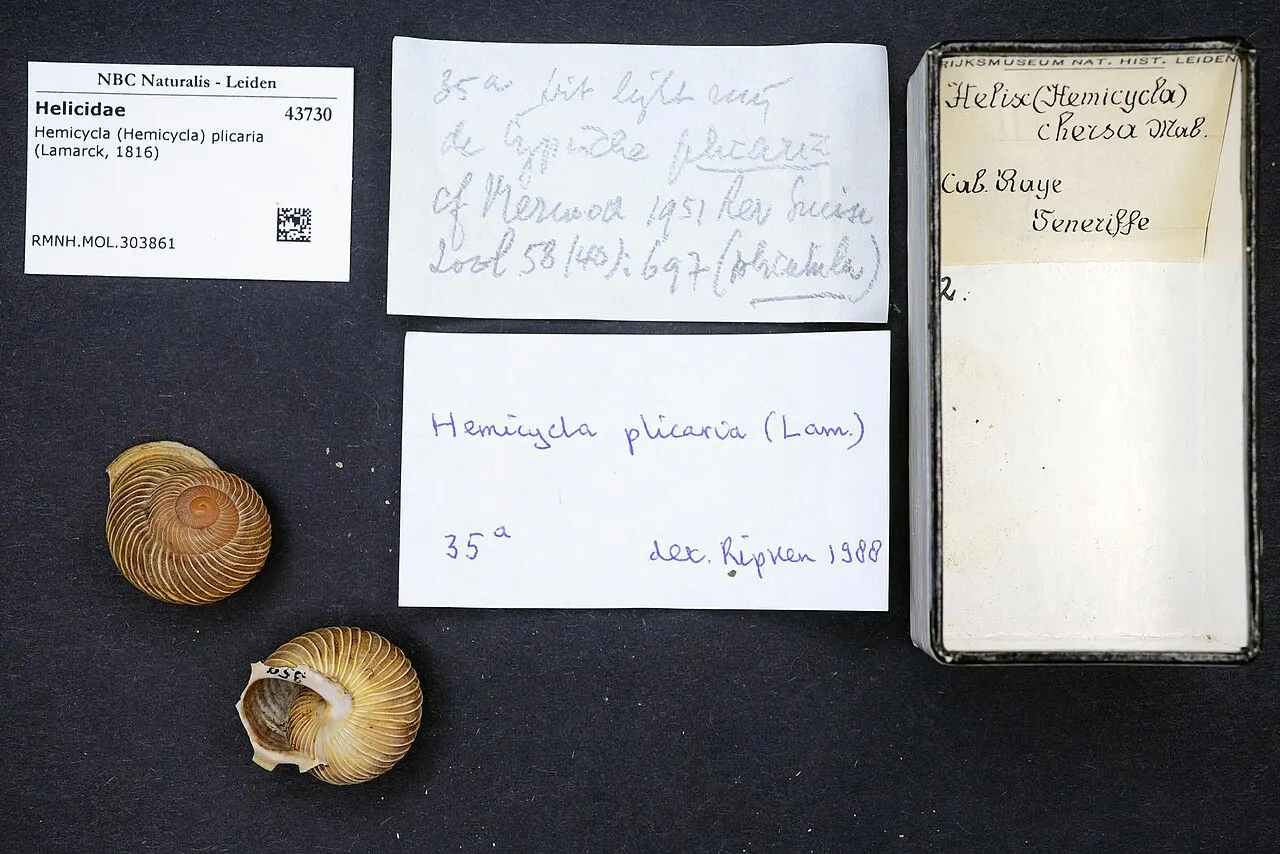
8 animals in this catalog carry a structured country pin for Dominican Republic. That is a filing fact, not a claim that the crisis is only here.
The photograph is one of those animals: Hemicycla plicaria. Open a dossier for the text, the status, and the map. Use the world map to jump to another country. Confirm official distributions on the Red List.
The Dominican Republic occupies the eastern two thirds of Hispaniola, the Caribbean's second-largest island, which it shares with Haiti. The country covers about 48,445 square kilometres. Hispaniola's ecoregions include moist forests (about half the island), dry forests (about 20%) and pine forests (about 15%).
Its draft Convention on Biological Diversity profile places the country in the Caribbean Islands biodiversity hotspot and describes endemism as high, notably among reptiles, vascular plants and birds. Forests cover 39.2% of the country.
Where the pressure comes from
The profile lists habitat modification, fragmentation and loss, overexploitation of species, climate change, invasive alien species and agrochemical pollution as the main threats, with underlying causes that include population growth, poverty and inequality, and the land tenure situation. It singles out broadleaf cloud forests as particularly threatened, saying they could be gone in about 11 years if the current rate of loss continues.
For the Ricord's iguana, a Hispaniolan endemic, the pressures are specific: cattle grazing and charcoal production damage its dry-forest habitat, people hunt it for food or kill it from a mistaken belief it harms livestock, and cats, dogs and mongooses take the young. One source puts its numbers at 3,000 to 4,000 animals in the 2018 assessment, still decreasing.
What is being done
The National System of Protected Areas covers 25% of the territory, though the profile calls management effectiveness low. A General Law on Environmental and Natural Resources dates from 2000, and a national biodiversity strategy ran from 2011 to 2020 with 20 targets. Parts of the Ricord's iguana's range lie in Jaragua National Park and Lago Enriquillo e Isla Cabritos National Park, and the Dominican group Grupo Jaragua monitored the species in 2018. Zoos in Indianapolis and Santo Domingo have bred it.
Reading the catalog for the Dominican Republic
The catalog lists 8 animals here: 3 Critically Endangered and 5 Endangered. Lizards and geckos (Squamata) are the largest group with 4, followed by corals (Anthozoa) with 2. Iguanas and Sphaerodactylus geckos have 2 entries each.
The snail Hemicycla plicaria is described as endemic to Spain, so its pin here may be a data oddity. Check each animal's page for its real range.
Sources for this section
- CBD country profile, Dominican Republic (draft): hotspot, endemism, forest cover, protected areas, threats, strategy, law
- Wikipedia, Hispaniola: island size, country area, ecoregion shares
- Wikipedia, Ricord's iguana: range, population estimates, threats, parks, zoo breeding
- Wikipedia, Hemicycla plicaria: described as endemic to Spain
What the catalog records for Dominican Republic
The catalog has 8 animals with a country pin for Dominican Republic: 3 Critically Endangered and 5 Endangered. By GBIF class the largest groups are Squamata (4), Anthozoa (2), Gastropoda (1), Amphibia (1). The families with the most records are Sphaerodactylidae (2), Iguanidae (2), Helicidae (1). A pin means a structured source (Wikidata or a GBIF match) places the animal in Dominican Republic; it does not say the animal lives only there.
 CR
Hemicycla plicaria
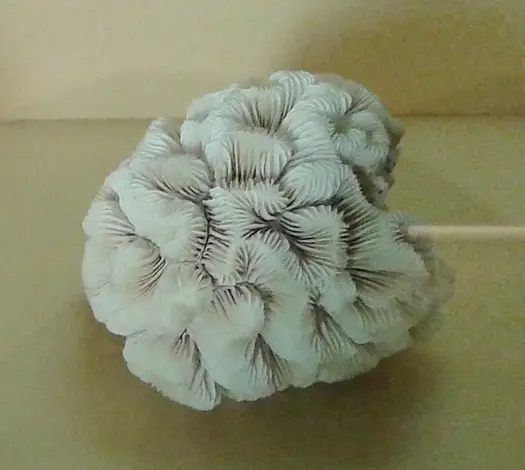 CR
Brazilian maze coral
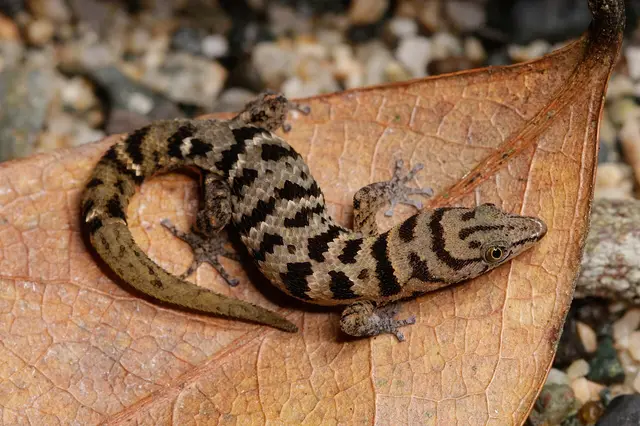 CR
Hispaniolan tailspot sphaero
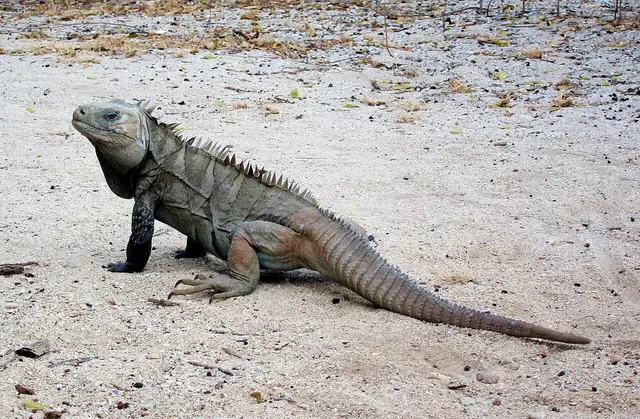 EN
Cyclura ricordii
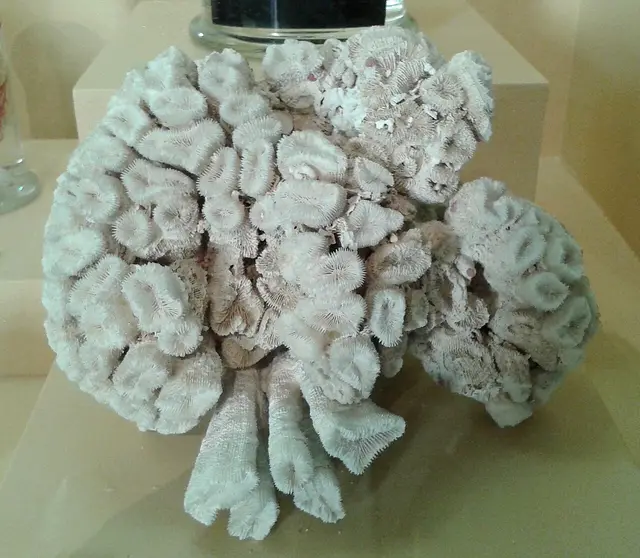 EN
Mussismilia harttii
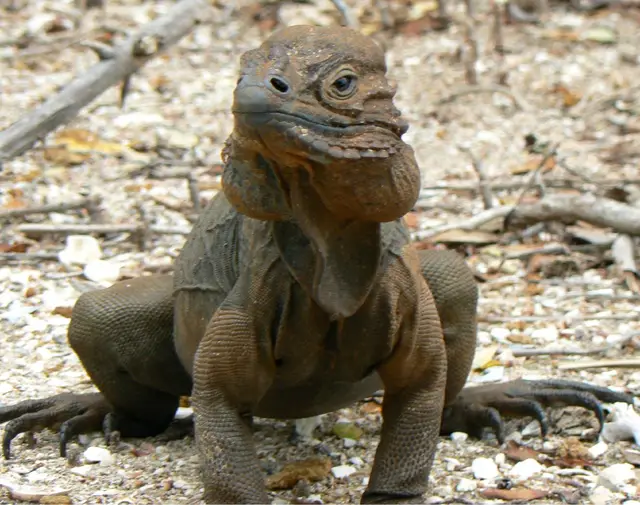 EN
Rhinoceros iguana
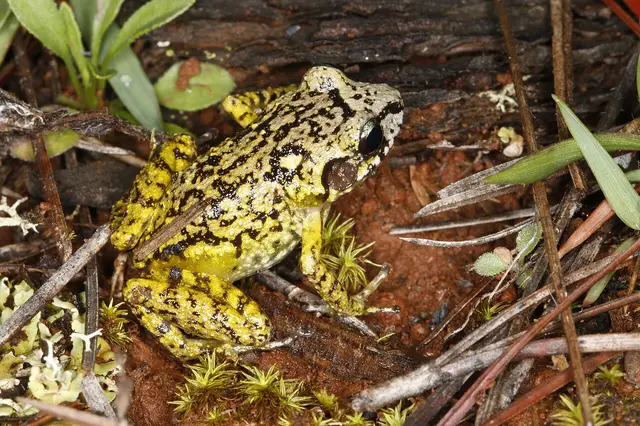 EN
Southern pastel frog
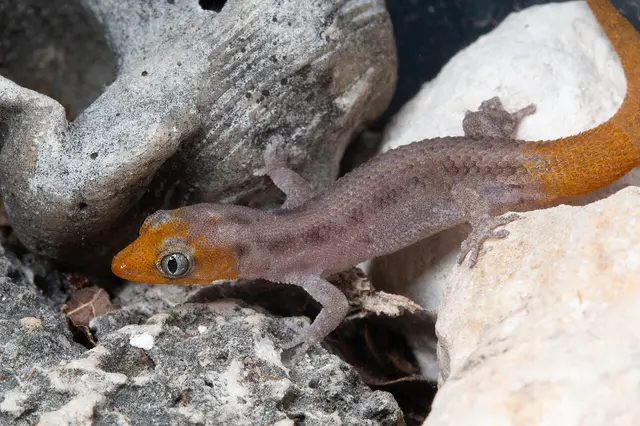 EN
Hispaniolan Two-striped Geckolet
Total pins: 8.
Quick answers
- Do all these animals live only in Dominican Republic?
- No. A pin means a Wikidata place field resolved here. Official ranges can be wider.
- Is this a government list?
- No. It is a slice of this catalog.