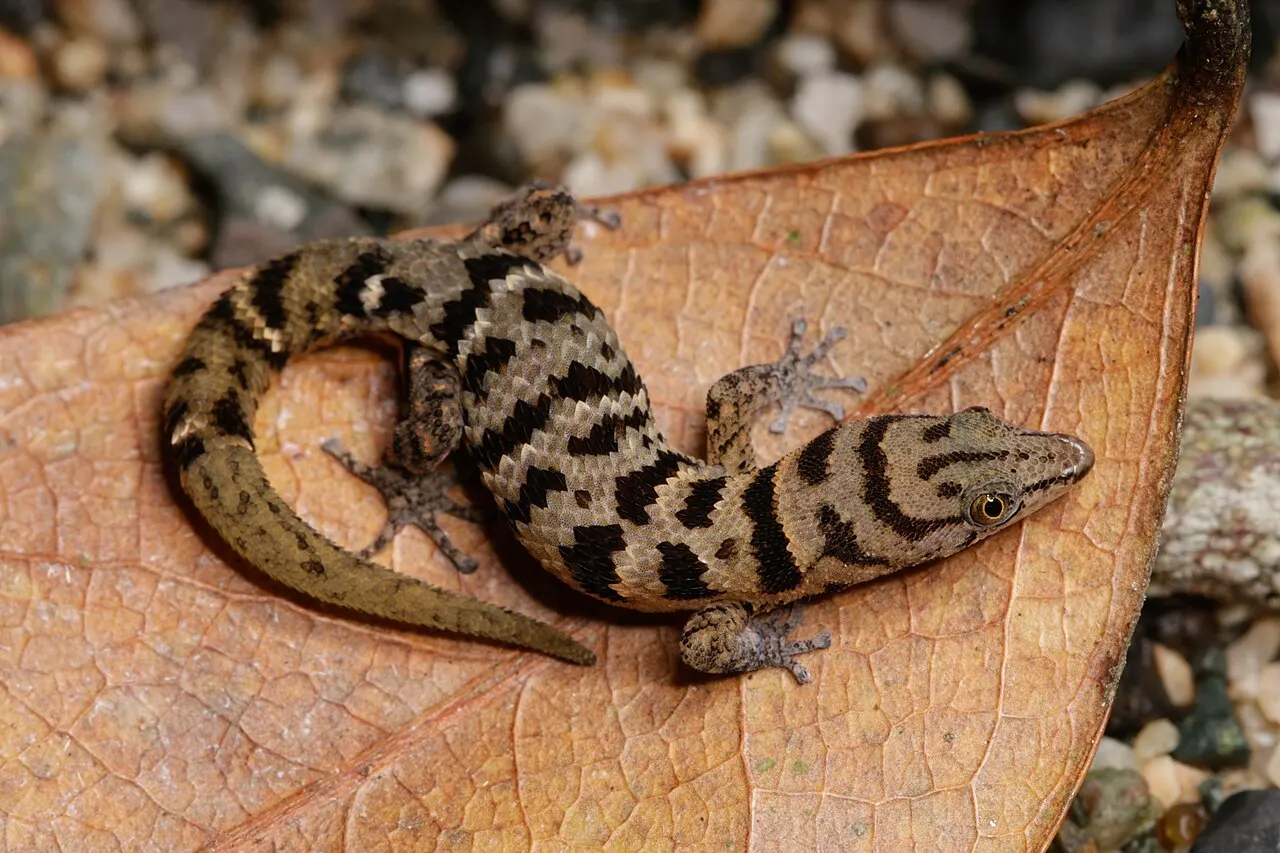
Critically Endangered
Hispaniolan tailspot sphaero
Sphaerodactylus epiurus
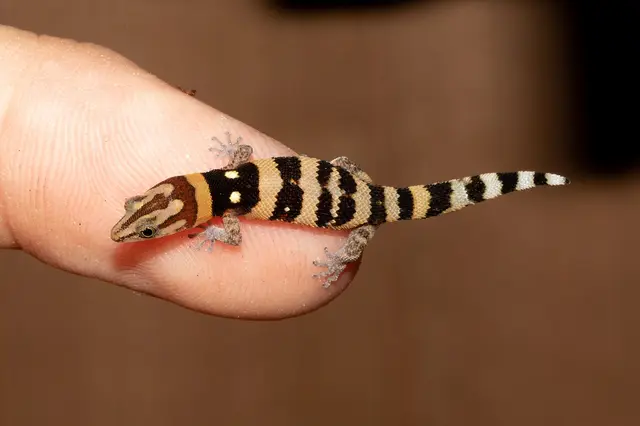
The Hispaniolan tailspot sphaero (Sphaerodactylus epiurus) is a tiny gecko known only from one small area of the eastern Dominican Republic. The IUCN Red List rates it Critically Endangered (assessed 2016), with a decreasing population. Its name refers to distinctive eyespots near the base of its tail.
How to recognise it
Sphaerodactylus geckos are small, and two members of the genus, S. ariasae and S. parthenopion, rank among the smallest reptiles known, at about 1.6 centimetres from snout to vent. The genus has 108 recognised species. In all of them the pupils are round and each toe ends in a single round adhesive pad.
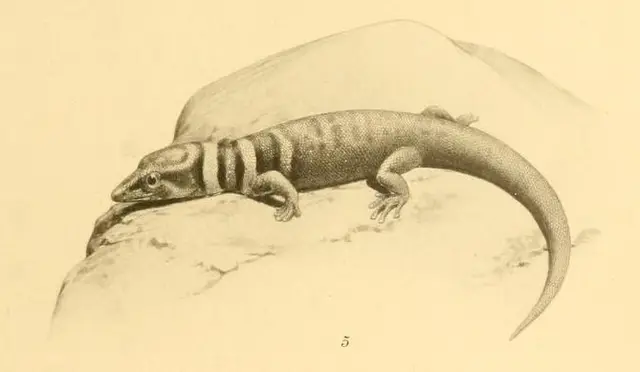
Richard Thomas and S. Blair Hedges described this species in 1993, in a paper titled as a new banded Sphaerodactylus from eastern Hispaniola. The scientific name epiurus comes from Greek words meaning on and tail. It refers to the distinctive postsacral ocelli, eyespots behind the hips, which give the animal its common name. It lays eggs.
Where it lives
The species was described from Loma El Penon, near Garcia in Altagracia Province, at 100 to 290 metres above sea level. The Reptile Database lists it from nowhere else. The IUCN counts it from a single location and puts its extent of occurrence at about 12 square kilometres.
The Red List records two habitats, rocky areas and moist lowland subtropical or tropical forest. Beyond that, very little has been published about how it lives. The Reptile Database cites a 2017 study by Meiri and colleagues in saying the species is known only from its original description.
Pins are Wikidata “endemic to” fields. Orange dots, when present, are GBIF occurrence tiles — survey bias included.
Why it is in trouble
The gecko's small range is under pressure from land use. The IUCN lists small-holder farming and small-holder grazing or ranching as ongoing threats across the whole range, and mining and quarrying as a threat expected in the future. The assessment records a continuing decline in the area the species occupies.
There is no estimate of how many individuals survive.
What is being done
The Red List says the species isn't known to occur in any protected area, and it lists no conservation actions. The research it records is on population size, distribution and trends, and on threats.
Sources
Written for this catalog in our own words from the sources below, checked against them on 12 November 2026. Population figures are estimates and carry the year they were made. Status and assessment year: IUCN. 2026. The IUCN Red List of Threatened Species. Version 2026-1. iucnredlist.org.